
Conventional vs. Synthetic Motor Oil: Understanding the Real Differences
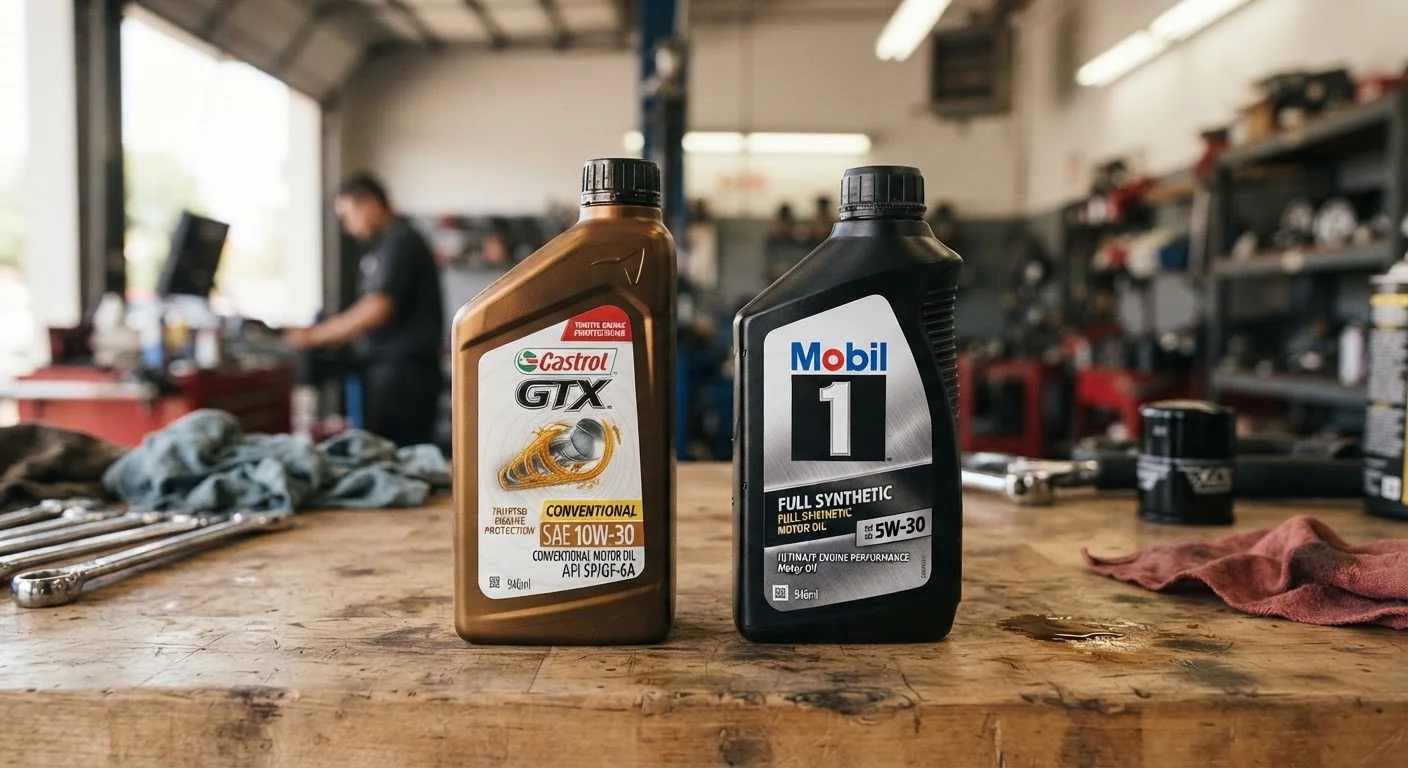
Photo credit: ExplorerGrid.com | Endless Grid Of Factual Content
In this article
Synthetic and conventional oils perform differently across temperature ranges, engine age, and driving conditions. Here's what actually sets them apart.
Key Takeaways
- Synthetic oil is engineered for consistency; conventional oil is refined from crude with natural molecular variation.
- Synthetic oil typically lasts 7,500–15,000 miles between changes; conventional oil generally requires changes every 3,000–5,000 miles.
- Modern vehicles with tight engine tolerances often require or strongly benefit from full synthetic formulations.
- Conventional oil costs less per quart but requires more frequent changes, narrowing the long-term price gap.
- Always follow your vehicle manufacturer's oil specification — not just oil type, but viscosity grade.
What Makes Them Different at a Molecular Level
Both conventional and synthetic motor oils start with a base oil and are blended with performance additives — detergents, anti-wear agents, and viscosity modifiers. The fundamental difference lies in the base oil itself.
Conventional oil is refined from crude petroleum. This refining process removes many impurities, but the resulting molecules are still irregular in size and shape. That inconsistency limits how well the oil resists breakdown under heat and stress.
Synthetic oil, by contrast, is either fully synthesized from chemical compounds or built up from a highly refined base stock. The result is a uniform molecular structure engineered to perform predictably. This uniformity is why synthetic oil flows more readily at low temperatures, resists thinning at high temperatures, and breaks down more slowly over time.
| Criterion | Conventional Oil | Synthetic Oil |
|---|---|---|
| Base stock origin | Refined crude petroleum | Chemically engineered compounds |
| Molecular consistency | Variable, natural impurities | Uniform, engineered structure |
| Typical change interval | 3,000–5,000 miles | 7,500–15,000 miles |
| Cold-weather performance | Thickens more at low temps | Flows readily at startup |
| Heat resistance | Breaks down faster under heat | Resists thermal breakdown longer |
| Cost per quart | Lower upfront cost | Two to four times higher per quart |
| Annual maintenance cost | More changes narrow savings | Fewer changes offset higher price |
| Turbo/VVT engine suitability | Generally not recommended | Strongly preferred or required |
Oil Change Intervals and Long-Term Costs
The old 3,000-mile oil change rule was built around conventional oil in older engines. Most modern vehicles and synthetic formulations have made that interval outdated. Conventional oil typically needs changing every 3,000–5,000 miles, while full synthetic can often go 7,500–15,000 miles depending on the manufacturer's recommendation and driving conditions.
That extended interval matters for cost comparisons. Synthetic oil costs roughly two to four times more per quart than conventional, but because you change it less often, the annual maintenance cost difference narrows considerably — and may essentially disappear depending on labor costs in your area.
The most reliable guide is your owner's manual. Manufacturers specify oil type and change intervals based on extensive engine testing, and following those specifications protects your warranty coverage as well as your engine.
Which Engines Benefit Most from Synthetic?
Synthetic oil delivers its clearest advantages in specific engine scenarios:
- Turbocharged engines: Turbos spin at extremely high speeds and run very hot. Oil must flow instantly at startup and withstand sustained heat — synthetic handles both demands better.
- Engines with variable valve timing (VVT): These systems rely on oil pressure for precise actuation. Consistent synthetic viscosity helps maintain the tight tolerances these systems require.
- Cold-climate operation: In sub-freezing temperatures, conventional oil thickens more dramatically, slowing lubrication at the critical moment of startup. Synthetic flows faster, reducing wear during those first seconds.
- High-mileage engines: Many manufacturers offer synthetic blends formulated specifically for engines over 75,000 miles, helping condition aging seals without the switch being too abrupt.
Conventional oil remains a practical, legitimate choice for older vehicles built before tighter manufacturing tolerances became standard, provided the owner's manual allows it and change intervals are followed consistently.
Myths Worth Clearing Up
A few persistent misconceptions complicate this decision for many drivers:
"Once you switch to synthetic, you can't go back." This is false. Modern synthetic and conventional oils are compatible and can be mixed without engine damage, though mixing dilutes the performance benefits of synthetic.
"Synthetic causes leaks in older engines." Synthetic oil does not cause seals to leak. However, if an older engine already has compromised seals, synthetic's better flow characteristics may make a pre-existing slow leak more noticeable.
"Synthetic is always necessary." Some older, simpler engines have run reliably on conventional oil for decades and continue to do so. The key is matching the oil to the manufacturer's specification — not defaulting to the most expensive option.
Your Owner's Manual Is the Authority
Vehicle manufacturers test and specify oil types and viscosity grades based on actual engine design requirements. Using an oil that meets or exceeds your manufacturer's specification — whether conventional or synthetic — is more important than defaulting to whichever type is considered premium. If your manual specifies 0W-20 full synthetic, that requirement exists for a reason and should be followed to maintain proper protection and warranty coverage.
Regardless of oil type, consistently changing your oil on schedule is more protective than choosing the premium option and stretching intervals too far.

Author
Automotive Editorial Team
Automotive Editorial Team is the collective byline for our editorial team and contributor network. Articles published under this byline or an editorial pen name are researched, written, and reviewed according to our editorial standards for clarity, consistency, and independence before publication.
View all articles →