
DIY or Licensed Pro? A Practical Framework for Home Repair Decisions
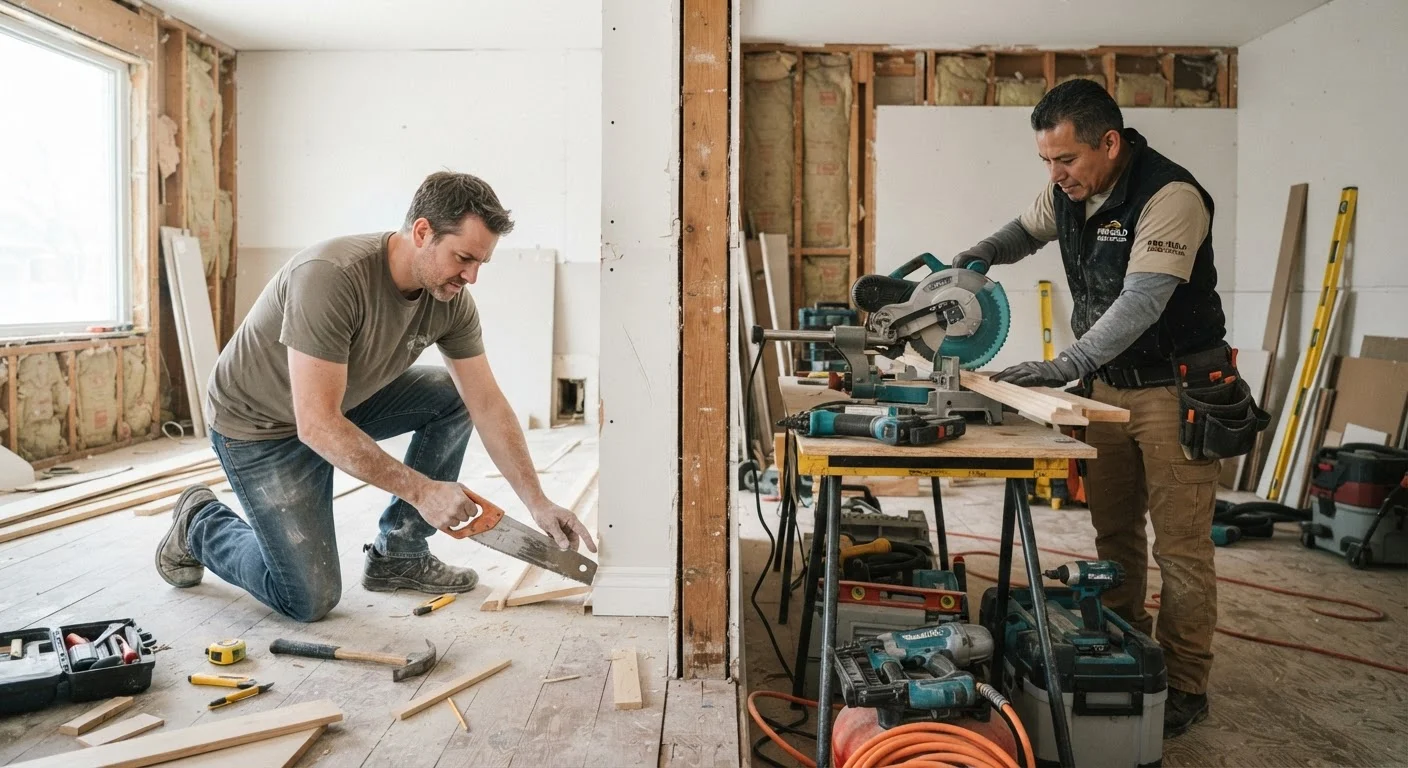
Photo credit: ExplorerGrid.com | Endless Grid Of Factual Content
In this article
Not every repair is safe or legal to tackle yourself. Here's how to decide what you can handle and when to call a professional.
Key Takeaways
- Electrical, gas, structural, and major plumbing work typically requires a licensed professional and permits.
- DIY is appropriate for cosmetic, low-risk tasks where skill level matches the job's complexity.
- Unpermitted work can create legal liability and complicate future home sales.
- Honest self-assessment of skill, tools, and time is essential before starting any repair.
- When in doubt, a professional consultation is often low-cost and prevents expensive mistakes.
Why the DIY vs. Pro Decision Matters More Than You Think
Every homeowner faces repair decisions that range from trivially simple to genuinely dangerous. The stakes of choosing wrong go beyond a botched paint job — unpermitted electrical work can void your homeowner's insurance, and improperly repaired structural elements can create safety hazards that surface years later, often at resale. A practical framework helps you sort repairs quickly and confidently.
Start by recognizing that this isn't really a question of pride or budget alone. It's about matching the right level of expertise to the risk profile of the job. Reading your home for early warning signs is the foundation — because some repairs look minor on the surface while masking deeper problems that only a trained eye would catch.
The Four-Question Test Before You Pick Up a Tool
Before committing to either path, work through these four questions:
- Is this work regulated? Electrical panel upgrades, gas line work, load-bearing structural changes, and most plumbing connections to the main supply line typically require permits and licensed contractors in nearly every US jurisdiction. Skipping permits costs more than you think — both financially and legally.
- What's the consequence of a mistake? A poorly caulked window is inconvenient; a miswired circuit is a fire hazard. Weigh the worst-case outcome honestly.
- Do I have the skills, tools, and time? Tutorials make tasks look deceptively simple. If you haven't done similar work before, budget extra time and expect a learning curve.
- Will this affect my home's insurability or resale value? Unpermitted additions and DIY electrical work are red flags in home inspections that can derail sales or trigger insurance complications.
| DIY | Licensed Professional | |
|---|---|---|
| Cost | Lower upfront; risk of costly mistakes | Higher upfront; work is warranted |
| Permit / Code compliance | Homeowner responsible; often skipped | Pro handles permits and inspections |
| Safety risk | Low for cosmetic tasks; high for regulated work | Trained to manage hazardous systems safely |
| Skill requirement | Must match task complexity honestly | Licensed and insured for the work |
| Impact on resale / insurance | Unpermitted work can cause complications | Permitted work documented for future buyers |
| Best suited for | Cosmetic, low-risk maintenance tasks | Electrical, gas, structural, permitted projects |
What Belongs in the DIY Column
Many routine maintenance and cosmetic tasks are well within reach for a motivated homeowner with basic tools and patience. These typically share a few characteristics: low safety stakes, no permit requirements, reversible outcomes, and clear instructional resources.
- Painting interior and exterior surfaces
- Replacing outlet covers, switch plates, or light fixtures (on existing, functioning circuits — not new wiring)
- Patching drywall holes under six inches
- Caulking around tubs, sinks, and windows
- Replacing faucet aerators or showerheads
- Basic landscaping, mulching, and planting
- Installing weatherstripping and door sweeps
- Replacing toilet flappers and fill valves
For planning larger upgrades, a room-by-room renovation checklist helps clarify scope before you commit to a project.
When a Licensed Professional Is Non-Negotiable
Certain repairs carry risks that make professional licensing a legal requirement — not just a suggestion. These include:
- Electrical work: Panel upgrades, new circuit installation, rewiring, and anything inside the main service panel.
- Gas lines: Any work on gas supply lines, appliance connections, or venting requires a licensed plumber or gas fitter in most states.
- Structural repairs: Removing or altering load-bearing walls, foundation work, and roof structural framing.
- HVAC systems: Refrigerant handling legally requires EPA Section 608 certification; duct redesign affects air quality and fire safety.
- Major plumbing: Tie-ins to municipal supply or sewer lines, water heater installations in many jurisdictions.
If you're planning work in any of these categories, understanding how to vet and hire a general contractor will help you engage the right professional with confidence. See also our broader home improvement guidance hub for project-specific resources.
Get a Second Opinion Before You Start
If a repair looks straightforward but you notice staining, cracking, or odors nearby, pause before proceeding. These can signal hidden water damage, mold, or structural stress that changes the entire scope of the job. A brief professional assessment at this stage is almost always cheaper than discovering deeper problems mid-project. Learn what warning signs a contractor would flag during a standard walkthrough.
The Gray Zone: Hybrid Projects
Some projects have DIY-appropriate phases and phases that genuinely require a pro. A bathroom remodel is a good example: you might demo the old tile, prep the substrate, and handle finish painting yourself — but the rough plumbing and any new electrical circuits should go to licensed tradespeople. Breaking a project into phases this way can meaningfully reduce total cost without cutting corners on safety.
When you're uncertain whether a symptom signals a simple fix or something deeper, consider booking a diagnostic visit with a contractor before committing to either path. Many licensed contractors offer paid assessments that can save far more than they cost if the underlying problem turns out to be outside your DIY scope.

Author
Home & Garden Editorial Team
Home & Garden Editorial Team is the collective byline for our editorial team and contributor network. Articles published under this byline or an editorial pen name are researched, written, and reviewed according to our editorial standards for clarity, consistency, and independence before publication.
View all articles →