
Attic Insulation: Common Misconceptions That Lead to Energy Loss
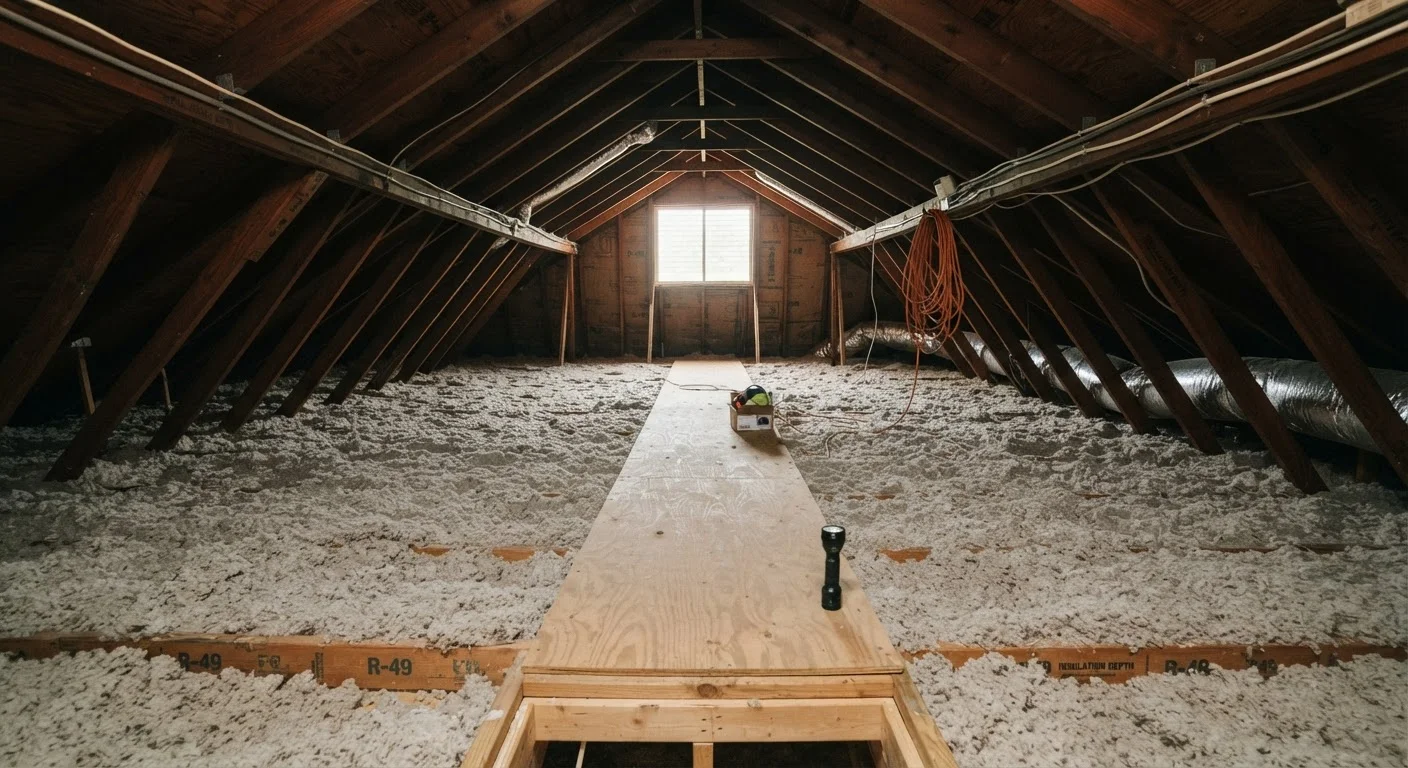
Photo credit: ExplorerGrid.com | Endless Grid Of Factual Content
In this article
Many homeowners believe more insulation always helps, or that existing insulation lasts forever. Here's what the evidence actually shows.
Key Takeaways
- More insulation is not always better — R-value targets depend on your climate zone and existing levels.
- Attic insulation does not last forever; compression, moisture, and pests can significantly reduce its effectiveness.
- Air sealing is just as critical as insulation — gaps allow heat transfer that insulation alone cannot stop.
- Summer heat gain through the attic is as costly as winter heat loss, making insulation a year-round concern.
- Ventilation and insulation work together; insulating without maintaining proper airflow can cause moisture damage.
Why Attic Insulation Myths Are So Costly
Attic insulation is one of the highest-impact energy improvements a homeowner can make — yet it's also one of the most misunderstood. Misconceptions about how insulation works lead thousands of homeowners to leave money on the table, or worse, to make changes that actually reduce comfort and cause structural damage over time.
The myths below aren't obscure edge cases. They're the beliefs that drive common, expensive mistakes. Understanding what the evidence actually shows can help you make smarter decisions before calling a contractor or buying materials. For a broader look at how these improvements affect everyday comfort, see our article on energy efficiency upgrades that change how a home feels.
Myth
Adding more insulation always improves energy efficiency, regardless of what's already there.
Fact
Beyond the recommended R-value for your climate zone, additional insulation delivers sharply diminishing returns and can introduce moisture problems.
Insulation effectiveness follows a curve, not a straight line. The U.S. Department of Energy publishes specific R-value targets by climate zone — most US attics benefit most from reaching R-38 to R-60. Once you hit that target, every additional inch of insulation saves a smaller fraction of energy while adding cost and potentially restricting attic ventilation. The priority should be reaching the recommended level, then shifting focus to air sealing.
Myth
Attic insulation, once installed, lasts the lifetime of the house without any attention.
Fact
Insulation degrades over time due to settling, moisture absorption, pest activity, and physical disturbance — all of which reduce its effective R-value.
Fiberglass batts can compress and lose R-value if walked on or stored against. Cellulose settles naturally over years, reducing depth and effectiveness. Moisture infiltration — from roof leaks or condensation — can cause batts to clump and mold. Rodents routinely burrow through loose-fill and batt insulation, creating voids. A visual inspection every five to seven years is a practical baseline; any signs of discoloration, matting, or pest activity warrant a closer look and possibly professional assessment.
Myth
Insulation is only important in winter — it doesn't do much in summer.
Fact
Attic insulation reduces heat gain in summer just as it slows heat loss in winter, directly affecting cooling costs and comfort.
In summer, an uninsulated or under-insulated attic can reach temperatures well above 130°F (54°C), radiating heat downward into living spaces and forcing air conditioners to work significantly harder. Proper insulation creates a thermal barrier in both directions. In hot climates, summer cooling savings from adequate attic insulation can actually exceed winter heating savings, making it a year-round investment rather than a cold-weather concern.
Myth
If you insulate the attic well enough, you don't need to worry about air sealing.
Fact
Air leakage bypasses insulation entirely — heated or cooled air moves through gaps regardless of how much insulation surrounds them.
Insulation slows conductive heat transfer through solid materials. Air leaks, however, are a convective problem: warm air physically moves through gaps around recessed lights, plumbing stacks, attic hatches, and wall top plates, carrying heat with it. Studies from building science researchers consistently show that air sealing delivers a larger efficiency return per dollar than simply adding insulation in leaky homes. Best practice is to air-seal before insulating — not instead of it.
Myth
Covering attic vents with insulation helps by keeping more heat inside.
Fact
Blocking attic vents traps moisture and heat in ways that damage roof sheathing and undermine the insulation itself.
Proper attic ventilation is separate from the home's living-space thermal envelope. The attic itself is designed to stay close to outdoor temperature in most construction types (called a "cold roof" design). When soffit or ridge vents are blocked by insulation, humid air stagnates, raising the risk of condensation on roof decking — a leading cause of mold and premature shingle failure. Insulation baffles installed between rafters keep the ventilation channel open while still allowing full insulation depth across the attic floor.
Insulation and Ventilation: Two Systems, Not One
One of the most consequential misunderstandings homeowners carry is treating attic insulation as a standalone fix. In practice, insulation and ventilation are tightly linked systems. Blocking soffit vents with insulation, for example, traps humid air in the attic — creating conditions for mold, wood rot, and ice dams in colder climates.
The U.S. Department of Energy recommends maintaining a clear ventilation pathway along the attic floor while ensuring insulation doesn't compress or spill over ridge and soffit vents. Baffles (also called rafter vents) installed between rafters keep airflow channels open even after adding blown-in insulation.
If you're unclear on how attic airflow actually functions, our ventilation explainer covers the essentials every homeowner should understand before making insulation decisions. And if you're comparing materials — fiberglass batts, spray foam, or rigid board — the insulation types comparison breaks down performance across the key variables.
15%
Typical heating/cooling savings from attic air sealing
The U.S. Department of Energy estimates that air sealing combined with proper insulation can reduce heating and cooling costs by around 15% in a typical home.
R-38 to R-60
Recommended attic insulation range for most US climates
DOE climate zone recommendations for attic insulation span R-38 in warmer zones to R-60 in the coldest northern regions of the country.
130°F+
Peak summer attic temperature without adequate insulation
Building science researchers have measured uninsulated or poorly insulated attics reaching temperatures above 130°F on hot summer days, significantly increasing cooling loads.
Before You Add More Insulation: A Practical Checklist
Rather than defaulting to "add more," start with a systematic assessment. A few hours of honest evaluation can save significant expense and prevent the problems that myths tend to create.
- Check current R-value: Measure existing insulation depth and compare it to the DOE's recommended R-values for your climate zone (R-38 to R-60 for most US attics).
- Inspect for air leaks first: Seal around recessed lights, plumbing penetrations, attic hatch edges, and top plates before adding any new material.
- Look for moisture damage or compression: Wet, flattened, or pest-disturbed insulation has lost a measurable portion of its rated R-value and may need replacement, not addition.
- Verify ventilation is intact: Confirm soffit vents are clear and that existing insulation hasn't already blocked airflow pathways.
- Consider a professional energy audit: Blower-door tests identify hidden air leakage points that visual inspection misses, giving you a prioritized action list rather than guesswork.
Attic insulation decisions share some of the same "more isn't always better" logic that applies to other home systems — much like the filter-change misconceptions covered in our article on what homeowners get wrong about HVAC filter changes. Getting the basics right matters more than piling on product.

Author
Home & Garden Editorial Team
Home & Garden Editorial Team is the collective byline for our editorial team and contributor network. Articles published under this byline or an editorial pen name are researched, written, and reviewed according to our editorial standards for clarity, consistency, and independence before publication.
View all articles →