
Budgeting Approaches Compared: Envelope, Zero-Based, 50/30/20, and More
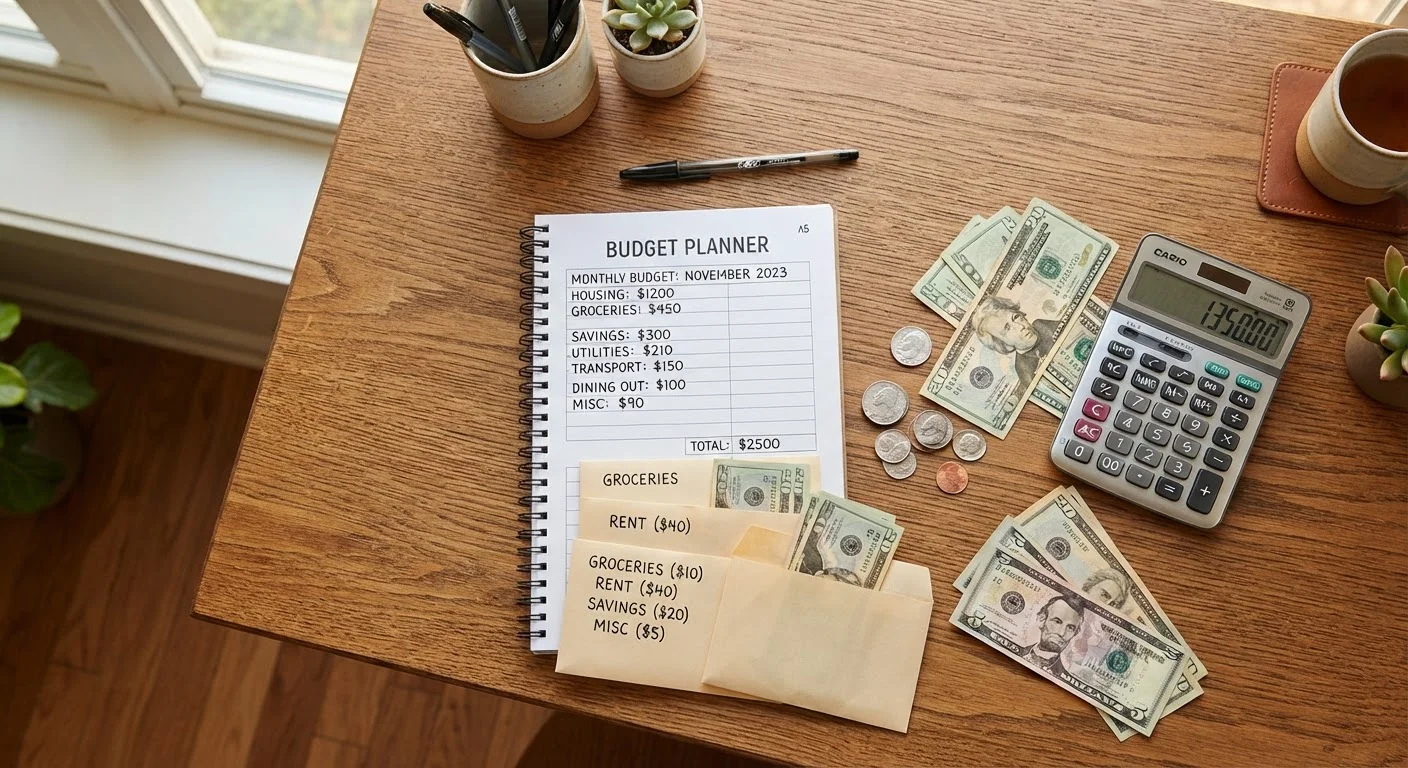
Photo credit: ExplorerGrid.com | Endless Grid Of Factual Content
In this article
A side-by-side look at the most widely used household budgeting frameworks — how each works, who it suits, and where each one tends to struggle.
Key Takeaways
- No single budgeting method works for everyone — the best fit depends on your income type, habits, and goals.
- Zero-based budgeting offers the most detailed control but requires the most ongoing effort to maintain.
- The 50/30/20 rule is a low-effort starting point but may not reflect real cost-of-living pressures in high-expense areas.
- Envelope budgeting is highly effective for curbing overspending in specific categories, especially discretionary ones.
- Combining elements from multiple methods is a valid — and often practical — strategy.
Why Your Budgeting Method Matters
A budget is only useful if you actually use it. That sounds obvious, but it explains why so many people abandon their spending plans within a few weeks — the method they chose wasn't a realistic fit for their habits, income pattern, or financial goals. Understanding the mechanics of each major approach lets you make an informed choice rather than defaulting to whatever spreadsheet you downloaded first.
This comparison covers four widely used frameworks: envelope budgeting, zero-based budgeting, the 50/30/20 rule, and the pay-yourself-first method. For a broader foundation, see The Complete Guide to Household Budgeting, which covers how to build and maintain a budget regardless of the method you choose.
The Four Methods at a Glance
Before diving into the details, here is a structured look at how each method stacks up across the criteria that matter most to everyday budgeters.
| Zero-Based | 50/30/20 Rule | Envelope | Pay-Yourself-First | |
|---|---|---|---|---|
| Setup effort | High — rebuilds monthly | Low — set percentages | Moderate — prep envelopes | Low — automate transfers |
| Ongoing maintenance | High — tracks every dollar | Low to moderate | Moderate — cash management | Low — mostly automated |
| Best income type | Stable or predictable | Stable salary | Any income type | Stable or automatic payroll |
| Savings focus | Built into every category | Fixed 20% target | Depends on envelope setup | Core priority of method |
| Overspending control | Very strong | Weak — broad categories | Very strong — cash limits | Weak on spending side |
| Suitable for beginners | No — steep learning curve | Yes — very accessible | Yes — intuitive concept | Yes — simple to start |
| Works without cash | Yes — digital friendly | Yes — digital friendly | Partially — adaptations needed | Yes — digital friendly |
Zero-Based Budgeting: Maximum Intentionality
Zero-based budgeting (ZBB) assigns every dollar of income a specific job — savings, rent, groceries, debt payments — until income minus expenses equals zero. Nothing is left unaccounted for. This doesn't mean spending everything; it means every dollar has a designated destination, including a savings or investment category.
Where it works well: ZBB is particularly effective for households with variable expenses or those actively trying to eliminate debt. Because you rebuild the budget each month from scratch, it forces a regular check-in on your actual spending patterns rather than relying on outdated assumptions.
Where it struggles: The method is time-intensive. Setting up a zero-based budget correctly can take 30 to 60 minutes per month, and mid-month adjustments are common. For people with irregular freelance or gig income, predicting income precisely enough to build the budget is its own challenge.
The 50/30/20 Rule: Simplicity With Trade-Offs
The 50/30/20 rule divides after-tax income into three broad buckets: 50% toward needs (housing, utilities, groceries, minimum debt payments), 30% toward wants (dining out, entertainment, subscriptions), and 20% toward savings and additional debt repayment.
Where it works well: Its simplicity is a genuine feature. Someone new to budgeting can implement it in under an hour without a spreadsheet. It also scales — as income grows, so does each bucket proportionally.
Where it struggles: In high cost-of-living cities, housing alone can consume far more than 50% of take-home pay, leaving the framework structurally broken before you start. The broad categories also make it easy to rationalize overspending. The 20% savings target is a reasonable baseline, but households with significant debt or no emergency fund may need to allocate more. For guidance on building savings toward specific goals, you may need a more granular approach.
Envelope Budgeting: Spending Limits You Can Feel
The envelope method involves dividing cash into labeled physical envelopes — one per spending category — and spending only what is in each envelope for that period. When the envelope is empty, spending in that category stops.
Where it works well: The tactile, visual nature of cash makes overspending psychologically harder. Research in behavioral economics consistently finds that people spend less when using physical cash versus cards. It is especially useful for categories where people tend to lose track — dining, entertainment, and personal care.
Where it struggles: Cash-only spending is impractical for online purchases, automatic bill payments, and recurring subscriptions. Envelope Budgeting in a Digital World explores how people adapt the core logic to digital spending using apps and dedicated debit accounts — a worthwhile read if you're drawn to the method but live a mostly cashless life.
Pay-Yourself-First: Savings as the Non-Negotiable
The pay-yourself-first (PYF) method flips the conventional order. Instead of saving what is left after spending, you move a fixed savings amount out of your account immediately after each paycheck — before discretionary spending begins. Whatever remains covers everyday expenses.
Where it works well: PYF is highly effective for building emergency funds, retirement contributions, or goal-specific savings. Automating the transfer removes the need for willpower each month. It pairs naturally with employer-sponsored retirement accounts where contributions are deducted before the paycheck arrives.
Where it struggles: PYF offers little guidance on how to manage the remaining funds. Without a secondary system for tracking spending, it is easy to overspend on discretionary items and end up short for fixed bills. Pay-Yourself-First Budgeting: Upsides and Real Limitations covers these trade-offs in depth.
This article provides general financial education and is not personalized financial advice. For guidance specific to your situation, consider consulting a licensed financial professional.

Author
Personal Finance Editorial Team
Personal Finance Editorial Team is the collective byline for our editorial team and contributor network. Articles published under this byline or an editorial pen name are researched, written, and reviewed according to our editorial standards for clarity, consistency, and independence before publication.
View all articles →