
Snacking Habits That Support Rather Than Sabotage Your Diet
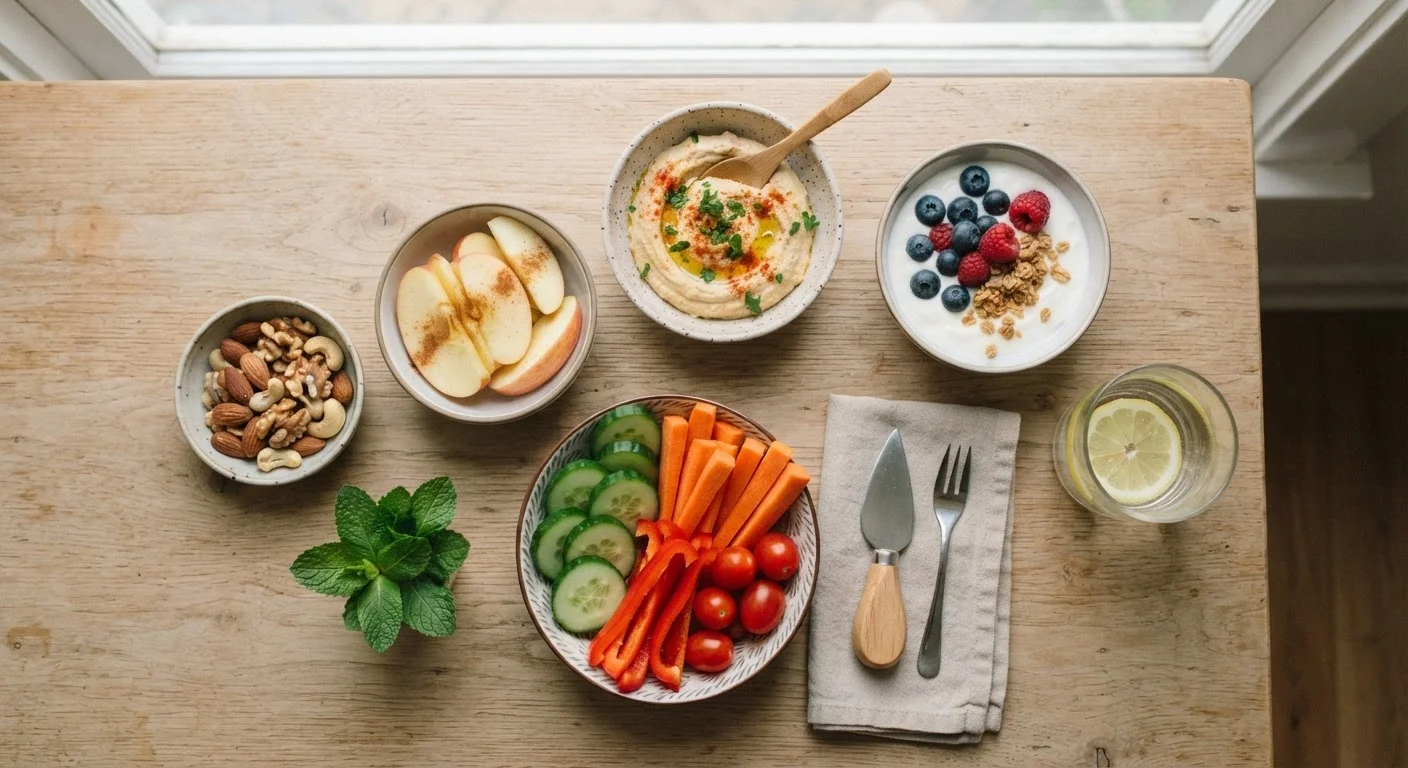
Photo credit: ExplorerGrid.com | Endless Grid Of Factual Content
In this article
Snacking isn't inherently bad — but timing, composition, and hunger cues all play a role. Here's what the evidence suggests.
Key Takeaways
- Snacking is not inherently unhealthy — what, when, and why you snack matters most.
- Pairing protein or fiber with carbohydrates helps sustain energy and reduce overeating at meals.
- Eating in response to genuine hunger rather than boredom or stress is a cornerstone habit.
- Ultra-processed snack foods are linked to higher calorie intake and lower satiety.
- Planning snacks in advance significantly reduces impulsive, less nutritious choices.
- Portion awareness, not rigid restriction, supports long-term dietary balance.
Snacking Gets a Bad Reputation It Doesn't Always Deserve
For years, snacking has been cast as the enemy of a healthy diet — a habit to suppress rather than refine. That framing misses the point. Snacking itself is neutral; it's the patterns around it that determine whether it helps or hurts your overall nutrition.
Research consistently shows that the quality and context of snacks matter far more than the mere act of eating between meals. Many people find that well-chosen snacks help regulate appetite, prevent overeating at mealtimes, and maintain steadier energy throughout the day. Others genuinely thrive with three meals and no snacks at all. Neither approach is universally correct — your needs depend on activity level, meal timing, metabolism, and personal preference.
What the evidence does support is this: unconscious, habit-driven snacking — reaching for highly processed options out of boredom, stress, or proximity — is where most dietary goals quietly unravel. Understanding the habits that distinguish supportive snacking from sabotaging snacking is a practical first step. If you're also working to untangle broader nutrition misconceptions, our evidence-based look at nutrition myths is worth a read.
Eat in response to hunger, not habit or emotion
Before reaching for a snack, take a moment to check in with your actual hunger level. Emotional eating — snacking in response to stress, anxiety, boredom, or fatigue — is one of the most common ways snacking undermines dietary goals. It's not a character flaw; it's a deeply ingrained behavioral pattern that most people develop over time.
A simple strategy is to pause for two to three minutes before snacking and ask: Am I physically hungry, or am I looking for a distraction or comfort? Physical hunger tends to build gradually; emotional hunger often arrives suddenly and targets specific foods. Developing this awareness doesn't eliminate emotional eating overnight, but it creates the conditions for more intentional choices.
Pausing before snacking to identify true hunger is one of the most effective habits you can build.
Prioritize protein and fiber in your snack choices
The composition of a snack has a direct impact on how satisfied you feel afterward. Foods high in protein and dietary fiber tend to slow digestion, promote satiety hormones, and sustain energy more effectively than snacks built primarily on refined carbohydrates and added sugars.
Practically, this means pairing snack options rather than eating one ingredient in isolation. Examples that reflect this principle include:
- Apple slices with a small portion of nut butter
- Greek yogurt with berries
- Vegetables with hummus or a bean-based dip
- A small handful of mixed nuts alongside whole-grain crackers
None of these require elaborate preparation, and they align well with the dietary patterns shown to support long-term health — explored further in our guide to well-studied eating patterns.
Protein and fiber together slow digestion and keep hunger at bay far longer than processed snacks alone.
Plan snacks ahead rather than deciding in the moment
Decision fatigue is real. When you're hungry, tired, or distracted, the path of least resistance is whatever is most accessible — which in many workplaces and homes means ultra-processed options. Planning snacks in advance removes that friction at the moment it matters most.
This doesn't require extensive meal prep. Even simple steps — portioning out nuts into small containers, keeping washed fruit at eye level in the fridge, or packing a snack before leaving the house — meaningfully reduce impulsive choices. The goal is to make the nutritious option the easy option, not to eliminate flexibility entirely.
Making the nutritious option the convenient option is a structural advantage, not just a mindset shift.
Be mindful of portion size without obsessing over it
Even nutrient-dense snack foods can contribute excess calories when consumed without any portion awareness. Nuts, for example, are an excellent source of healthy fats and protein — but their calorie density means that eating directly from a large bag makes it easy to consume far more than intended.
Portion awareness doesn't mean weighing every gram or applying strict calorie limits. It means having a general sense of what a reasonable serving looks like — and serving yourself that amount rather than eating mindlessly from the container. Research on food environment design consistently shows that the size of the package or bowl significantly influences how much people eat, independent of hunger.
Eating from smaller containers rather than full packages consistently reduces unintentional overconsumption.
Limit ultra-processed snack foods without eliminating all treats
Ultra-processed foods — a category defined by extensive industrial formulation and the inclusion of ingredients rarely used in home cooking — are associated with higher overall calorie intake, lower satiety, and poorer diet quality in population-level research. Many packaged snack foods, chips, cookies, and sweetened crackers fall into this category.
This isn't a case for eliminating enjoyable foods entirely; rigid restriction tends to increase preoccupation with forbidden items and can be difficult to maintain. Instead, the practical approach is to make whole or minimally processed foods the default snack choice, while treating more heavily processed options as occasional rather than routine. That balance is more sustainable than any all-or-nothing rule.
Defaulting to whole foods for snacks while leaving room for occasional treats is more sustainable than strict elimination.
Pay attention to snack timing relative to meals
Snacking very close to a main meal can reduce appetite for that meal and disrupt the natural hunger-fullness cycle. Conversely, going too long between meals without eating can lead to excessive hunger that makes it harder to make considered food choices when you do eat.
For many people, a snack roughly two to three hours after a meal — if genuine hunger is present — fits naturally into this rhythm. There's no universal ideal timing; context, schedule, and individual appetite patterns all vary. What's worth avoiding is the pattern of snacking immediately before meals as a habit, or snacking late in the evening primarily out of boredom rather than hunger.
Spacing snacks thoughtfully between meals supports a healthier hunger-fullness rhythm throughout the day.
Eat mindfully — without screens or distractions
Distracted eating is consistently linked to higher calorie intake and reduced satisfaction. When attention is split between food and a screen, people tend to eat faster, feel less full at the end of eating, and often underestimate how much they consumed. These effects apply to snacks just as much as full meals.
Eating with some degree of attention — noticing flavors, textures, and your progression through the snack — isn't about turning every bite into a meditative event. It's simply about being present enough to recognize when you're satisfied. Even putting down your phone for the two to three minutes a snack takes can meaningfully change the experience and the outcome.
Distracted snacking consistently leads to eating more while feeling less satisfied — a preventable pattern.
Building Snack Habits That Actually Stick
Lasting dietary change rarely comes from dramatic overhauls. Adjusting how you approach snacks — without eliminating them entirely — is far more sustainable than the all-or-nothing restrictions common to crash dieting. For more on why rigid restriction tends to backfire, see our piece on why crash diets don't work the way you think.
The habits covered here reflect established nutritional principles, not a rigid prescription. Individual needs vary widely, and anyone managing a specific health condition, metabolic concern, or significant dietary change should consult a registered dietitian or qualified healthcare provider before making adjustments.
Start With One Habit, Not Seven
It can be tempting to overhaul every snacking habit at once, but behavior change research strongly favors starting with a single, specific adjustment — such as planning snacks in advance or pausing before eating to assess hunger. Once that habit feels automatic, adding the next one becomes much easier. Small, consistent changes accumulate into lasting patterns.
This article is for general informational and educational purposes only and does not constitute medical or dietary advice. Please consult a qualified healthcare professional for guidance tailored to your individual health needs.

Author
Health & Wellness Editorial Team
Health & Wellness Editorial Team is the collective byline for our editorial team and contributor network. Articles published under this byline or an editorial pen name are researched, written, and reviewed according to our editorial standards for clarity, consistency, and independence before publication.
View all articles →