
Why Your Tomato Plants Keep Dropping Blossoms Before Fruiting
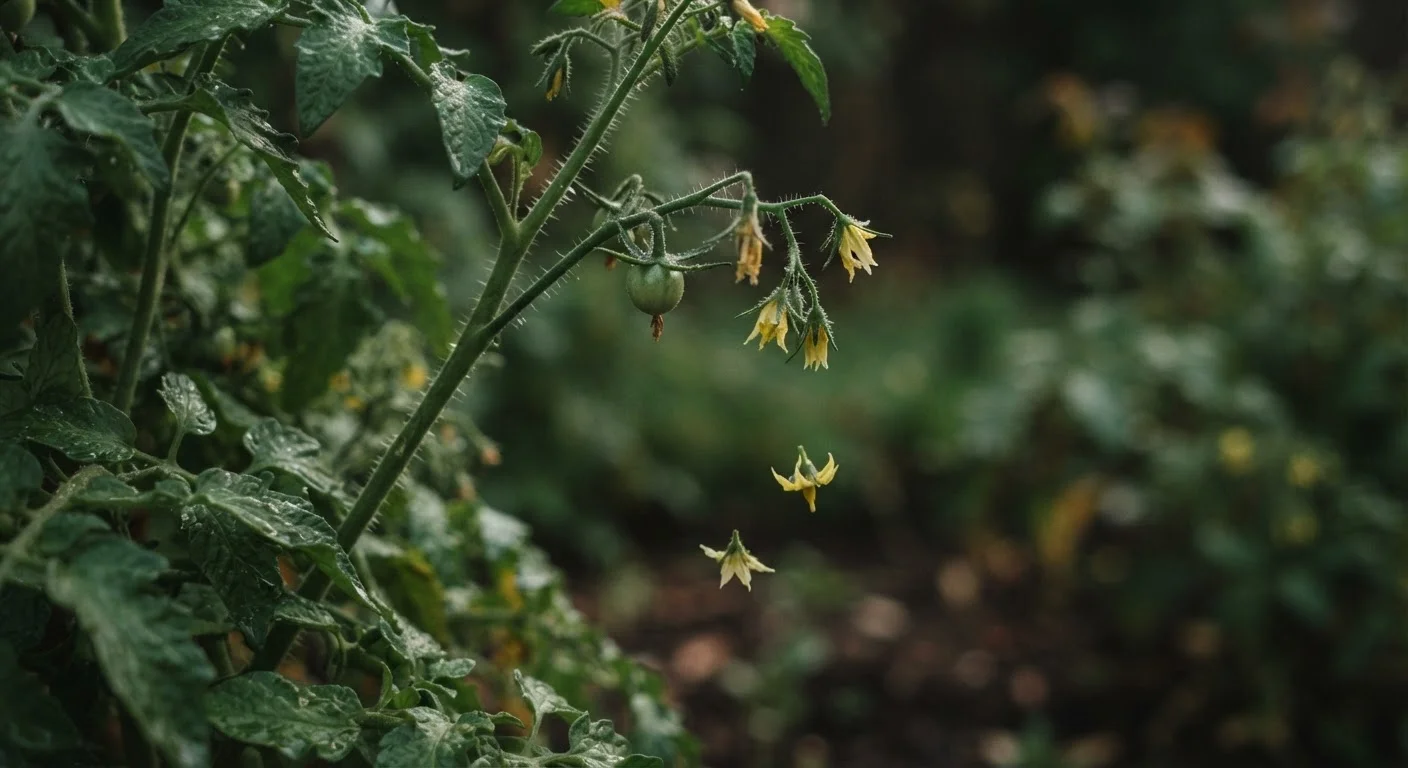
Photo credit: ExplorerGrid.com | Endless Grid Of Factual Content
In this article
Blossom drop frustrates many home growers. Learn the environmental and cultural reasons it happens and what you can adjust to get fruit set.
Key Takeaways
- Tomato blossom drop is almost always caused by environmental stress, not disease or pest damage.
- Temperature extremes — both too hot and too cold — are the leading cause of failed fruit set.
- Inconsistent watering and over-fertilizing with nitrogen are two of the most correctable cultural mistakes.
- Most blossom drop problems resolve once the underlying stressor is identified and addressed.
- Healthy pollination depends on gentle air movement and daytime temperatures between roughly 55°F and 85°F.
What Blossom Drop Is and Why It Matters
Tomato blossom drop describes exactly what it sounds like: flower clusters fall from the plant before they develop into fruit. For home gardeners who have waited weeks for those first yellow blooms to appear, watching them drop to the soil is disheartening. Understanding the underlying biology helps put the problem in perspective.
Tomatoes are self-pollinating plants. Each flower contains both male and female parts, and pollen must transfer within the bloom — typically shaken loose by wind or bees — for fertilization to occur. When the plant detects that environmental conditions make successful fruit development unlikely, it sheds the blossom as a survival strategy, conserving resources for a more favorable moment.
The good news is that blossom drop is almost never caused by disease, and the conditions that trigger it are almost always within a gardener's ability to influence.
Blossom Drop Is a Symptom, Not a Disease
Tomatoes shed blossoms as a stress response — the plant is conserving energy when conditions aren't right for successful fruit development. Applying pesticides or fungicides will not solve blossom drop. Focus on identifying and correcting the environmental or cultural stressor instead.
The Most Common Mistakes That Cause Blossom Drop
Most cases of tomato blossom drop trace back to one or more of five correctable mistakes. Understanding why each happens — and what to do instead — puts you back in control of the season's harvest.
Exposing plants to temperature extremes during bloom.
Why it happens: Gardeners often transplant or plant seedlings on a schedule tied to the calendar rather than actual soil and air temperature conditions. Tomatoes are particularly sensitive — pollen becomes non-viable above roughly 95°F or below about 55°F at night.
Watering inconsistently, swinging between drought stress and overwatering.
Why it happens: Home gardeners often water reactively — waiting until plants look wilted — rather than maintaining even soil moisture. Erratic soil moisture disrupts nutrient uptake and sends a stress signal that triggers blossom abortion.
Over-fertilizing with nitrogen once flowering begins.
Why it happens: Many gardeners assume that more fertilizer means more production. Nitrogen is critical early in the season for strong leaf and stem growth, but excessive nitrogen during the bloom stage causes the plant to prioritize vegetative growth over reproduction.
Planting in a location with poor air circulation.
Why it happens: Tomatoes are self-pollinating but rely on physical vibration — from wind or pollinators — to release pollen within the flower. Plants crammed into tight corners or against fences can sit in still air, reducing effective pollination.
Ignoring relative humidity extremes during bloom.
Why it happens: Humidity levels that are either very high or very low interfere with pollen viability and transfer. This factor is often overlooked because it is less visible than wilting or yellowing leaves.
55°F–85°F
Ideal daytime temperature range for tomato fruit set
University extension programs widely cite this range as optimal for pollen viability and successful pollination in tomatoes.
40%–70%
Relative humidity range that supports healthy pollen transfer
Outside this humidity window, tomato pollen can clump or dry out, significantly reducing fruit set rates.
Practical Steps to Encourage Fruit Set This Season
Once you've identified the likely stressor, most plants recover and resume setting fruit within a week or two of improved conditions. Here are habits worth building into your regular garden routine:
- Check nighttime temperatures before and during bloom periods; be ready with row covers if a cold snap is forecast.
- Mulch deeply — 3 to 4 inches of straw or shredded wood — to buffer soil temperature and retain moisture evenly.
- Shake flowering stems gently in the morning on still days to assist pollination.
- Adjust your fertilizer as soon as the first flower clusters appear, reducing nitrogen and increasing phosphorus.
- Water on a schedule rather than by appearance alone; a simple soil moisture meter can take the guesswork out of timing.
Blossom drop is frustrating, but it is also one of the clearest feedback signals a tomato plant gives you. Treat each dropped flower as useful diagnostic information rather than a failure, and you will be better positioned for a productive harvest.
Avoid Excess Nitrogen During Flowering
Applying a high-nitrogen fertilizer once your tomatoes begin to flower redirects the plant's energy toward leaf growth instead of fruit set. If your plants look lush and dark green but produce few fruits, excess nitrogen is a likely culprit. Switch to a fertilizer with a higher middle number (phosphorus) once blossoms appear.

Author
Home & Garden Editorial Team
Home & Garden Editorial Team is the collective byline for our editorial team and contributor network. Articles published under this byline or an editorial pen name are researched, written, and reviewed according to our editorial standards for clarity, consistency, and independence before publication.
View all articles →