
Credit Scores Decoded: What the Number Actually Measures
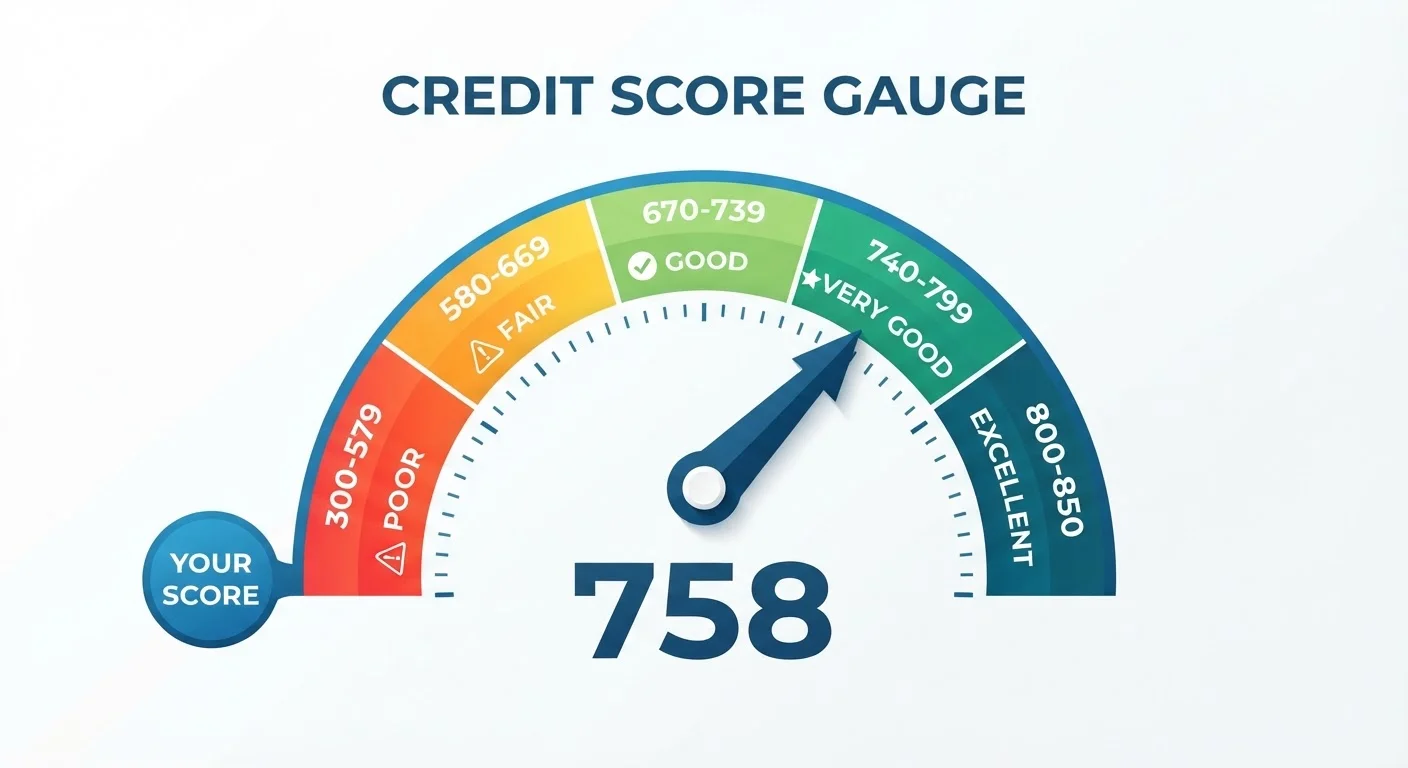
Photo credit: ExplorerGrid.com | Endless Grid Of Factual Content
In this article
Learn what goes into your credit score, how each factor is weighted, and why lenders care so much about three digits.
Key Takeaways
- Payment history is the single biggest factor, accounting for roughly 35% of a FICO Score.
- Credit utilization — how much of your available credit you use — makes up about 30% of your score.
- A longer credit history generally helps your score, but new accounts can temporarily lower it.
- Hard inquiries from loan applications have a small, short-term negative effect on your score.
- Your score is calculated from your credit report, but the two are not the same thing.
- Most lenders consider scores above 670 to be good; scores above 740 typically unlock the most favorable terms.
The Five Factors Inside Your Score
A credit score isn't arbitrary — it's a formula built from specific, measurable behaviors recorded on your credit report. The FICO model, which most major lenders use, breaks those behaviors into five categories, each weighted differently.
- Payment history (35%): Whether you pay on time is the most heavily weighted factor. Even one missed payment can cause a noticeable drop, especially if your credit history is thin.
- Amounts owed / Credit utilization (30%): This measures how much of your available revolving credit — mainly credit cards — you're currently using. Using a high percentage signals financial strain to lenders. Staying below 30% of your limit is widely recommended; lower is generally better.
- Length of credit history (15%): Older accounts contribute positively. Scoring models look at the age of your oldest account, your newest account, and the average age of all accounts combined.
- Credit mix (10%): Having a variety of credit types — credit cards, installment loans, a mortgage — shows you can manage different forms of borrowing responsibly.
- New credit / Hard inquiries (10%): Applying for several new credit accounts in a short period can suggest financial distress. Each application triggers a hard inquiry, which can temporarily lower your score by a small amount.
35%
Weight of payment history in FICO Score
According to myFICO.com, payment history is the single largest factor in the standard FICO scoring model.
300–850
Standard FICO Score range
The most widely used FICO scoring range, where higher scores indicate lower credit risk to lenders.
~200M
US consumers with scoreable credit files
The Consumer Financial Protection Bureau estimates that the vast majority of American adults have enough credit history to generate a score.
Understanding these weights helps you prioritize: since payment history and utilization together account for nearly two-thirds of your score, those are the levers most worth focusing on.
Why Lenders Care So Much About Three Digits
Lending is fundamentally a bet on future behavior. A lender extending a $20,000 auto loan needs some confidence you'll repay it. Your credit score compresses years of financial behavior into a single, comparable number — making it fast and consistent to evaluate millions of applicants.
The score doesn't just determine whether you're approved; it often determines the terms you receive. Borrowers with higher scores typically qualify for lower interest rates. Over the life of a 30-year mortgage, a difference of even half a percentage point in rate can translate to tens of thousands of dollars in total interest paid.
That said, your credit score is one input, not the whole picture. Lenders also weigh income, employment stability, and your debt-to-income ratio. Our overview of what lenders look at beyond the credit score covers these additional factors in detail.
Monitor Your Score Without Obsessing
Checking your credit score monthly through your bank, credit union, or a free monitoring service is enough to catch meaningful changes without creating anxiety over normal fluctuations. Focus on trends over several months rather than reacting to single-point swings. A score that rises steadily over a year matters far more than week-to-week noise.
Common Misconceptions That Cost People Points
Several widely held beliefs about credit scores are simply wrong — and acting on them can backfire.
Carrying a balance helps your score
This is false. Paying your balance in full each month does not hurt your score. What matters is that the account shows activity, not that you're paying interest to the lender.
Closing old accounts is good housekeeping
Closing an old, unused credit card can actually lower your score in two ways: it reduces your total available credit (raising your utilization ratio) and shortens your average account age. Unless the card carries a fee you can't justify, leaving it open is usually the better move.
Checking your score hurts it
Checking your own credit generates a soft inquiry, which has no impact on your score. You can review your score as often as you like. You're entitled to a free credit report from each of the three major bureaus annually through AnnualCreditReport.com — and reviewing it for errors is genuinely useful.
For a thorough walkthrough of what your report actually contains, see our guide to reading your credit report.
Building or Rebuilding Credit Deliberately
Whether you're starting from scratch or recovering from past financial difficulty, the same principles apply: consistent on-time payments and controlled utilization are the fastest legitimate paths to a stronger score.
Secured credit cards — where you deposit funds as collateral — are commonly used by people with limited or damaged credit histories. Credit-builder loans offered by some credit unions work similarly. In both cases, the key is that the account is reported to the credit bureaus and you pay reliably.
Time also matters. Negative items lose impact as they age, and a growing record of positive behavior steadily offsets past missteps. There is no legal shortcut that accelerates this process; any service claiming to instantly erase accurate negative information is misleading you.
If your credit history is brand new, becoming an authorized user on a family member's older, well-managed account can add positive history to your report — though the primary cardholder's behavior on that account affects you too.
This article is for general informational and educational purposes only and does not constitute personalized financial advice. For guidance specific to your situation, consider consulting a nonprofit credit counselor or a licensed financial professional.
Frequently Asked Questions

Author
Personal Finance Editorial Team
Personal Finance Editorial Team is the collective byline for our editorial team and contributor network. Articles published under this byline or an editorial pen name are researched, written, and reviewed according to our editorial standards for clarity, consistency, and independence before publication.
View all articles →