
The 50/30/20 Rule Explained: A Framework, Not a Formula
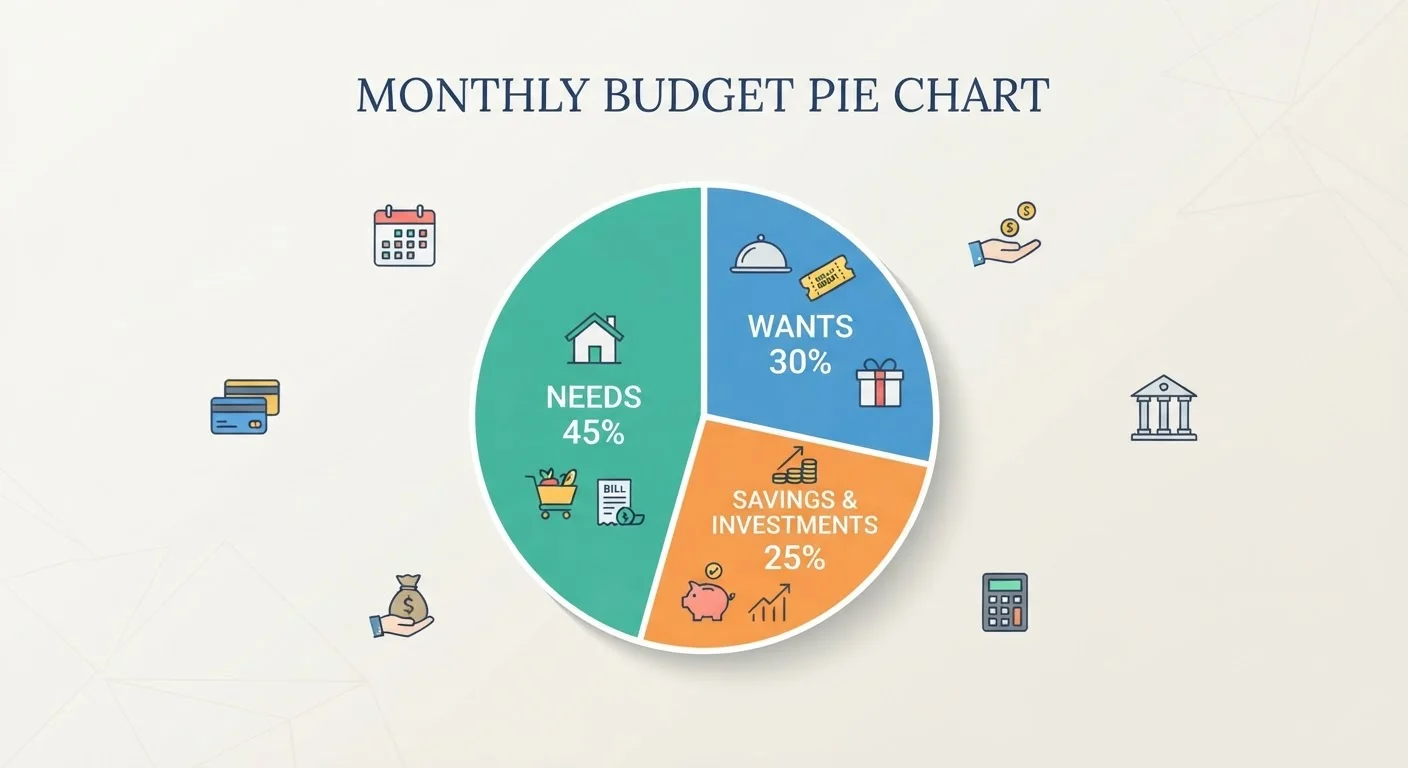
Photo credit: ExplorerGrid.com | Endless Grid Of Factual Content
In this article
The 50/30/20 budgeting rule is widely cited — but what does it actually mean, and does it fit your real financial situation?
Key Takeaways
- The 50/30/20 rule splits after-tax income into needs, wants, and savings or debt repayment.
- It is a guideline, not a rigid rule — your actual percentages may need to differ based on income and location.
- High housing costs or low income can make the 50% needs target unrealistic for many Americans.
- The framework is most useful as a starting diagnostic, not a permanent prescription.
- Adjusting the percentages to fit your situation is not only acceptable — it is often necessary.
Where the Rule Comes From
The 50/30/20 framework traces back to All Your Worth: The Ultimate Lifetime Money Plan, published in 2005 by Elizabeth Warren and Amelia Warren Tyagi. Their core argument was that financial stress often stems not from reckless spending but from a mismatch between fixed obligations and income. They proposed a simple ratio as a reality check, not a strict prescription.
Today the rule is cited frequently in personal finance education because it is easy to remember and requires no spreadsheet to apply. For a broader look at how it compares to other methods, see budgeting approaches compared. Understanding its origins helps clarify what it was designed to do — and what it was not.
Breaking Down the Three Categories
50% — Needs: This covers non-negotiable expenses. Housing, utilities, groceries, health insurance, minimum loan payments, and basic transportation all fall here. The goal is to keep these fixed costs at or below half of take-home pay. If they exceed 50%, you have less flexibility to absorb financial shocks.
30% — Wants: Discretionary spending that improves quality of life but is not strictly essential. Streaming services, dining out, travel, hobbies, and clothing beyond basic needs fit here. This is the most flexible category — and the first place to look if your needs spending runs high.
20% — Savings and Debt Repayment: This bucket targets your financial future. Emergency fund contributions, retirement account deposits, and above-minimum debt payments all belong here. Prioritizing this category consistently is what builds long-term financial stability.
37%
Americans with no emergency savings
A Bankrate survey found roughly 37% of U.S. adults could not cover a $400 emergency expense from savings alone, underscoring why the savings bucket matters.
30%+
Renters spending over 30% on housing alone
According to U.S. Census Bureau data, nearly half of all renters are cost-burdened, spending more than 30% of income on housing — making the 50% needs target difficult before other bills are counted.
20%
Recommended savings and debt repayment share
Personal finance educators widely cite saving at least 15–20% of income as a long-term benchmark for retirement readiness and financial resilience.
One practical starting point: list every monthly expense, assign each to one of the three categories, then compare totals to your actual after-tax income. That diagnostic alone is valuable, even before you change a single spending habit.
Why the Numbers May Not Work for You — And That's Okay
The 50/30/20 rule was built around a median American income and cost structure that does not reflect every household's reality. Housing costs in high-cost cities frequently push the needs category well above 50% before a single discretionary dollar is spent. A single parent, a recent graduate with student loans, or someone supporting extended family may find the math simply does not fit.
Rather than abandoning the framework, treat these gaps as information. If needs consume 65% of income, the question becomes: which needs can be reduced over time (refinancing debt, finding lower-cost housing, reducing insurance costs), and how much can savings realistically look like right now — even if it is 5% instead of 20%?
Start With What's Achievable
If saving 20% feels out of reach right now, start with whatever percentage is realistic — even 3% or 5%. Automating a small, consistent transfer to savings on payday builds the habit and grows over time as your income or expenses shift. Consistency matters more than hitting the exact target immediately.
The framework's value is in creating intentional categories, not in the specific numbers. Saving 10% consistently will build wealth. Saving 0% because 20% felt unachievable builds nothing.
Using the Rule as a Starting Diagnostic
Many people find the 50/30/20 rule most useful not as a permanent structure but as a first-pass audit. Run through one month of bank and credit card statements, tag each transaction as a need, want, or savings contribution, and total each column. The result usually surprises people — wants spending is often higher than expected, and the savings bucket is often the thinnest.
From there, you can set adjusted targets that respect your actual constraints while still moving toward the 20% savings goal over time. If you want to go deeper into the setup process, our household budget setup checklist walks through everything to gather and calculate before your budget goes live.
For those who want more control than the 50/30/20 rule provides, comparing it to zero-based budgeting can clarify which approach fits your temperament. Alternatively, pay-yourself-first budgeting offers a simpler automation-focused approach worth understanding.
This article is for general informational and educational purposes only and does not constitute personalized financial advice. Consult a qualified financial professional for guidance tailored to your specific circumstances.
Frequently Asked Questions

Author
Personal Finance Editorial Team
Personal Finance Editorial Team is the collective byline for our editorial team and contributor network. Articles published under this byline or an editorial pen name are researched, written, and reviewed according to our editorial standards for clarity, consistency, and independence before publication.
View all articles →