
New Orleans Beyond Bourbon Street: Neighborhoods Worth Knowing Before You Go
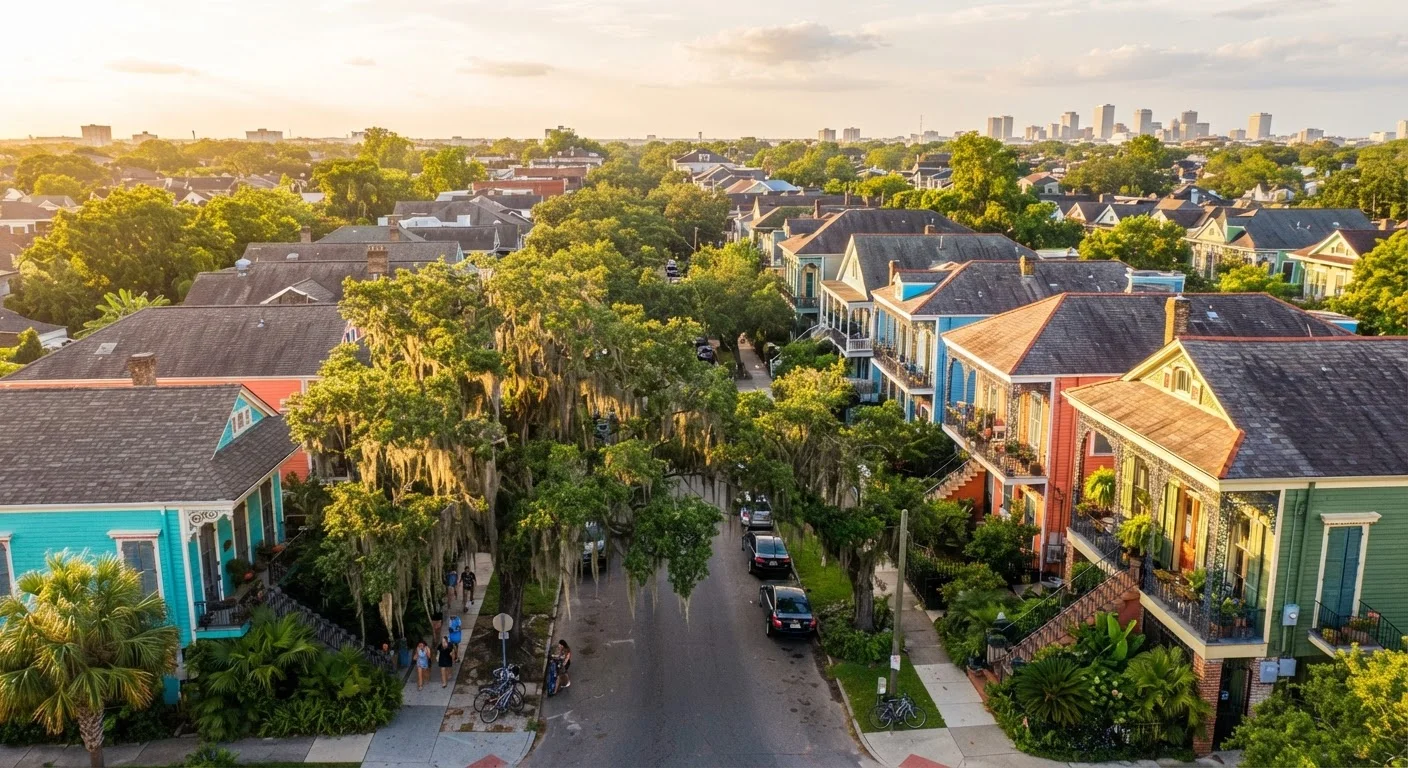
Photo credit: ExplorerGrid.com | Endless Grid Of Factual Content
In this article
- Why Neighborhoods Define Your New Orleans Trip
- Tremé: America's Oldest Black Neighborhood
- Marigny and Bywater: Where the Locals Go for Live Music
- Garden District and Uptown: Stately, Shaded, and Surprisingly Accessible
- Mid-City and Bayou St. John: The Everyday New Orleans
- How to Use This Information to Plan Smarter
Discover the distinct character of New Orleans' lesser-known districts—from Tremé to Bywater—and what each brings to your visit.
Key Takeaways
- New Orleans has over a dozen distinct neighborhoods, each with its own food, music, and architectural identity.
- Tremé is widely recognized as one of the oldest African American neighborhoods in the United States.
- The Marigny and Bywater attract visitors who want live music and creative culture away from French Quarter crowds.
- Uptown and the Garden District feature grand antebellum mansions and a quieter, residential atmosphere.
- Where you stay significantly shapes your New Orleans experience — choose a neighborhood that matches your travel style.
- Streetcar lines connect many key districts, making car-free exploration genuinely practical.
Why Neighborhoods Define Your New Orleans Trip
New Orleans doesn't operate like most American cities. Its culture isn't concentrated in one downtown core — it's spread across a patchwork of neighborhoods that each evolved under different flags, languages, and communities. Knowing the map before you land isn't just useful; it's the difference between a trip that skims the surface and one that sticks with you.
Just as a first-timer to New York needs to understand how its boroughs fit together — something we unpack in our guide to what to realistically expect on your first NYC trip — understanding New Orleans' districts will sharpen every decision you make, from where to book a room to where to eat breakfast.
Neighborhood Boundaries Shift Block by Block
In New Orleans, the transition between neighborhoods can happen mid-block, and locals sometimes use historical names that don't appear on modern maps. If you're navigating by neighborhood name alone, cross-reference with a current street map. The Faubourg Marigny, for instance, is often just called 'the Marigny' by locals and is distinct from the Bywater despite sharing a similar cultural vibe.
Tremé: America's Oldest Black Neighborhood
Just beyond the French Quarter's back edge lies Tremé (pronounced treh-MAY), a neighborhood whose musical and cultural contributions are almost impossible to overstate. This is the birthplace of jazz as a living community tradition — not a museum exhibit. Second line parades still roll through its streets on weekends, brass bands practice in front yards, and the New Orleans African American Museum anchors a deep history of free people of color who shaped the city's identity for centuries.
Tremé is not a polished tourist district. That's precisely its value. Visitors who wander here find authentic neighborhood life, neighborhood bars, and a spiritual connection to the music they'll hear everywhere else in the city.
13+
Recognized distinct neighborhoods in New Orleans
The City of New Orleans officially recognizes more than a dozen distinct neighborhoods, each with its own civic associations and character.
1,300 acres
Size of City Park in Mid-City
New Orleans' City Park covers approximately 1,300 acres, making it one of the largest urban parks in the United States.
1835
Year St. Charles streetcar line began operating
The St. Charles Avenue streetcar line began service in 1835 and is widely cited as one of the oldest continuously operating streetcar lines in the world.
Marigny and Bywater: Where the Locals Go for Live Music
Downriver from the French Quarter, the Faubourg Marigny is home to Frenchmen Street — a stretch of live music venues that locals genuinely prefer to Bourbon Street. On any given night, jazz, funk, brass band, and blues spill out of open doors onto the sidewalk. The crowds are mixed, the cover charges are low or nonexistent, and the music is rarely performative.
A few blocks further, Bywater offers a slower, more residential version of that same creative energy. Art studios, community gardens, and inventive restaurants occupy converted shotgun houses. It's a neighborhood for people who want to feel like they're actually living in New Orleans for a few days rather than visiting it.
Garden District and Uptown: Stately, Shaded, and Surprisingly Accessible
Cross Canal Street heading upriver and the city's architecture shifts dramatically. The Garden District is defined by American-era wealth: sweeping Greek Revival and Italianate mansions set behind wrought-iron fences and curtains of Spanish moss. Walking tours here focus on architecture and local lore, and the neighborhood's main commercial corridor, Magazine Street, is lined with independent shops, bakeries, and neighborhood restaurants.
Further upriver, Uptown stretches toward Tulane and Loyola universities, giving it a lively academic energy alongside quiet residential blocks. The St. Charles Avenue streetcar — one of the oldest continuously operating streetcar lines in the world — runs the full length and is itself a sightseeing experience worth taking slowly.
Mid-City and Bayou St. John: The Everyday New Orleans
Mid-City sits at the geographic heart of the city, and it's where many locals actually live, shop, and eat. Bayou St. John, a narrow waterway cutting through the neighborhood, is flanked by picnic blankets, kayakers, and neighborhood dogs on any warm afternoon. The area around it has some of the city's most beloved neighborhood restaurants — the kind of places with no signage strategy and a loyal local following built over decades.
City Park, one of the largest urban parks in the country, anchors the northern edge of Mid-City and contains the New Orleans Museum of Art, walking trails, and a stunning grove of ancient live oak trees. It's an easy half-day that most short-stay visitors skip entirely — and completely shouldn't.
How to Use This Information to Plan Smarter
Once you understand New Orleans' neighborhood geography, your planning decisions get much clearer. Families or architecture lovers tend to gravitate toward the Garden District or Uptown. Music-first travelers often anchor in the Marigny. History and culture seekers should carve out time for Tremé regardless of where they stay.
A practical approach: pick a home base that fits your vibe, then plan at least one dedicated half-day in each other district. Use the streetcar where routes align, and factor in that New Orleans is a walking city — but a hot, humid one. Mornings are the best time to cover ground on foot.
The city rewards travelers who slow down and let neighborhoods reveal themselves block by block. Bourbon Street will always be there. These neighborhoods are where the real story lives.
Frequently Asked Questions

Author
Travel & Trips Editorial Team
Travel & Trips Editorial Team is the collective byline for our editorial team and contributor network. Articles published under this byline or an editorial pen name are researched, written, and reviewed according to our editorial standards for clarity, consistency, and independence before publication.
View all articles →