
Car Pricing Jargon Decoded: MSRP, Invoice, Market Value, and More
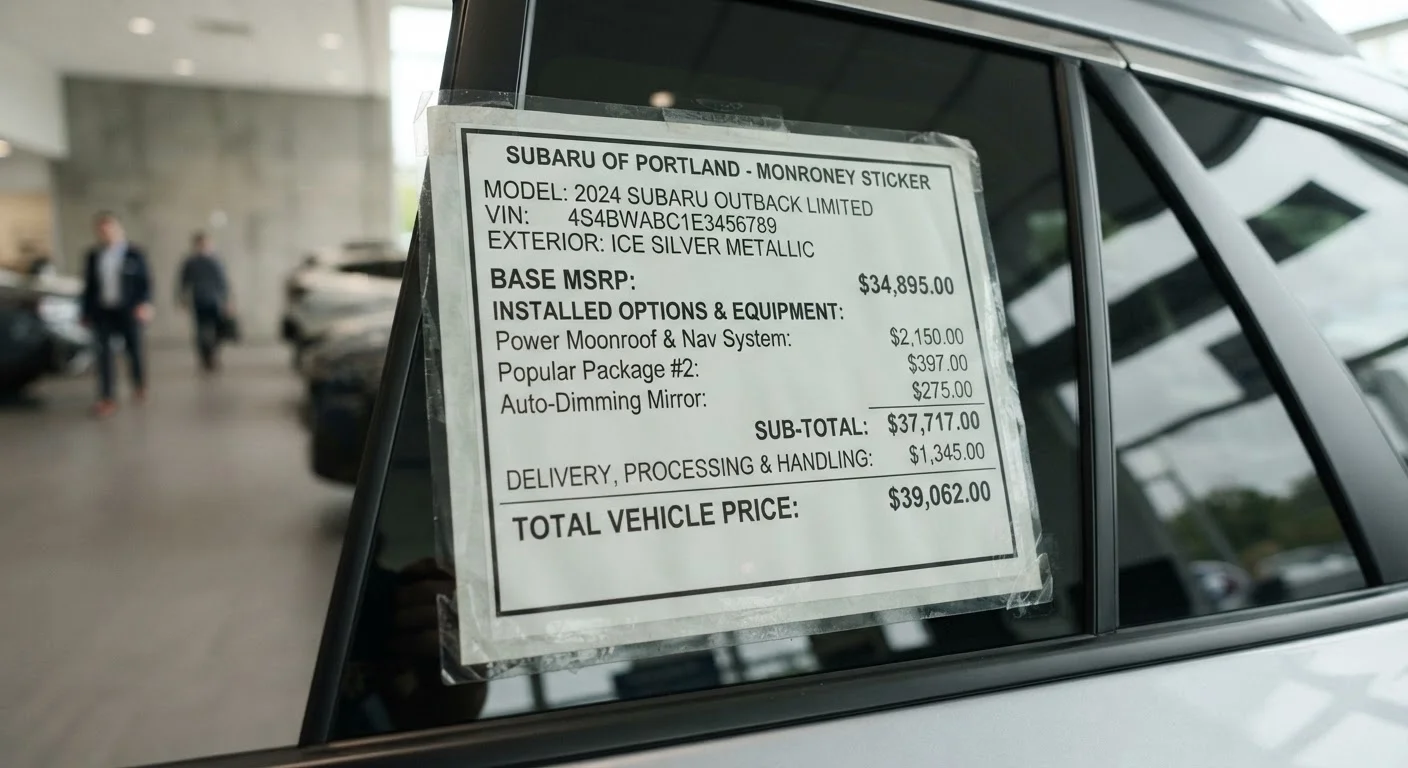
Photo credit: ExplorerGrid.com | Endless Grid Of Factual Content
In this article
A plain-language reference to the pricing terms you'll encounter on the lot and online—so you know what's negotiable and what isn't.
The Pricing Landscape: Why the Numbers Multiply
Walk onto a dealership lot or open a vehicle listing online, and you'll quickly encounter a stack of overlapping price figures — each calculated differently and carrying different negotiating implications. MSRP, invoice, dealer cost, market value, out-the-door price: these aren't interchangeable. Using the wrong one as your starting point can cost you hundreds or thousands of dollars.
This reference decodes the terms you're most likely to encounter, explains where each number comes from, and clarifies which ones have real room to move. For a deeper look at how these dynamics play out at the negotiating table, see why buyers overpay at dealerships.
MSRP
Manufacturer's Suggested Retail Price — the price the automaker recommends dealers charge. It appears on the window sticker but is a starting point for negotiation, not a fixed price.
Invoice Price
The price the dealer nominally paid the manufacturer for the vehicle. It's not the dealer's true cost because holdback payments and manufacturer incentives reduce what the dealer ultimately pays.
Holdback
A percentage of MSRP (typically 1–3%) that the manufacturer pays back to the dealer after a sale. It's a built-in profit buffer that makes invoice price deals still profitable for the dealer.
Market Value
What comparable vehicles are actually selling for in a given local market, based on real transaction data. This figure reflects supply and demand more accurately than MSRP or invoice.
Out-the-Door Price
The complete amount you pay to drive the vehicle home, including the negotiated price, taxes, title, registration, and any dealer fees. Always use OTD when comparing offers.
Market Adjustment
A dealer-added premium above MSRP applied to high-demand or limited-supply vehicles. It is a dealership practice, not a manufacturer pricing element, and may be negotiable depending on market conditions.
Doc Fee
A documentation fee charged by the dealer to handle paperwork. State laws vary on whether and how much dealers can charge; in states without caps, this fee is largely dealer discretion.
Dealer Cost
An estimate of what a dealer actually pays for a vehicle after accounting for holdback and incentives. It is more accurate than invoice price as a proxy for the dealer's real break-even point.
Key Pricing Terms, Defined
The terms below represent the core vocabulary of vehicle pricing. Understanding how they relate to each other is more useful than memorizing any single figure.
| MSRP Role | Starting point for negotiation, not a fixed price |
| Typical Holdback Range | 1–3% of MSRP (General industry range; varies by manufacturer) |
| Doc Fee Range (uncapped states) | Often $300–$800 (Varies by state and dealership) |
| Most Useful Comparison Metric | Out-the-door (OTD) price |
| Fixed Costs in Transaction | State taxes, title fees, registration (Set by law; not negotiable) |
| Market Value Source | Real transaction data, not sticker prices (Available via automotive research tools) |
From Sticker to Street: How the Numbers Connect
MSRP is the manufacturer's suggested retail price — the number printed on the window sticker. It's a starting point, not a ceiling. On slow-selling models, dealers routinely accept offers below MSRP; on high-demand vehicles, they may add a market adjustment above it.
Invoice price is what the dealer nominally paid the manufacturer. It sounds like the dealer's floor, but it isn't — automakers pay dealers holdback (typically 1–3% of MSRP) after the sale, plus various manufacturer-to-dealer incentives. A deal at invoice can still be profitable for the dealer.
Dealer cost (sometimes called net cost or true cost) attempts to account for holdback and incentives, making it a more accurate picture of the dealer's actual break-even point. Published estimates of dealer cost are available through automotive research tools, though exact figures vary by region and sales volume.
Market value reflects what buyers in a given area are actually paying for a specific vehicle at a specific time. It's shaped by supply, demand, trim availability, and local competition — and it's the most practically useful number when assessing whether a quoted price is reasonable.
Out-the-door (OTD) price is the total you pay before driving away: vehicle price plus taxes, title, registration, and dealer fees. Always negotiate and compare using OTD figures. For a full breakdown of what those added costs include, see hidden fees that inflate the real price of buying a car.
What's Negotiable — and What Isn't
Not every line on a purchase agreement has flexibility. Understanding which costs are fixed by law and which are dealership discretion helps you focus your energy.
- State and local taxes: Set by law. Non-negotiable.
- Title and registration fees: Also government-mandated. Fixed.
- Documentation (doc) fee: Varies widely by state — some cap it by law, others don't. In uncapped states, this fee (often $300–$800) is effectively dealer revenue and may have some flexibility.
- Dealer add-ons: Items like paint sealant, fabric protection, or nitrogen tire fills are almost always negotiable or removable. These frequently carry very high margins.
- The vehicle price itself: Subject to negotiation within the bounds of market conditions. On in-demand vehicles with low inventory, expect limited movement; on slower models near model-year-end, meaningful discounts are more common.
If you're financing, keep in mind that the interest rate and loan term interact directly with your total cost — sometimes more significantly than the negotiated vehicle price itself. How financing terms shape what you really pay explains this clearly.
Common misconceptions about negotiation — like the idea that you should lead with your monthly payment target — can actually work against you. Common myths about car negotiation walks through which tactics backfire and why.
This article provides general educational information about vehicle pricing terminology and is not a substitute for personalized financial or legal advice. Pricing dynamics vary by market, vehicle, and time. Verify specific figures with qualified sources before making any purchase decision.

Author
Automotive Editorial Team
Automotive Editorial Team is the collective byline for our editorial team and contributor network. Articles published under this byline or an editorial pen name are researched, written, and reviewed according to our editorial standards for clarity, consistency, and independence before publication.
View all articles →