
Private Seller vs. Dealership: Weighing Where to Buy Your Next Car
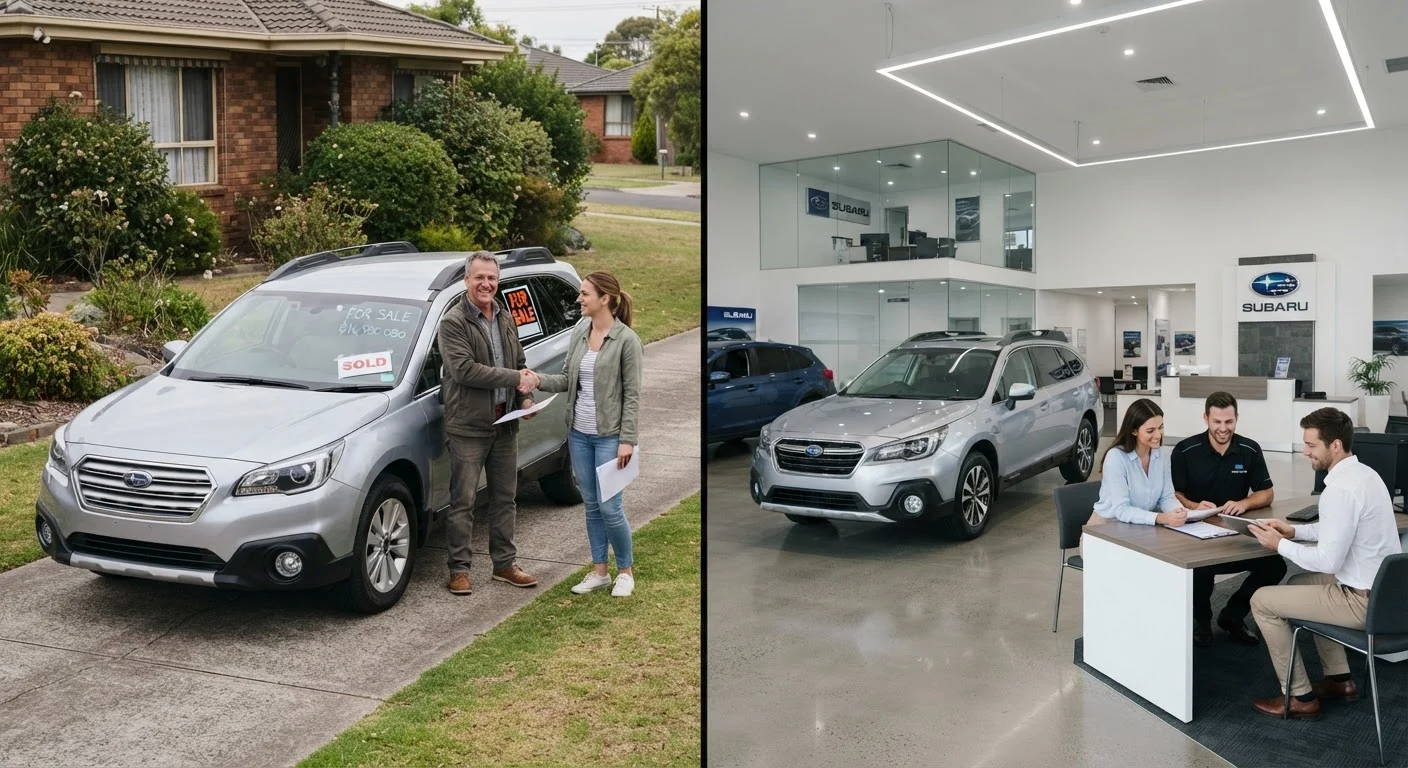
Photo credit: ExplorerGrid.com | Endless Grid Of Factual Content
In this article
Compare the trade-offs of buying from a private seller versus a dealership—price, paperwork, protections, and peace of mind.
Key Takeaways
- Private sellers typically list vehicles closer to market value, leaving more room to negotiate on price.
- Dealerships offer certified inspections, warranties, and in-house financing that private sales cannot match.
- Private transactions require buyers to handle title transfer, lien checks, and inspection independently.
- As-is sales are standard in private transactions — there is generally no recourse after the deal closes.
- Dealer fees (documentation, prep, dealer add-ons) can add hundreds to thousands of dollars to the sticker price.
- Your comfort with risk, research, and paperwork should guide which channel suits your situation.
Price: What Each Channel Actually Costs You
The price difference between a private listing and a dealer listing for the same vehicle is real — but it's not always as large as buyers expect once you account for everything involved.
Private sellers set prices without the overhead of a showroom, staff, or reconditioning budget, which often means listings sit closer to raw market value. Negotiation is common, and motivated sellers may accept offers well below asking. That said, a well-informed private seller who has done their homework may price accurately and hold firm.
Dealerships, by contrast, build overhead into their margins. Beyond the sticker price, buyers routinely encounter documentation fees (commonly $100–$500 depending on the state), dealer prep charges, and optional add-ons pushed in the finance office. Understanding how those layers work is important — see our guide to avoiding overpaying at dealerships for a detailed breakdown.
| Criterion | Private Seller | Dealership |
|---|---|---|
| Typical price | Closer to market value; negotiable | Higher; includes overhead and fees |
| Warranty | None (as-is) | CPO or limited dealer warranty available |
| Financing | Buyer arranges independently | In-house financing options available |
| Title & paperwork | Buyer manages transfer and DMV filing | Dealer handles most paperwork in-house |
| Vehicle history | Buyer must obtain independently | Often provided; CPO includes inspection records |
| Trade-in option | Not available | Available (value varies) |
| Consumer protections | Minimal; as-is is standard | State licensing laws apply; paper trail exists |
| Negotiation dynamic | Direct with owner; often flexible | Structured; multiple cost levers at play |
Protections, Warranties, and What Happens When Something Goes Wrong
This is where the two channels diverge most sharply. Private vehicle sales in the US are almost universally completed as-is. Once you drive away, you own the problem — mechanical, cosmetic, or otherwise. There is no implied warranty, no return policy, and generally no legal recourse unless the seller committed outright fraud (a high bar to prove).
Dealerships, particularly franchised new-car dealers, are licensed businesses subject to state consumer protection laws. They can offer certified pre-owned (CPO) programs backed by manufacturer warranties, and many carry their own limited used-car warranties. Even when a used vehicle is sold as-is at a dealership, the structured environment creates a paper trail that a handshake deal does not.
For buyers considering financing, the dealership channel also has a built-in advantage: financing is negotiated in the same room. Our article on how dealer financing works explains what to watch for in that process.
Paperwork, Title, and the Logistics of Getting It Done
A private sale requires the buyer to independently verify that the seller actually holds clear title — meaning no outstanding liens. Running a vehicle history report and, ideally, contacting the lender directly if a loan appears is essential. Once payment is made, both parties complete a bill of sale, the seller signs over the title, and the buyer registers the vehicle with their state DMV, paying applicable taxes and fees at that point.
If the seller still carries an auto loan, the process becomes more complex. Our article on selling a car with an outstanding loan covers how that payoff and title transfer actually unfolds.
Dealerships handle most of this in-house. They clear liens, process the title transfer, manage registration paperwork, and in many states collect sales tax on the dealer's behalf. For buyers who find DMV paperwork daunting, this convenience has genuine value — though it's priced into the transaction.
State Rules on Title Transfer Vary
Each US state sets its own requirements for transferring a vehicle title, including which forms are required, how quickly registration must be completed after purchase, and whether a notary is needed on the bill of sale. Before completing a private sale, check your state's DMV website for the specific steps that apply to your transaction. Errors in title transfer can delay registration or, in rare cases, create legal complications around ownership.
Inspection and Vehicle Condition: Know Before You Commit
Regardless of channel, a pre-purchase inspection (PPI) by an independent mechanic is one of the most cost-effective steps a used-car buyer can take. Expect to pay $100–$200 for a thorough inspection — a fraction of what a hidden transmission or suspension issue could cost post-purchase.
In a private sale, arranging a PPI requires seller cooperation; most honest sellers will agree. If a seller refuses an inspection, treat that as a significant red flag. You'll also want to review a vehicle history report from a reputable provider to check for accident records, odometer rollbacks, and title issues.
At a dealership, CPO vehicles come with manufacturer-defined inspection checklists and are typically reconditioned before sale. Non-CPO used vehicles may have been inspected to varying standards — ask specifically what was checked and request the service records. Even with dealer assurances, an independent inspection on a significant purchase remains worthwhile. For a broader look at long-term ownership costs, including maintenance and upkeep, that context matters when evaluating a used vehicle's condition at the point of sale.

Author
Automotive Editorial Team
Automotive Editorial Team is the collective byline for our editorial team and contributor network. Articles published under this byline or an editorial pen name are researched, written, and reviewed according to our editorial standards for clarity, consistency, and independence before publication.
View all articles →