
Engine Overheating: What's Happening Under the Hood and How to Respond
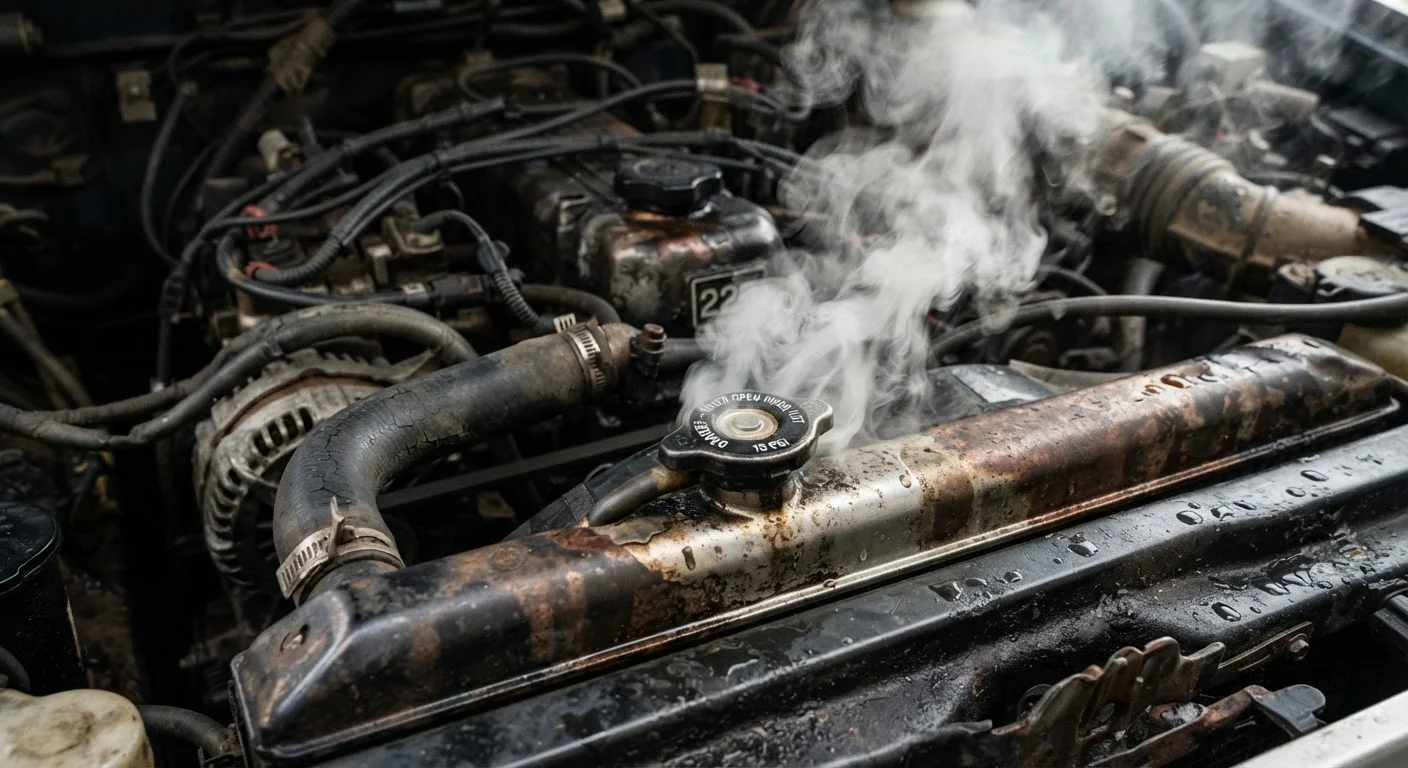
Photo credit: ExplorerGrid.com | Endless Grid Of Factual Content
In this article
An overheating engine can cause serious damage within minutes. Understand the common causes, the warning signs, and the safe steps to take.
Key Takeaways
- An overheating engine can warp cylinder heads or seize completely within minutes of the temperature gauge redlining.
- Low coolant, a failing thermostat, and a broken water pump are the three most common culprits.
- Pull over safely and turn off the engine — never open the radiator cap while the engine is hot.
- Driving even a short distance on an overheating engine can turn a $300 repair into a $3,000 one.
- Regular coolant flushes and hose inspections are the most cost-effective prevention.
Why Engines Overheat — and Why It's Serious
Your engine produces enormous heat as a byproduct of combustion. The cooling system — coolant, radiator, water pump, thermostat, and hoses — exists to manage that heat and keep operating temperature in a safe range, typically between 195°F and 220°F. When any part of that system fails, temperatures climb fast.
The consequences escalate quickly. Sustained overheating can warp aluminum cylinder heads, blow a head gasket (a repair that commonly runs $1,500–$2,500), or in severe cases cause a complete engine seizure — a potential total loss. Understanding what goes wrong makes it far easier to catch problems early. The most common causes include:
- Low or depleted coolant: A leak in a hose, the radiator, or the water pump lets coolant escape. Even a small leak compounds over time. See our guide to car fluids to understand how to check coolant levels and spot warning signs.
- Thermostat failure: The thermostat regulates coolant flow. If it sticks closed, coolant can't circulate through the radiator to shed heat.
- Water pump failure: The water pump drives coolant through the entire system. A worn impeller or broken belt stops circulation entirely.
- Radiator blockage or damage: Clogged fins, internal scale buildup, or physical damage from road debris reduces the radiator's ability to dissipate heat.
- Cooling fan failure: Electric or belt-driven fans pull air through the radiator at low speeds. When they fail, city driving becomes particularly risky.
Catching these issues before they cascade is a core part of managing long-term ownership costs — something worth understanding in the context of lifetime maintenance cost control.
Warning Signs to Watch For
Overheating rarely happens without warning. The key is knowing what to look and listen for:
- Temperature gauge climbing toward the red: This is your clearest signal. If the needle moves significantly above its normal midpoint, act immediately.
- A temperature warning light: Many modern vehicles display a thermometer symbol or a text alert before the gauge reaches critical levels.
- Steam or smoke from under the hood: This usually means coolant is boiling and escaping — pull over immediately.
- Sweet, syrupy smell: Coolant (ethylene glycol) has a distinctive sweet odor. Smelling it while driving often indicates a leak that's dripping onto hot engine components.
- Reduced heater output: Counterintuitively, a sudden loss of cabin heat can signal low coolant, because heater cores rely on hot coolant flow.
Don't Ignore a Rising Temperature Gauge
A temperature gauge that climbs past its normal midpoint is not a warning to monitor — it's a signal to act on immediately. Delaying by even a few minutes at highway speeds can push coolant temperatures past the threshold where head gasket and cylinder head damage begins. When in doubt, pull over.
How to Respond Safely: Step-by-Step
If your temperature gauge spikes or a warning light appears, follow these steps in order. Acting calmly and methodically protects both you and the engine.
Turn off the A/C and turn on the heater
As soon as you notice the temperature gauge rising, switch off the air conditioning immediately — it adds load to the engine. Then turn the cabin heater to its maximum heat setting and set the fan to high. This transfers heat from the engine coolant into the cabin, acting as a secondary radiator and buying you time to pull over safely.
Pull over safely and turn off the engine
Signal, check your mirrors, and move to the nearest safe stopping point — a parking lot, a wide shoulder, or a side street. Once stopped, turn the engine off completely. Do not idle; idling with a compromised cooling system often makes matters worse.
Wait at least 30 minutes before opening the hood
Coolant systems operate under pressure. Opening the hood immediately is safe, and allowing air to reach the engine compartment helps cooling. However, do not touch the radiator cap or any coolant hoses for a minimum of 30 minutes after shutting the engine off. The coolant inside can be well above 250°F and will erupt violently if the cap is removed prematurely.
Check the coolant reservoir level
After waiting, locate the translucent plastic overflow reservoir connected to the radiator — it will have MIN and MAX markings. If the coolant level is low and you have pre-mixed coolant or distilled water available, add it slowly to bring the level to the MIN line. In an emergency, plain water can be used temporarily, but have the system flushed and refilled with the correct coolant type as soon as possible.
Restart the engine and monitor closely — or call for assistance
If the coolant level was low and you've topped it off, restart the engine and watch the temperature gauge carefully for the first few minutes. If it climbs toward the red again, shut the engine off and call for a tow. If the level was normal, the problem lies elsewhere (thermostat, water pump, fan) and driving further risks more damage. When in doubt, a tow truck is always the safer and often cheaper choice.
Once the immediate situation is resolved, have the vehicle inspected by a qualified mechanic before driving it again. Overheating events that seemed minor can leave hidden damage — a pressurized cooling system test and a visual inspection of hoses, the thermostat, and the radiator cap are standard first checks. Repair costs for the underlying cause vary widely, and neglecting them is one of the financial missteps covered in our overview of where car budgets break down.
Prevention: The Maintenance That Keeps Coolant Systems Healthy
Most overheating events are preventable with routine attention to the cooling system. These are the practices that make the biggest difference:
- Coolant flush intervals: Most manufacturers recommend flushing and replacing coolant every 30,000 to 50,000 miles, though extended-life coolants can last longer. Check your owner's manual for the correct interval and coolant type.
- Hose and belt inspection: Rubber hoses and serpentine or timing belts degrade with age and heat. Have them inspected at each major service; replace hoses that feel soft, spongy, or show cracking.
- Radiator cap condition: The cap maintains system pressure, which raises the coolant's boiling point. A worn cap that can't hold pressure effectively lowers that threshold — a simple, inexpensive part worth replacing every few years.
- Check coolant level periodically: A quick look at the translucent overflow reservoir takes seconds and can reveal a slow leak before it becomes an emergency.
Proactive cooling system maintenance is among the highest-return investments an owner can make — prevention consistently costs a fraction of what reactive repairs demand. For a broader framework on managing what you spend across a vehicle's life, see our car ownership costs hub.

Author
Automotive Editorial Team
Automotive Editorial Team is the collective byline for our editorial team and contributor network. Articles published under this byline or an editorial pen name are researched, written, and reviewed according to our editorial standards for clarity, consistency, and independence before publication.
View all articles →