
Why Brake Maintenance Gets Neglected — and What That Actually Risks
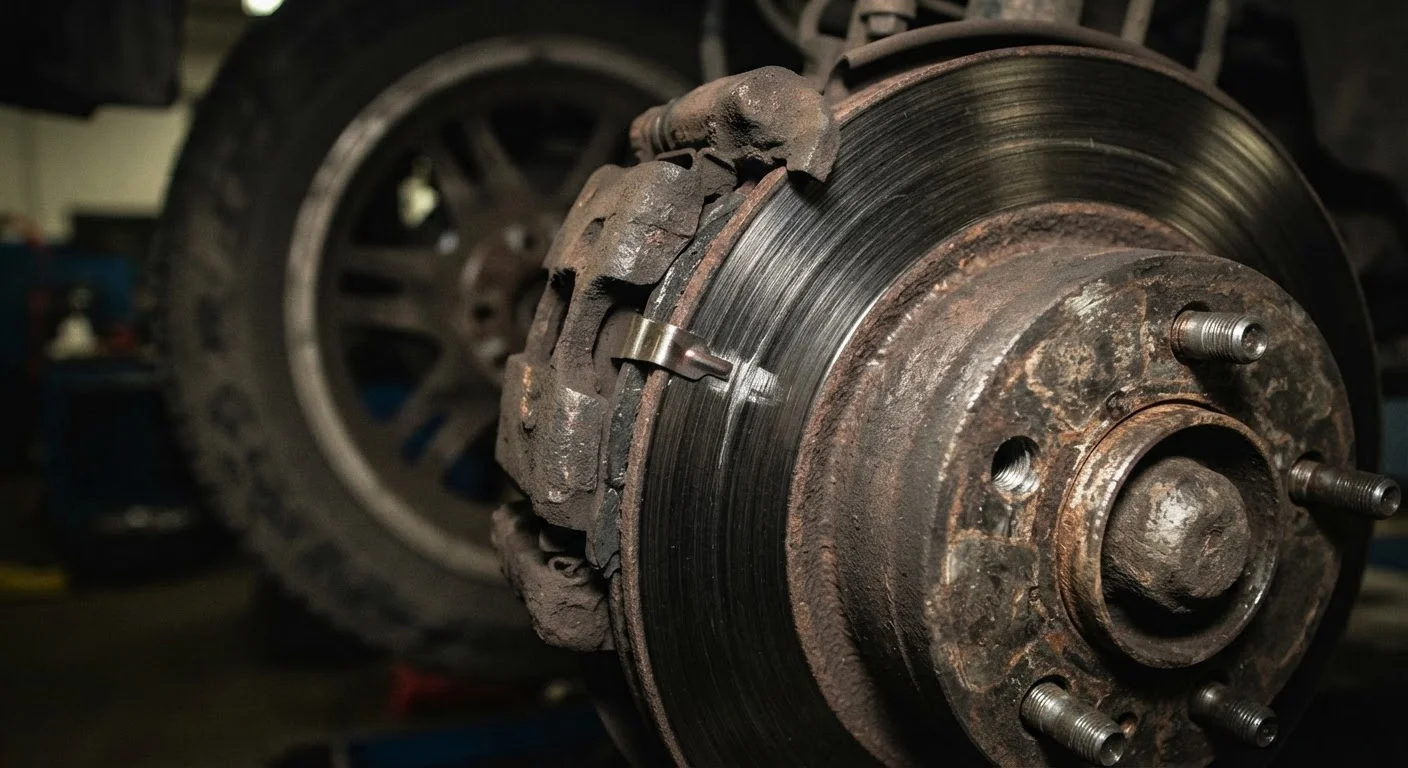
Photo credit: ExplorerGrid.com | Endless Grid Of Factual Content
In this article
Brakes wear gradually, making it easy to postpone service. Understand how brake systems degrade and the safety consequences of waiting too long.
Key Takeaways
- Brake wear is gradual and silent, making it psychologically easy to defer service indefinitely.
- Ignoring brake warning signs doesn't just cost more money — it creates genuine stopping-distance safety risks.
- Pad replacement alone can cost $150–$300 per axle; rotor replacement adds $200–$400 more per axle.
- Most modern vehicles include audible wear indicators designed to alert drivers before damage becomes severe.
- Brake fluid absorbs moisture over time and should be inspected at least every two years.
Why Brake Neglect Is So Common
Unlike a flat tire or dead battery, brake wear rarely announces itself dramatically. Pads thin out over thousands of miles, and the change in stopping performance is so incremental that most drivers adapt without realizing it. This gradual degradation is precisely why brake maintenance is among the most commonly deferred services — not because drivers are reckless, but because the system gives few obvious cues until the problem is already serious.
There's also a cost-avoidance impulse at work. A brake job feels expensive, and when a car seems to be stopping adequately, it's easy to rationalize waiting another few weeks. That reasoning, compounded over months, is how minor pad wear becomes rotor damage and a far larger bill. As detailed in our article on the hidden costs of skipping routine maintenance, deferred service almost never saves money over the long run.
Common Mistakes Drivers Make With Brake Service
Understanding where drivers typically go wrong is the first step toward correcting those patterns. Below are the most frequent — and consequential — errors.
Waiting for a warning light before scheduling brake inspection.
Why it happens: Drivers associate dashboard alerts with urgency, so they treat the absence of a light as confirmation that brakes are fine. Many vehicles, however, don't have pad-wear sensors — only audible metal squealer tabs.
Ignoring the high-pitched squealing sound that signals worn pads.
Why it happens: The sound often appears intermittently at first — sometimes only when the brakes are cold or wet — leading drivers to dismiss it as a temporary quirk rather than a wear indicator.
Replacing only the pads without inspecting or resurfacing the rotors.
Why it happens: Pad-only replacement is less expensive upfront, and shops sometimes present it as the minimum necessary repair. Drivers focused on cost accept it without asking about rotor condition.
Neglecting brake fluid inspection and replacement.
Why it happens: Brake fluid is invisible in normal operation and rarely mentioned in routine service conversations, so most drivers don't know it degrades. Brake fluid is hygroscopic — it absorbs moisture from the air — which lowers its boiling point and introduces corrosion into the hydraulic system.
Assuming all four brakes wear at the same rate.
Why it happens: Front brakes handle 60–70% of stopping force on most vehicles, so they wear significantly faster than rear brakes. Drivers who check only one axle may miss early wear on the fronts or assume a recent rear-brake inspection covers everything.
What Delayed Brake Service Actually Risks
The safety stakes of brake neglect deserve plain language. Worn pads increase stopping distance. On a highway at 60 mph, even an extra few feet of stopping distance can mean the difference between a near-miss and a collision. When metal-on-metal contact begins — pads fully worn through — rotors score and warp, further reducing braking consistency and making stopping unpredictable under hard application.
Severely Worn Brakes Are a Safety Emergency
If you hear a grinding metal-on-metal noise — beyond the initial squeal — brake pads have likely worn through completely and rotor damage is actively occurring. At this stage, braking performance is compromised and the vehicle should be inspected by a qualified mechanic as soon as possible, not at the next convenient appointment. Do not continue driving at highway speeds or in heavy traffic until the brake system has been assessed.
Beyond stopping distance, brake fluid degradation introduces brake fade — a loss of pedal firmness under repeated or sustained braking, such as descending a long hill. Drivers often mistake a spongy pedal for a minor quirk rather than recognizing it as a hydraulic warning sign.
High-mileage vehicles are especially vulnerable. If your car has exceeded 100,000 miles, our guide on high-mileage vehicle upkeep covers why brake components deserve closer scrutiny as miles accumulate. For those building long-term ownership habits, keeping maintenance costs under control over a vehicle's lifetime offers a broader framework for preventing deferred-service cycles.

Author
Automotive Editorial Team
Automotive Editorial Team is the collective byline for our editorial team and contributor network. Articles published under this byline or an editorial pen name are researched, written, and reviewed according to our editorial standards for clarity, consistency, and independence before publication.
View all articles →