
Leasing vs. Buying a Car: What the Numbers Actually Look Like
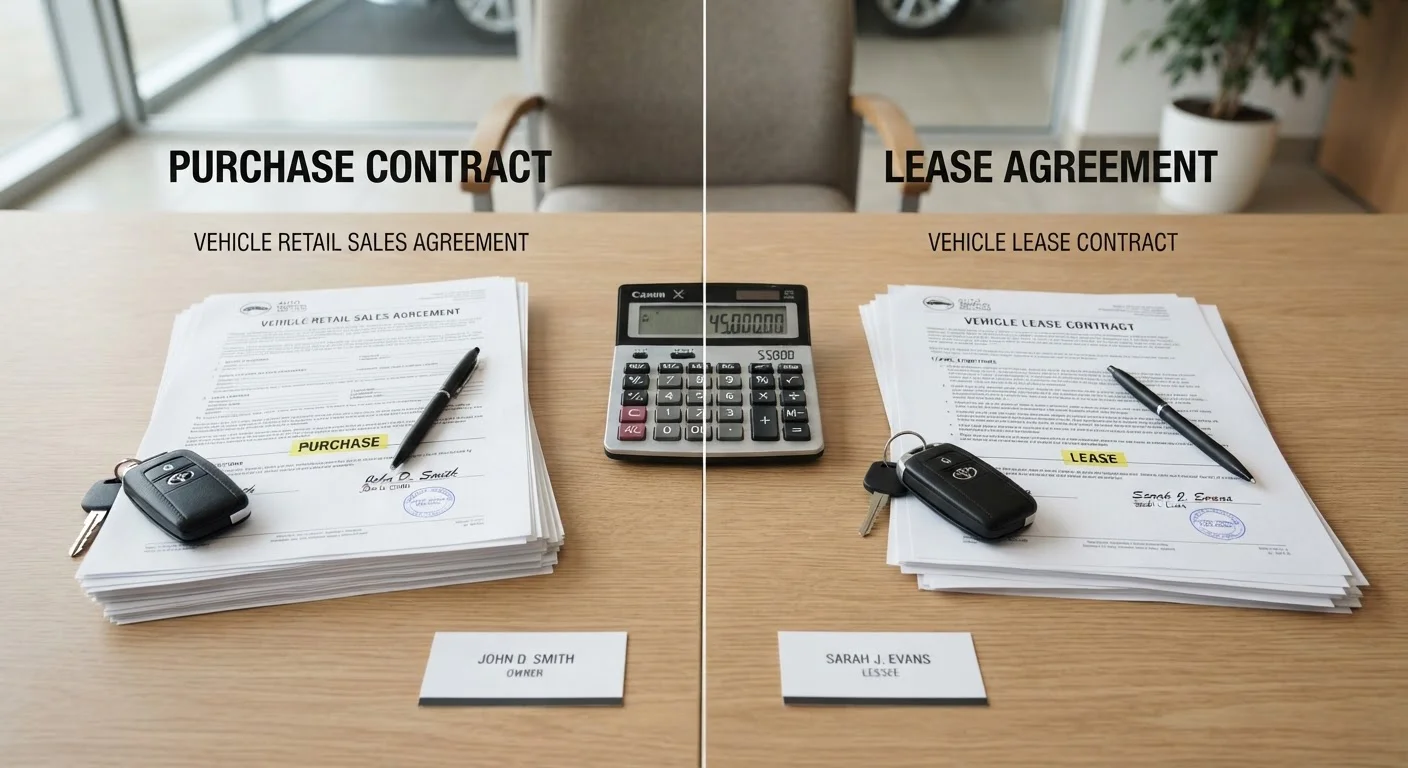
Photo credit: ExplorerGrid.com | Endless Grid Of Factual Content
In this article
Monthly payments tell only part of the story. A clear breakdown of the total financial difference between leasing and buying a vehicle.
Key Takeaways
- Lease payments are lower month-to-month, but you own nothing when the term ends.
- Buying costs more upfront and in monthly payments but builds equity over time.
- Mileage overages, wear-and-tear charges, and early termination fees can significantly inflate lease costs.
- Long-term buyers typically pay less per year of use once a loan is paid off.
- Your annual mileage, driving habits, and financial goals should drive this decision.
The Monthly Payment Gap — and Why It's Misleading
For a mid-range vehicle priced around $35,000, a typical 36-month lease might carry a monthly payment in the range of $400–$500, while a 60-month auto loan on the same vehicle could run $550–$700 per month depending on the interest rate and down payment. That gap looks compelling — until you factor in what each payment is actually buying you.
Lease payments cover only the vehicle's depreciation during the lease term, plus a finance charge (the money factor, which is the lease equivalent of an interest rate) and taxes and fees. You are, in effect, renting the car's value for a defined period. Loan payments, by contrast, reduce principal on an asset you will eventually own outright.
As we detail in our guide to auto loan interest and financing terms, the interaction between loan term and rate can add thousands to a vehicle's true cost — making it equally important to look beyond the monthly figure when financing a purchase.
| Criterion | Leasing | Buying |
|---|---|---|
| Typical monthly payment | Lower ($400–$500 range) | Higher ($550–$700 range) |
| Upfront costs | Low to moderate | Moderate to high (down payment) |
| Ownership at term end | None — return vehicle | Full ownership, free and clear |
| Mileage restrictions | Yes — typically 10,000–12,000/yr | None |
| Modification allowed | No — must return as-is | Yes |
| Long-term cost (7+ years) | Higher — perpetual payments | Lower — no payment after payoff |
| Early exit flexibility | Low — fees apply | High — sell or trade anytime |
| Equity built | None | Yes — as loan is repaid |
Total Cost Over Three Years: A Realistic Comparison
The most useful comparison is total outlay over a defined period. Consider a $35,000 vehicle leased for 36 months versus financed over 60 months:
- Lease (36 months): $450/month × 36 = $16,200 in payments, plus an acquisition fee (typically $500–$1,000), disposition fee at lease-end (~$300–$500), and any excess mileage or wear charges. Total outlay: roughly $17,000–$19,000. Remaining equity: $0.
- Purchase (60-month loan, ~7% APR): Approximately $693/month × 36 months = $24,948 paid in the first 36 months, with ~$12,000–$15,000 in remaining loan balance. Vehicle value at 36 months: approximately $19,000–$21,000, meaning you hold positive equity.
At the three-year mark, the lease driver has spent less cash but owns nothing. The buyer has spent more but holds an asset — one that, if sold or traded, offsets total cost. This dynamic becomes even more pronounced the longer a buyer keeps the vehicle. For a full picture of long-run ownership expenses, see our breakdown of the true cost of car ownership beyond the sticker price.
~20%
Average first-year new car depreciation
Industry estimates consistently place new vehicle value loss in the 15–25% range during the first 12 months of ownership.
$0.25/mi
Typical excess mileage penalty on leases
Most lease contracts charge between $0.15 and $0.30 per mile over the contracted annual limit, per the Consumer Financial Protection Bureau's lease explainer.
36–48 mo
Most common lease term length
The majority of vehicle leases in the US are structured for 36 or 48 months, aligning with factory warranty periods.
Hidden Costs That Shift the Equation
Both leasing and buying carry costs that don't appear in the headline monthly figure.
Lease-Specific Costs
- Mileage penalties: Most leases cap annual miles at 10,000–12,000. Overages are charged at $0.15–$0.30 per mile — driving 3,000 miles over a three-year lease at $0.25/mile adds $750 to your bill.
- Wear-and-tear charges: Lessors define "acceptable" condition narrowly. Tire wear, small dents, or interior staining can generate charges at lease return.
- Early termination fees: Breaking a lease early is expensive. Remaining payments, a termination fee, and negative equity exposure can collectively cost several thousand dollars.
- Gap insurance: If a leased vehicle is totaled, standard auto insurance may not cover the full amount owed. Gap coverage is often required by lessors and adds to monthly cost.
Ownership-Specific Costs
- Depreciation front-loading: New vehicles lose roughly 15–25% of value in the first year. This loss is absorbed by the buyer, not the lessor.
- Maintenance after warranty: Once factory coverage expires, repair costs fall entirely on the owner — a significant variable for high-mileage drivers.
Drivers who frequently underestimate these variables often find themselves surprised. Our article on where drivers' budgets break down walks through the most common missteps in detail.
Which Path Makes Sense for Your Situation
There is no universally correct answer — leasing and buying serve different financial profiles and driving patterns. The key variables to weigh are annual mileage, how long you intend to keep the vehicle, your cash flow priorities, and whether you have a preference for always driving within warranty coverage.
Drivers who navigate the car market with a long-term ownership mindset typically benefit from buying, especially if they plan to drive the vehicle well past the loan payoff date. Drivers who value flexibility, low monthly outlay, and consistent access to newer technology may find leasing a rational fit — provided they stay within mileage limits and return the vehicle in good condition.
If you're approaching this decision as a first-time buyer, our starter's financial roadmap for car ownership provides a category-by-category budget framework to help you plan before signing anything.
Leasing and Your Credit Profile
Both leasing and financing a vehicle require a credit check, and approval terms — including the money factor on a lease or the APR on a loan — are heavily influenced by your credit score. Applicants with stronger credit typically qualify for better money factors and lower interest rates, meaningfully reducing total cost in both scenarios. If your credit profile is a concern, it's worth reviewing it before entering any dealership negotiation.

Author
Automotive Editorial Team
Automotive Editorial Team is the collective byline for our editorial team and contributor network. Articles published under this byline or an editorial pen name are researched, written, and reviewed according to our editorial standards for clarity, consistency, and independence before publication.
View all articles →