
Certificate vs. Certification: A Distinction That Actually Matters on Your Resume
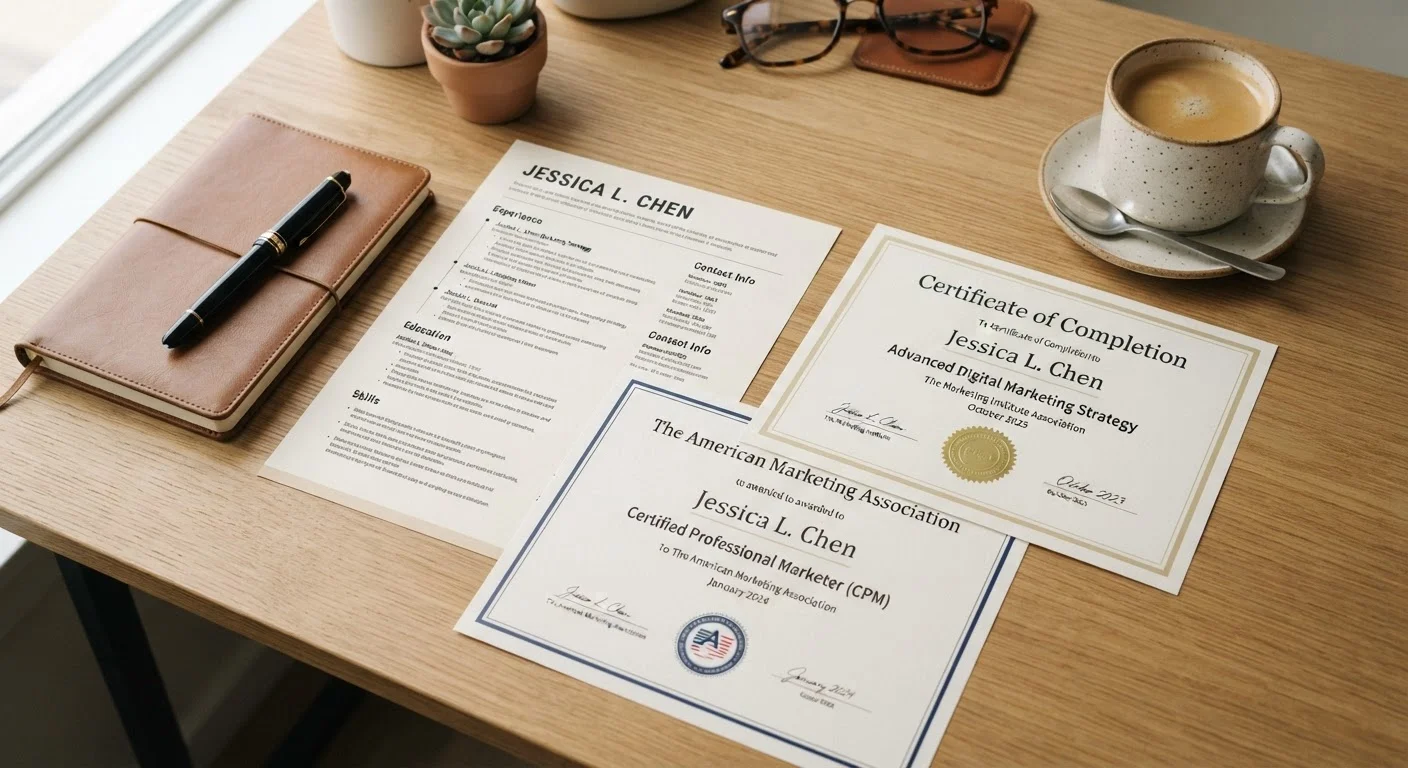
Photo credit: ExplorerGrid.com | Endless Grid Of Factual Content
In this article
Certificate programs and professional certifications aren't the same thing. Here's what sets them apart and which carries more weight in different fields.
Key Takeaways
- A certificate confirms you completed a course of study; a certification confirms you passed a competency assessment.
- Professional certifications are typically issued by industry or trade bodies, not educational institutions.
- Certifications often require renewal, continuing education, or re-examination; certificates generally do not.
- In regulated fields like healthcare and IT, certifications frequently carry more employer weight than certificates.
- Both credentials can add value, but knowing which one a job posting expects helps you target your effort.
What Each Credential Actually Is
The terms certificate and certification are often used interchangeably, but they describe fundamentally different things — and conflating them on a resume can undercut your credibility with informed hiring managers.
A certificate is awarded by an educational institution — a college, university, or training provider — to confirm that you completed a defined program of study. Completion is the threshold. You attended, finished the coursework, and received the credential. The value is tied directly to the reputation of the institution and the quality of the curriculum.
A certification, by contrast, is issued by a professional or industry body and requires you to demonstrate competency, typically by passing a standardized exam. The issuing organization sets performance standards, and your passing score confirms you met them. Many certifications also require documented work experience, continuing education units (CEUs), or periodic renewal to remain active.
Think of it this way: a certificate says you learned something; a certification says you can do something to a verified standard. Both can be valuable — but they signal different things to different audiences. See our overview of micro-credentials for how a third category is also reshaping this landscape.
Head-to-Head: How They Compare
The differences between these two credentials span several practical dimensions — from who issues them to how long they remain valid. Understanding each dimension helps you decide where to invest your time and money.
| Criterion | Certificate Program | Professional Certification |
|---|---|---|
| Issued by | Educational institution | Industry or trade body |
| How earned | Complete coursework | Pass standardized exam |
| Validates | Completion of learning | Demonstrated competency |
| Work experience required | Rarely | Often required |
| Renewal required | No | Yes, typically every 2–3 years |
| Academic credit potential | Sometimes (accredited programs) | Rarely |
| Industry recognition | Varies by institution | Standardized across employers |
One often-overlooked factor is maintenance. Most professional certifications expire after a set period — commonly two to three years — and require renewal through continued education or re-examination. A certificate from a completed course, on the other hand, doesn't lapse. That ongoing requirement for certifications can be a burden, but it also signals to employers that certified professionals stay current in their field.
For a broader look at how institutional reputation affects credential value, our article on accreditation in online education explains what to look for before enrolling in any program.
Which Carries More Weight With Employers?
The honest answer is: it depends on the field and the role. Neither credential universally outranks the other — context is everything.
In technology, healthcare, finance, and project management, professional certifications issued by recognized bodies tend to carry substantial weight. Credentials like the PMP (Project Management Professional) from PMI, CompTIA Security+, or the CPA licensure signal standardized competency that employers trust because the issuing bodies are well-established and the testing standards are public.
In creative fields, trades education, and emerging domains where no dominant industry body has emerged, certificates from respected institutions or training providers can be equally compelling — sometimes more so — because they document structured learning in areas where no standardized exam yet exists.
Job postings often telegraph what they expect. If a listing says "PMP preferred" or "must hold an active CompTIA certification," that's a certification requirement. If it says "training in data analysis a plus," a certificate program may satisfy the expectation. Reading job descriptions carefully before investing in either credential is time well spent.
Adults considering a career transition should also review what research shows about certifications for career changers to set realistic expectations about outcomes.
Listing Each Correctly on Your Resume
Accuracy in how you list credentials matters. Misidentifying a certificate as a certification — or vice versa — can raise red flags during background screening or reference checks.
- For certificates: List the program name, the issuing institution, and the completion date. Example: Certificate in Data Analytics — State University Extension, 2023.
- For certifications: List the full credential name, the issuing body, and the active date or expiration year. If a certification is no longer active, note that clearly rather than omitting it — lapsed credentials can still show relevant expertise. Example: Project Management Professional (PMP) — Project Management Institute, active through 2026.
If space allows, a brief parenthetical note about what the certification required — such as "(exam + 3 years experience)" — can contextualize its rigor for readers unfamiliar with the credential.
For anyone still weighing broader educational formats before committing, our comparison of degree programs vs. bootcamps covers how those paths differ in cost, credibility, and career outcomes.

Author
Education & Learning Editorial Team
Education & Learning Editorial Team is the collective byline for our editorial team and contributor network. Articles published under this byline or an editorial pen name are researched, written, and reviewed according to our editorial standards for clarity, consistency, and independence before publication.
View all articles →