
An Honest Look at the Trade-Offs of Mental Health Apps
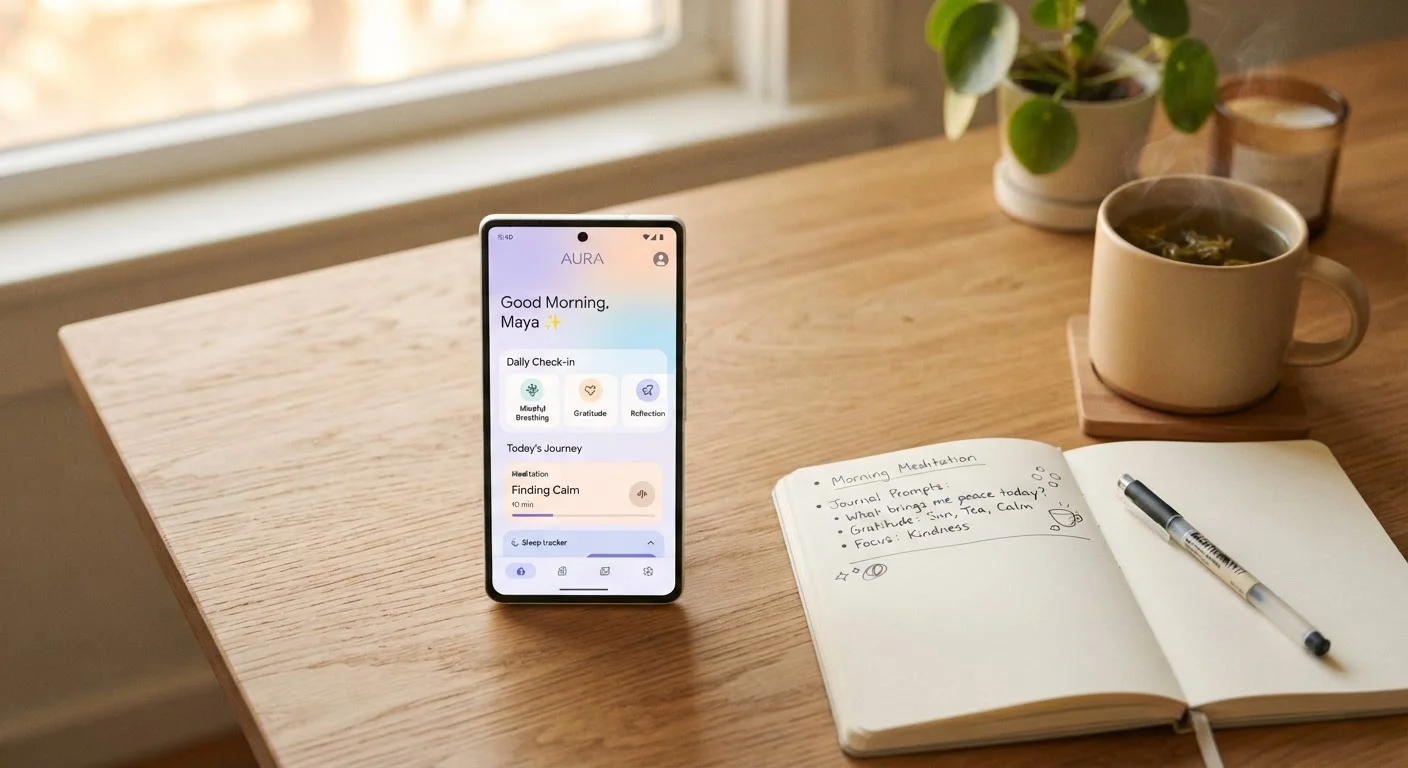
Photo credit: ExplorerGrid.com | Endless Grid Of Factual Content
In this article
Wellness apps offer accessibility and convenience, but they have real limitations. A balanced look at what digital mental health tools can and cannot provide.
Key Takeaways
- Mental health apps can lower barriers to support, especially for people without immediate access to care.
- Most apps are not replacements for licensed therapy or clinical treatment.
- Privacy practices vary widely — reviewing data policies before signing up matters.
- Apps work best as one tool within a broader mental wellness routine.
- Strong clinical evidence supports some app-based approaches, but the field is still developing.
Available 24/7 without appointments or waitlists
Many people face barriers to traditional care — cost, geography, or long waits for providers. Apps provide immediate access to structured support at any hour, which can be meaningful during moments of elevated stress.
Lower cost than most in-person therapy
Even subscription-based apps typically cost significantly less per month than a single therapy session. For people without insurance coverage for mental health services, this difference can be material.
Evidence-based techniques in accessible formats
Many well-regarded apps incorporate CBT or mindfulness-based frameworks with documented research support. When well-implemented, these can help users practice coping skills in daily life.
Useful complement to ongoing professional care
Apps can reinforce skills learned in therapy, track mood patterns to share with a clinician, or provide between-session structure — uses many therapists actively encourage.
Reduces stigma through private, low-barrier entry
For people hesitant to seek formal help, engaging with a wellness app normalizes attending to mental health in a private setting, potentially serving as a first step toward broader support.
Not equipped to treat clinical mental health conditions
Apps are generally designed for wellness support and stress management, not clinical diagnosis or treatment. Moderate to severe conditions like major depression, PTSD, or bipolar disorder require professional evaluation and care.
Engagement tends to drop off quickly
Research on digital health interventions consistently finds high initial download rates but significant drop-off in sustained use. The people who most need regular support may find it hardest to maintain consistent engagement.
Variable quality and inconsistent evidence base
The app market is largely unregulated, and the quality of clinical input behind individual apps varies widely. Consumers have few reliable ways to assess which apps are grounded in sound science.
Significant privacy and data security concerns
Mental health apps often collect highly sensitive personal data that may not be protected under the same regulations governing healthcare providers. Sharing practices vary considerably across platforms.
No crisis response capability
Apps cannot recognize or respond to a mental health emergency in real time. They are not designed to provide crisis intervention, and relying on them during acute distress can delay appropriate help.
Lacks the relational depth of human therapy
The therapeutic relationship between a client and licensed clinician is itself a well-documented mechanism of change. Apps cannot replicate the responsiveness, empathy, or adaptive judgment of a trained human professional.
What Mental Health Apps Actually Are
Mental health apps are software tools designed to support psychological and emotional wellbeing through features like guided meditation, mood tracking, cognitive behavioral therapy (CBT) exercises, breathing techniques, and peer communities. The category spans a wide range — from basic mindfulness timers to structured programs developed with clinical input.
It's worth distinguishing between apps that are evidence-informed (designed with input from mental health professionals or drawing on established therapeutic models) and those that are wellness-adjacent (offering relaxation or motivation content without a specific clinical framework). Both can have value, but they serve different purposes and carry different expectations.
As digital tools, they're available around the clock, require no appointment, and fit in a pocket — qualities that explain their rapid growth in adoption. Understanding their real strengths and genuine limitations helps consumers use them wisely rather than either dismissing or over-relying on them. If you're also building offline habits, a structured daily mental wellness routine can complement what apps offer.
The Genuine Advantages
Mental health apps offer several meaningful benefits that explain their growing role in everyday wellbeing.
Available 24/7 without appointments or waitlists
Many people face barriers to traditional care — cost, geography, or long waits for providers. Apps provide immediate access to structured support at any hour, which can be meaningful during moments of elevated stress.
Lower cost than most in-person therapy
Even subscription-based apps typically cost significantly less per month than a single therapy session. For people without insurance coverage for mental health services, this difference can be material.
Evidence-based techniques in accessible formats
Many well-regarded apps incorporate CBT or mindfulness-based frameworks with documented research support. When well-implemented, these can help users practice coping skills in daily life.
Useful complement to ongoing professional care
Apps can reinforce skills learned in therapy, track mood patterns to share with a clinician, or provide between-session structure — uses many therapists actively encourage.
Reduces stigma through private, low-barrier entry
For people hesitant to seek formal help, engaging with a wellness app normalizes attending to mental health in a private setting, potentially serving as a first step toward broader support.
10,000+
Mental health apps available on major platforms
Estimates from public health researchers suggest tens of thousands of mental health-related apps exist across app stores, with quality and evidence bases varying dramatically.
~20%
US adults who experience mental illness annually
According to the National Institute of Mental Health, roughly one in five US adults lives with a mental illness in any given year, highlighting the scale of unmet need that apps are positioned to partially address.
Beyond convenience, many apps draw on CBT, dialectical behavior therapy (DBT), or mindfulness-based stress reduction (MBSR) — therapeutic frameworks with substantial research support. When apps translate these models into daily exercises, users gain structured access to techniques that might otherwise require a therapist's guidance. For people already in therapy, apps can reinforce between-session skills — a use case many clinicians actively support.
Apps can also serve as a low-stakes entry point. For someone uncertain about seeking professional help, engaging with a structured wellness tool can normalize the habit of attending to mental health, potentially reducing the friction of eventually reaching out to a provider.
The Real Limitations
The advantages are real — but so are the constraints, and honest consumers deserve a clear-eyed account of both.
Not equipped to treat clinical mental health conditions
Apps are generally designed for wellness support and stress management, not clinical diagnosis or treatment. Moderate to severe conditions like major depression, PTSD, or bipolar disorder require professional evaluation and care.
Engagement tends to drop off quickly
Research on digital health interventions consistently finds high initial download rates but significant drop-off in sustained use. The people who most need regular support may find it hardest to maintain consistent engagement.
Variable quality and inconsistent evidence base
The app market is largely unregulated, and the quality of clinical input behind individual apps varies widely. Consumers have few reliable ways to assess which apps are grounded in sound science.
Significant privacy and data security concerns
Mental health apps often collect highly sensitive personal data that may not be protected under the same regulations governing healthcare providers. Sharing practices vary considerably across platforms.
No crisis response capability
Apps cannot recognize or respond to a mental health emergency in real time. They are not designed to provide crisis intervention, and relying on them during acute distress can delay appropriate help.
Lacks the relational depth of human therapy
The therapeutic relationship between a client and licensed clinician is itself a well-documented mechanism of change. Apps cannot replicate the responsiveness, empathy, or adaptive judgment of a trained human professional.
Perhaps the most important limitation is scope. Apps are not equipped to diagnose mental health conditions, provide crisis intervention, or substitute for the relational depth of working with a licensed therapist. Research consistently shows that moderate to severe depression, anxiety disorders, PTSD, and other clinical conditions respond best to evidence-based treatments delivered by trained professionals. Knowing when self-care tools aren't enough is an important distinction to understand before relying heavily on any app.
There's also an engagement paradox: the people who tend to benefit most from structured mental health support are sometimes least likely to sustain app use during difficult periods. Apps don't follow up, notice warning signs, or adapt their responses the way a human clinician would.
Privacy and Data: What Users Should Know
Mental health apps collect sensitive personal information — mood logs, journal entries, symptom responses, and sometimes audio or biometric data. Privacy practices across the industry vary considerably, and not all apps are subject to the same regulations that govern traditional healthcare providers under HIPAA.
HIPAA and Mental Health Apps: A Key Distinction
Most consumer mental health apps are not covered entities under the Health Insurance Portability and Accountability Act (HIPAA), meaning their data handling may not meet the same standards required of traditional healthcare providers. The Federal Trade Commission (FTC) has oversight over some app privacy practices, but the regulatory landscape remains less robust than in clinical settings. Checking an app's privacy policy and terms of service before entering personal mental health information is a practical precaution worth taking.
Before committing to any app, reviewing its privacy policy for clarity on what data is collected, how it is stored, whether it is shared with third parties, and what happens to data if you delete your account is a practical and worthwhile step. This isn't a reason to avoid apps entirely, but it is a reason to engage thoughtfully. The broader conversation about how digital habits shape emotional wellbeing is relevant context here.
How to Use Apps as Part of a Broader Strategy
The most effective use of mental health apps positions them as one component within a wider approach to wellbeing — not a standalone solution. Pairing app-based exercises with habits like regular movement, quality sleep (which has a well-documented relationship with mental health), and human connection (shown by researchers to buffer against mental health challenges) tends to produce more durable results than any single tool.
Apps also pair well with low-tech practices. Structured journaling and mindfulness and meditation practices offer complementary benefits that don't require a screen — and research supports each in its own right.
If you're experiencing persistent or worsening symptoms, treating an app as a bridge to professional support — rather than a destination — is the most responsible framing. Many clinicians now welcome it when patients use apps between sessions, provided expectations are calibrated correctly.
This article is for general informational and educational purposes only and is not a substitute for professional mental health advice, diagnosis, or treatment. Always consult a qualified mental health professional regarding any concerns about your mental health or before making changes to your care.

Author
Health & Wellness Editorial Team
Health & Wellness Editorial Team is the collective byline for our editorial team and contributor network. Articles published under this byline or an editorial pen name are researched, written, and reviewed according to our editorial standards for clarity, consistency, and independence before publication.
View all articles →