
Energy Efficiency Upgrades That Change How a Home Feels Day to Day
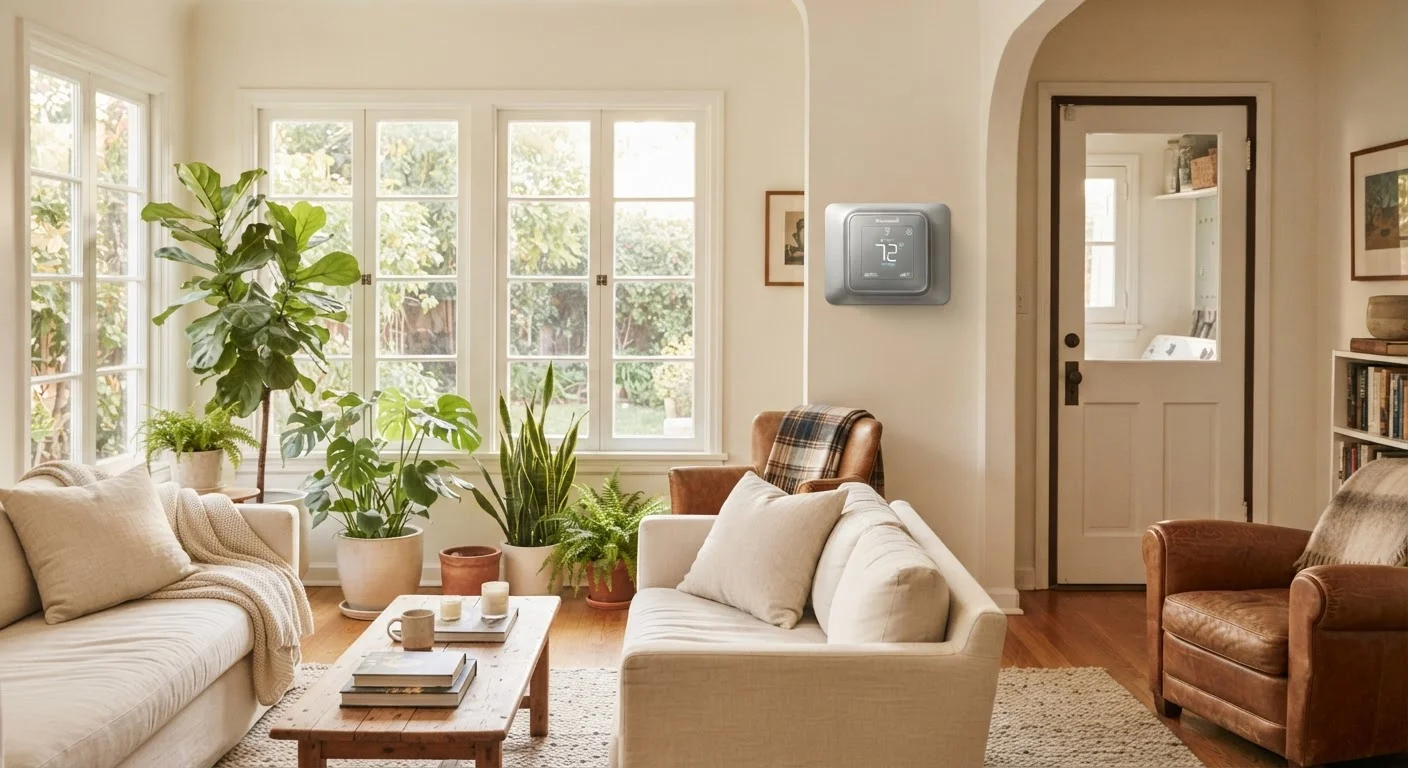
Photo credit: ExplorerGrid.com | Endless Grid Of Factual Content
In this article
From air sealing to programmable thermostats, these improvements reduce bills and improve comfort—not just your utility statement.
Key Takeaways
- Air sealing is one of the most cost-effective improvements that directly affects daily indoor comfort.
- Programmable and smart thermostats reduce energy waste without sacrificing temperature control.
- Attic insulation improvements often pay back faster than many other home upgrades.
- Upgrading windows and doors adds thermal comfort, not just aesthetics.
- HVAC filter maintenance is frequently overlooked but meaningfully affects air quality and system efficiency.
Why Efficiency Upgrades Feel Different in Practice
Energy efficiency upgrades are often framed around dollar savings — and those savings are real. But many homeowners notice something less expected: their home simply feels better. Drafty hallways calm down. Rooms hold temperature longer. The air feels less stale. These comfort benefits tend to show up every single day, well before the next utility bill arrives.
This article walks through the upgrades that deliver those everyday improvements, starting with the ones that require the least technical expertise and moving toward more involved projects. For unfamiliar terms like R-value or vapor barrier, the home improvement terminology guide is a useful companion reference.
Permits and Professional Work
Some efficiency upgrades — particularly those involving HVAC replacement, electrical modifications, or spray foam insulation in enclosed cavities — may require permits or licensed contractors in your jurisdiction. Requirements vary significantly by state and municipality. Before starting any significant project, check with your local building department to understand what applies in your area.
The upgrades below vary in complexity. Some are genuine DIY projects; others — particularly anything involving electrical systems, gas lines, or structural changes — should be handled by licensed professionals. Always verify local permit requirements before beginning significant work.
Air Sealing Gaps and Drafts
Air leaks are invisible but persistent. Common culprits include gaps around electrical outlets on exterior walls, spaces where pipes or wires pass through walls, attic hatches, and the joints where walls meet the floor. Collectively, these small openings can add up to the equivalent of leaving a window open year-round.
Sealing gaps with caulk or weatherstripping is a genuine DIY task that requires minimal tools. Foam sealant works well for larger irregular gaps around pipes. After sealing, most homeowners notice drafts disappear and rooms feel more consistently warm or cool — not just at the thermostat, but at the floor and near windows too.
Gaps around outlets and pipes can collectively equal a wide-open window in heat loss.
Upgrading Attic Insulation
Heat moves upward, which makes the attic the single biggest opportunity for thermal improvement in most US homes. The US Department of Energy has published recommended insulation levels by climate zone; many existing homes fall below these benchmarks, especially in older construction.
Adding blown-in or batt insulation to an attic floor is a project many homeowners tackle themselves, though it requires proper protective gear — insulation fibers are irritating to skin and lungs. For homes with complex attic geometry or existing moisture issues, a professional assessment is worthwhile before adding material.
For a detailed look at how different insulation materials compare, insulation types compared covers fiberglass, spray foam, rigid board, and more.
The attic is where most homes lose the most heat — and where insulation improvements pay back fastest.
Installing a Programmable or Smart Thermostat
A programmable thermostat reduces heating and cooling output during hours when a home is empty or occupants are asleep — hours that make up a significant portion of each day. Smart thermostats go further by learning usage patterns and adjusting automatically, and many can be controlled remotely via a smartphone app.
Installation is typically straightforward for most forced-air systems, involving swapping a few low-voltage wires. However, homes with older systems — particularly those without a common (C) wire — may require an adapter or professional installation. Confirm compatibility before purchasing a unit.
The behavioral side of thermostat upgrades is worth noting: once comfort schedules are set and forgotten, the savings happen automatically without daily decisions. It's a small illustration of how automating routine decisions tends to improve outcomes over time.
Smart thermostats remove the daily mental load of managing home temperature around your schedule.
Maintaining HVAC Filters Consistently
HVAC filters trap dust, allergens, and particulates — but a clogged filter forces the system to work harder, raises energy consumption, and reduces airflow. The result is rooms that don't reach set temperature, systems that cycle more frequently, and air quality that gradually declines.
The right filter and the right change interval depend on the specific system, household, and local air conditions. what homeowners get wrong about HVAC filter changes explains why a simple monthly swap isn't always the right answer — and how to calibrate for your situation.
A clogged HVAC filter quietly undermines every other efficiency improvement in your home.
Adding Window Treatments and Door Sweeps
Replacing windows is expensive and often delivers a slower return than envelope sealing or insulation. But adding thermal curtains, cellular shades, or exterior solar screens to existing windows provides meaningful improvement at much lower cost. These window treatments reduce solar heat gain in summer and add an insulating layer in winter.
Door sweeps and threshold seals address the visible gap at the base of exterior doors — one of the most common sources of conditioned air loss. Both are easy to install with basic tools. Combined with weatherstripping on door frames, these additions meaningfully reduce the drafts that make entryways uncomfortable in winter.
Thermal window treatments and door sweeps improve comfort without the cost of full replacements.
Switching to LED Lighting Throughout
LED bulbs use significantly less electricity than incandescent bulbs to produce the same light output, and they generate far less heat — a relevant comfort factor in summer when incandescent fixtures add unwanted warmth. They also last considerably longer, reducing the frequency of replacements.
The transition is incremental: as existing bulbs burn out, replacing them with LEDs of equivalent color temperature (look for the Kelvin rating on packaging — warmer light is around 2700K, cooler daylight tones around 5000K) allows households to gradually improve efficiency without a large upfront investment. High-use fixtures like kitchen overhead lighting and frequently occupied rooms deliver the fastest payback.
LEDs produce less heat and use less electricity — both factors that affect how a home feels daily.
Making the Most of These Improvements
Efficiency upgrades work best as a system, not a checklist. Air sealing without addressing insulation leaves gaps in thermal performance. A smart thermostat controlling an HVAC unit with a clogged filter won't reach its potential. For deeper guidance on how ventilation fits into the picture, see how home ventilation actually works.
Prioritizing projects by impact per dollar spent is a practical approach. For most homes, air sealing and attic insulation rank highest on that scale. From there, thermostat upgrades and HVAC maintenance are low-cost steps that compound the gains. Larger investments like window replacement make more sense once the building envelope is tightened first.
These improvements also tie into broader home maintenance habits — regular attention to your home's systems keeps efficiency gains from eroding over time. Small, consistent actions tend to outperform occasional large interventions.

Author
Home & Garden Editorial Team
Home & Garden Editorial Team is the collective byline for our editorial team and contributor network. Articles published under this byline or an editorial pen name are researched, written, and reviewed according to our editorial standards for clarity, consistency, and independence before publication.
View all articles →