
Reading Your Home Like a Contractor: Signs of Trouble Most Owners Miss
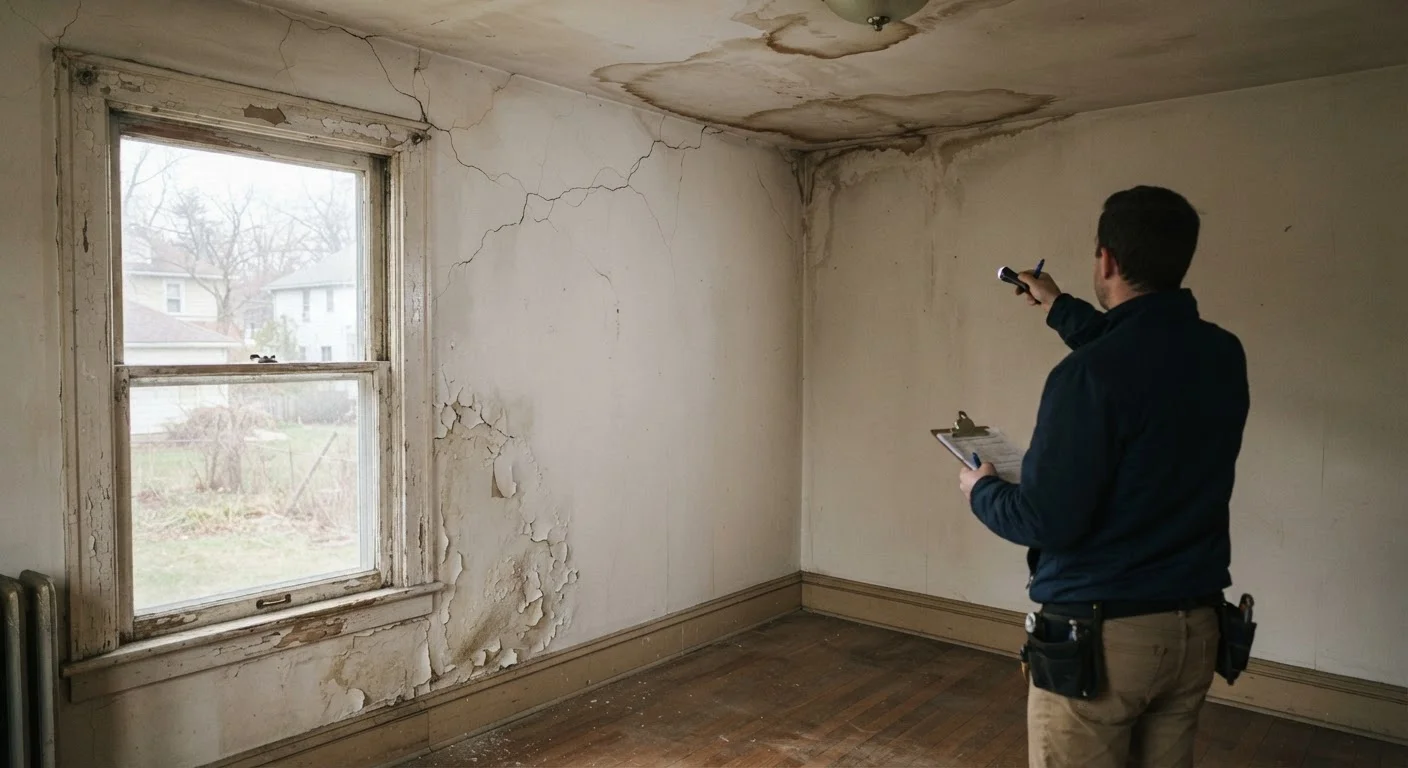
Photo credit: ExplorerGrid.com | Endless Grid Of Factual Content
Cracks, stains, and odors often signal deeper problems. Learn what a trained eye notices during a walkthrough of any house.
Key Takeaways
- Many serious home problems announce themselves through subtle visual, odor, or texture clues before they become emergencies.
- Contractors scan specific zones — foundation, attic, electrical panel, plumbing — that most owners overlook during routine walkthroughs.
- Early detection of moisture intrusion, settling, or ventilation failure is almost always cheaper than delayed repair.
- Some warning signs require a licensed professional's assessment; knowing the difference protects both safety and budget.
What Contractors Actually Look For
When an experienced contractor walks through a home, they aren't admiring the finishes — they're reading the building like a document. Every crack pattern, stain, or gap tells a story about what's happening inside walls, beneath floors, and above ceilings. The good news is that homeowners can learn the same visual language.
This isn't about becoming your own inspector or skipping professional evaluations. It's about developing enough literacy to catch early signals, ask informed questions, and avoid the costly surprise of a problem that's been growing for years unnoticed. For a broader look at every major system in your home, see our complete owner's maintenance resource.
The warning signs below are the ones that trained eyes catch — and that most owners walk right past.
Diagonal Cracks at Window and Door Corners
Hairline cracks directly above window or door corners — especially ones that run at roughly 45-degree angles — are a flag that contractors treat seriously. Straight vertical or horizontal cracks in drywall are usually cosmetic shrinkage. Diagonal stair-step cracks, particularly in brick or block, suggest differential settlement: one part of the foundation is moving at a different rate than another.
Check whether the door or window in question sticks, doesn't latch properly, or has developed a visible gap in its frame. Those functional changes paired with diagonal cracking indicate the structure is shifting, not just the finish materials. A structural engineer or foundation specialist should evaluate any pattern that's widening or accompanied by sloping floors.
Diagonal cracks at frame corners, especially in masonry, often indicate differential foundation settlement.
Efflorescence on Basement or Foundation Walls
That chalky white powder or crust on concrete or masonry walls has a name: efflorescence. It forms when water moves through a wall, dissolves minerals in the concrete or mortar, and deposits them on the surface as it evaporates. The powder itself is harmless, but it's evidence that water is regularly passing through your foundation wall.
Persistent efflorescence — especially if accompanied by damp spots, a musty smell, or mineral staining — points to an ongoing moisture pathway that can eventually compromise the wall's integrity and create conditions favorable to mold. Investigate grading, gutters, and downspout extensions before assuming the wall itself needs structural repair. A clogged or overflowing gutter is frequently the culprit.
Efflorescence is a mineral calling card left by water repeatedly moving through masonry walls.
Soft or Bouncy Spots in Flooring
Walk slowly across every floor in the house and pay attention underfoot. A springy section of hardwood or tile that flexes slightly when you step on it suggests the subfloor below has absorbed moisture, the joists have weakened, or the adhesive/fastener system has failed. In bathrooms and kitchens — rooms with regular water exposure — soft spots near the toilet base, sink cabinet, or dishwasher often signal a slow leak that's been rotting the subfloor for months.
Don't confuse minor squeaking (usually just loose fasteners or seasonal wood movement) with actual flex. Press firmly in multiple spots and compare. If an area near a fixture is noticeably softer than the surrounding floor, that's worth opening up to inspect — ideally before the subfloor damage spreads to the joists beneath.
Soft flooring near plumbing fixtures almost always signals a slow leak, not just normal wear.
Dark Staining or Granule Loss on Roof Surfaces
From ground level with binoculars — or safely from a ladder positioned at the eaves — look for dark streaks, patches of missing granules (which appear as bald, lighter-colored areas), or shingles that look cupped or curled at the edges. Granules protect asphalt shingles from UV degradation; heavy granule loss in gutters or downspout splash zones is a sign the shingles are nearing the end of their service life.
Black streaking is typically algae (treatable) rather than structural damage. But cupped, curled, or cracked shingles combined with granule loss suggest the entire roof surface may be due for evaluation. Given that roof access carries real fall risk, any close inspection above the eave line should be done by a roofing professional.
Granule loss in gutters is one of the clearest indicators a roof is approaching the end of its lifespan.
A Musty Odor That Persists After Airing Out
Smell is one of the most reliable diagnostic tools in a contractor's arsenal. A persistent musty odor — one that doesn't clear after windows are opened and the house has aired for several hours — strongly suggests microbial growth somewhere in the building envelope. Common locations include wall cavities behind bathroom tile, attic sheathing with poor ventilation, crawl spaces with vapor barrier gaps, and HVAC ducts that have accumulated moisture.
Don't attempt to mask the odor before locating the source. Follow it — musty smells are often strongest near the affected area, especially on humid days. For a guided approach to your home's plumbing and moisture systems, see the homeowner's introduction to plumbing systems. Confirmed mold in significant quantities, or mold inside HVAC systems, should be remediated by a qualified specialist.
A musty smell that lingers after ventilation points to hidden moisture and likely microbial growth.
Electrical Panel Warning Signs
Open the electrical panel and look — carefully, without touching anything — for signs of trouble: scorch marks or discoloration around breakers, breakers that feel warm, double-tapped breakers (two wires sharing a single breaker terminal), or a panel brand that a local electrician has identified as problematic in your area. Also look for mismatched breaker amperage relative to the wire gauge entering it.
These aren't DIY repair situations. Electrical panel issues can cause fires and present shock hazards even when the power appears off. Note what you see and call a licensed electrician. For more on how wiring errors develop, see why DIY electrical work goes wrong. Any permitted electrical work will also require an inspection — see why permits and inspections matter for what's typically involved.
Scorch marks or warm breakers in a panel are serious warning signs that warrant immediate professional evaluation.
What to Do When You Spot a Warning Sign
Finding a potential problem doesn't mean panicking — it means taking the next step deliberately. Document what you see with photos, note the location and approximate size, and track whether it changes over days or weeks. A crack that widens is far more urgent than one that stays stable.
For anything involving electrical systems, gas lines, structural framing, or active water intrusion, don't attempt a DIY assessment beyond visual observation. These areas carry safety and code implications that go beyond general maintenance. The guide DIY or licensed pro? A practical framework can help you sort which issues you can monitor yourself and which need a credentialed evaluation.
If your walkthrough turns up several concerns at once, consider scheduling a licensed home inspector or specialist — their written report creates a paper trail that's useful for insurance, resale, and contractor conversations. Before hiring anyone for repair work, review what every homeowner should know about hiring a general contractor.
Schedule a Seasonal Walkthrough
A structured seasonal inspection — especially after winter — helps you catch new cracks, moisture intrusion, and exterior damage before warm-weather repair season peaks. Walk each zone of the home methodically, rather than waiting for problems to become visible from your living room. The spring maintenance walkthrough guide is a useful starting framework for this habit.

Author
Home & Garden Editorial Team
Home & Garden Editorial Team is the collective byline for our editorial team and contributor network. Articles published under this byline or an editorial pen name are researched, written, and reviewed according to our editorial standards for clarity, consistency, and independence before publication.
View all articles →