
Home Maintenance from the Ground Up: A Complete Owner's Resource
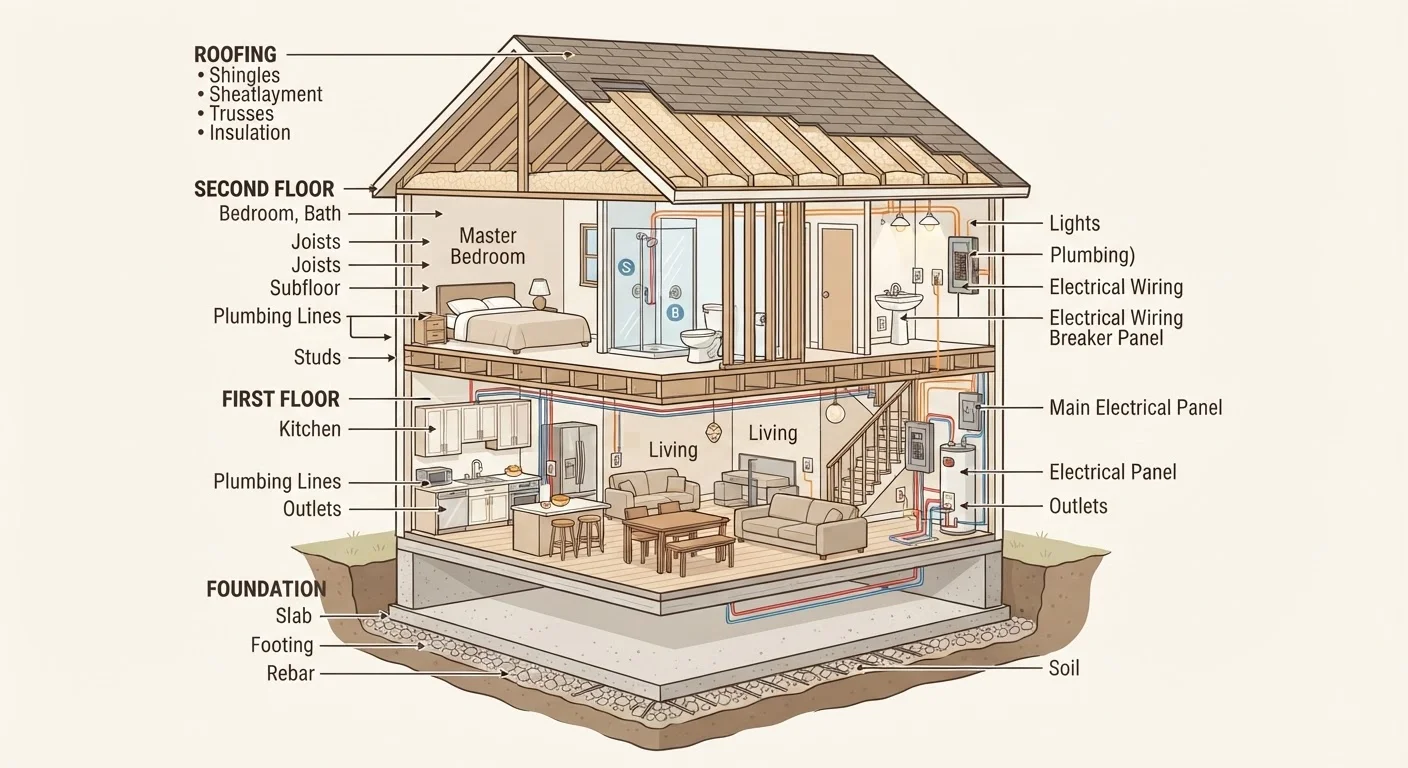
Photo credit: ExplorerGrid.com | Endless Grid Of Factual Content
In this article
From foundation to rooftop, this end-to-end guide covers every major system in your home, what can go wrong, and how to stay ahead of it.
Key Takeaways
- Most costly home repairs are preventable with routine inspections and small interventions.
- Water is the leading cause of structural and interior home damage — managing it is the top priority.
- Licensed professionals should handle electrical, gas, structural, and permitted work.
- A seasonal maintenance calendar helps distribute tasks and reduces surprise repair bills.
- Knowing your home's systems helps you communicate clearly with contractors and spot red flags.
Why Proactive Maintenance Pays Off
Owning a home means inheriting every system inside it — and the responsibility to keep those systems functioning. The good news: the vast majority of expensive repairs share a common origin. They begin as small, overlooked issues that compound over months or years before revealing themselves as emergencies.
Industry estimates consistently suggest that homeowners who invest roughly 1–2% of their home's value annually in maintenance tend to avoid the dramatic repair bills that catch reactive owners off guard. A $150 caulking job around a window frame, for example, can prevent thousands of dollars in water-damaged framing and drywall.
This guide walks through every major home zone — from the soil beneath your slab to the ridge cap on your roof — so you know what to watch for, when to act yourself, and when to call a licensed professional. For unfamiliar terms along the way, the Home Improvement Terminology glossary is a practical reference to bookmark.
1–2%
Recommended annual maintenance spend as share of home value
A widely cited homeownership guideline suggests budgeting 1–2% of your home's value each year for maintenance and repairs.
#1
Leading cause of home structural damage
Water infiltration — from leaks, poor drainage, and humidity — is consistently identified by home inspectors as the primary driver of costly structural repairs.
20–30 years
Typical lifespan of asphalt shingle roofing
Actual lifespan varies based on installation quality, climate, and maintenance, but most manufacturers design standard asphalt shingles for this range.
Foundation, Structure, and Exterior
Your home's foundation transfers all structural loads into the ground. Concrete slabs, poured basements, and crawl spaces each have distinct maintenance demands, but share one critical vulnerability: water infiltration.
What to inspect:
- Cracks in foundation walls or slabs: Hairline cracks are common as concrete cures, but horizontal cracks, stair-step cracking in block foundations, or cracks wider than ¼ inch warrant professional evaluation. These can signal settlement or lateral soil pressure — issues that worsen without intervention.
- Grading and drainage: Soil should slope away from the foundation at roughly 6 inches over the first 10 feet. Flat or inward-sloping ground directs rain and snowmelt toward your home's base.
- Siding and exterior cladding: Check for gaps, rot, warping, or missing sections annually. Paint or sealant failure exposes wood framing to moisture far faster than most homeowners expect.
Any work that affects structural elements, load-bearing walls, or foundation systems typically requires permits and should be done by licensed contractors. Verify requirements with your local building department before starting.
Roofing, Gutters, and Water Management
Water entering from above is among the most destructive forces a home faces. Roof and gutter maintenance is not glamorous, but neglecting it creates cascading damage through insulation, framing, ceilings, and walls.
Roof inspection basics:
- From the ground or with binoculars, look for missing, curling, or buckled shingles, and dark patches that may indicate algae or moisture.
- Check flashing — the metal strips around chimneys, vents, and skylights — for lifting or gaps. Flashing failures are a leading source of interior leaks.
- Most asphalt shingle roofs are designed to last 20–30 years, but installation quality and local climate affect actual lifespan significantly.
Gutters and downspouts:
Clean gutters at minimum twice per year — typically after leaf fall in autumn and again in spring. Downspouts should discharge water at least 4–6 feet from the foundation. Extensions are inexpensive and highly effective. Blocked or sagging gutters allow water to pool against fascia boards and eventually infiltrate walls.
For a zone-by-zone walkthrough of post-winter checks on these systems, see the Spring Maintenance Walkthrough.
Plumbing, HVAC, and Electrical Essentials
Three major systems — plumbing, heating and cooling, and electrical — account for a large share of both household energy use and repair costs. Basic familiarity with each helps you catch warning signs early.
Plumbing
Know where your main water shut-off valve is located before a leak demands it. Inspect visible supply lines under sinks and behind toilets annually for mineral buildup, corrosion, or slow seeping. Water heaters should be flushed periodically to remove sediment that reduces efficiency and accelerates tank wear. For a deeper understanding of how supply, drain, and vent lines interact, the Homeowner's Introduction to Plumbing Systems is a strong starting point.
HVAC
Replace or clean air filters according to manufacturer guidance — typically every 1–3 months for standard filters. A clogged filter forces your system to work harder, increasing energy bills and shortening equipment life. Schedule a professional HVAC tune-up annually, ideally before peak heating or cooling season.
Electrical
Test GFCI (ground fault circuit interrupter) outlets monthly — these are the outlets with Test/Reset buttons, commonly found in bathrooms, kitchens, and garages. If a circuit breaker trips repeatedly or outlets feel warm, have a licensed electrician evaluate the system. Do not attempt to work inside your electrical panel without professional training.
Interior Systems and Seasonal Priorities
Interior maintenance extends well beyond cosmetic upkeep. Insulation, ventilation, and moisture control directly affect comfort, energy efficiency, and indoor air quality.
Attic and insulation:
Adequate attic insulation (measured in R-value, which indicates thermal resistance) reduces heating and cooling loads. Check that attic ventilation is unobstructed — proper airflow prevents summer heat buildup and winter ice dam formation on roofs in colder climates.
Basement and crawl space:
Humidity above 60% in these spaces creates conditions favorable to mold growth and wood rot. A dehumidifier and vapor barrier in a crawl space are cost-effective defenses. If you notice musty odors or visible mold, address the moisture source before treating surfaces.
Windows and doors:
Weatherstripping and caulk around windows and doors are among the least expensive and highest-return maintenance tasks available. Drafts that feel minor in fall can translate to meaningfully higher heating bills through winter.
Check Weatherstripping Every Fall
Close a door or window on a piece of paper — if you can pull it out easily, the seal has failed. Replacing weatherstripping is a straightforward DIY task that pays back in lower heating and cooling costs within a single season.
Building Your Maintenance Routine
The most effective maintenance strategy is one you'll actually follow. Spreading tasks across the calendar — rather than tackling everything in a single weekend — makes the workload manageable and ensures nothing is missed for an entire year.
A practical framework: think in four seasonal phases. Spring is for post-winter inspection and exterior repairs. Summer suits painting, deck maintenance, and landscaping. Fall is ideal for weatherization, gutter cleaning, and heating system service. Winter focuses on interior systems and planning ahead.
For a structured task list organized month by month, the Annual Home Maintenance Calendar maps out the full year in actionable detail. If you're also managing a vehicle, the principles of scheduled maintenance apply equally — the Owner's Manual guide shows how manufacturer schedules work in practice.
Finally, keep a simple home maintenance log: date of service, what was done, and who performed it. This record proves valuable for warranty claims, insurance documentation, and when the time comes to sell. A well-maintained home communicates care to buyers — and often commands it at the closing table.
For renovation projects that go beyond routine upkeep, the Home Improvement hub covers upgrades and planning considerations that add lasting comfort and value.

Author
Home & Garden Editorial Team
Home & Garden Editorial Team is the collective byline for our editorial team and contributor network. Articles published under this byline or an editorial pen name are researched, written, and reviewed according to our editorial standards for clarity, consistency, and independence before publication.
View all articles →