
Fixed vs. Variable Expenses: How the Distinction Shapes Your Budget
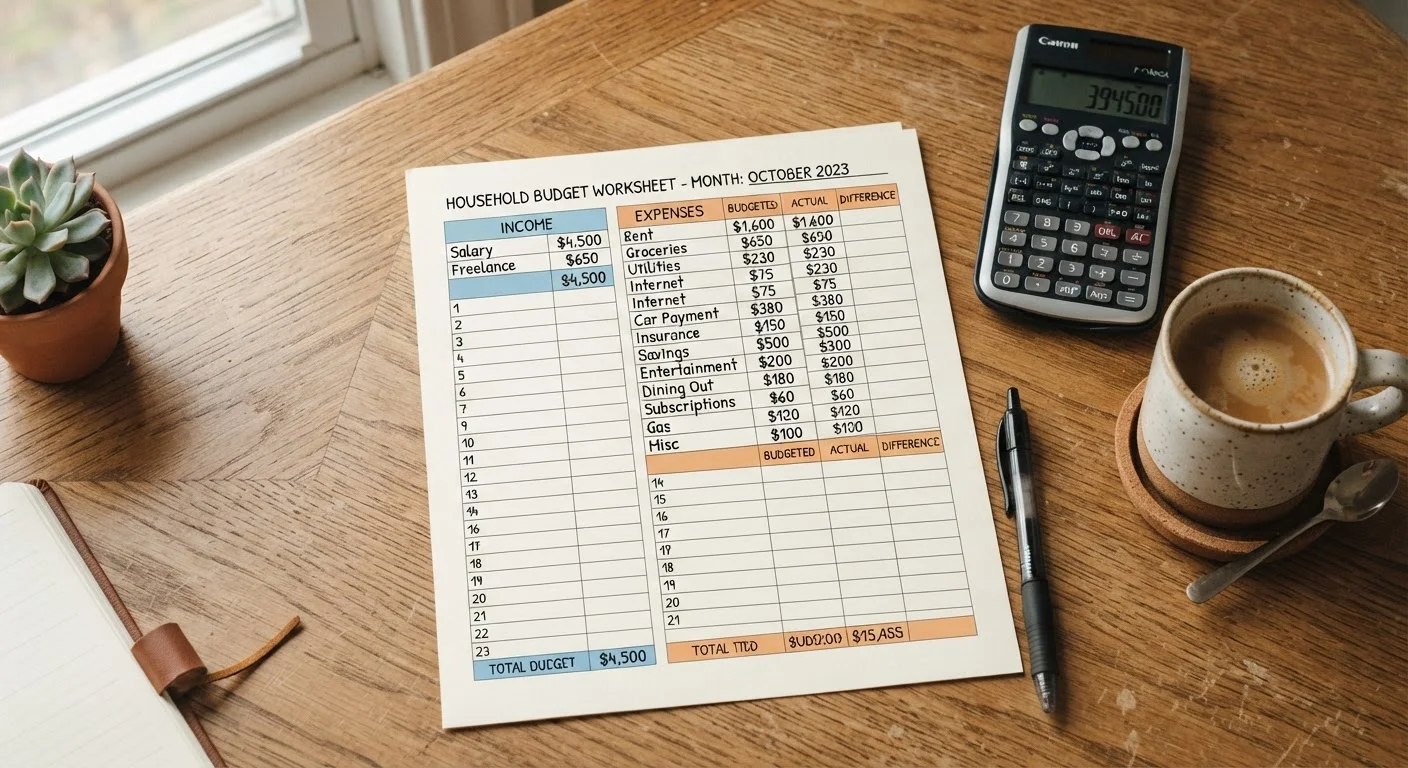
Photo credit: ExplorerGrid.com | Endless Grid Of Factual Content
In this article
Understanding which costs are predictable and which fluctuate is foundational to building a budget that doesn't fall apart mid-month.
Key Takeaways
- Fixed expenses are predictable and repeat at the same amount each period, making them easy to plan around.
- Variable expenses fluctuate with behavior and consumption, giving you the most control over budget adjustments.
- Semi-variable expenses blend both elements and require a closer look when building your spending plan.
- Knowing the split helps you identify which costs can be cut and which require renegotiation or refinancing to change.
- Most households benefit from listing fixed expenses first so they always know their true financial floor each month.
What Makes an Expense Fixed?
A fixed expense is one where the amount due doesn't change regardless of your behavior during the billing period. You owe the same number whether you stayed home all month or traveled across the country. Common examples include rent or mortgage payments, auto loan installments, student loan payments, and many subscription services with flat monthly pricing.
The defining feature isn't that the expense lasts forever — it's that you know the exact dollar amount in advance. That predictability is enormously useful when building a budget: fixed costs establish your financial floor, the minimum your income must cover before anything else. For a deeper look at terminology used in budgeting, see key budgeting vocabulary that helps clarify how these categories fit into a broader spending plan.
Fixed expenses are also the hardest to reduce quickly. Cutting a gym membership takes a phone call and sometimes a waiting period. Getting out of a lease or refinancing a loan takes time, paperwork, and sometimes money. That friction is worth understanding before you commit to any recurring obligation.
How Variable Expenses Work — and Where Your Flexibility Lives
Variable expenses rise and fall with your choices and circumstances. Groceries, gasoline, dining out, entertainment, clothing, and household supplies all shift month to month. Even utility bills, which feel routine, typically vary with seasonal usage — electricity climbs in summer, heating costs spike in winter.
This variability is actually your biggest budgeting asset. Because these costs respond to behavior, they're the primary place where you can tighten spending when money is tight or loosen it when you're ahead. Most people who struggle to make a budget work focus too much on fixed costs they can't immediately change and too little on variable costs they can influence today.
~33%
Average share of income spent on housing
The U.S. Bureau of Labor Statistics Consumer Expenditure Survey consistently shows housing as the largest single fixed expense for American households.
~15%
Average share of income spent on food
The same BLS data separates food at home from food away from home — both are variable expenses that shift noticeably with behavior changes.
56%
Americans unable to cover a $1,000 emergency
Bankrate's annual emergency savings report has consistently found that a majority of U.S. adults lack sufficient liquid savings, often because variable expenses go untracked.
Variable expenses also tend to be where spending surprises originate. A month with a birthday party, a car repair, and a higher-than-usual electric bill can blow past even a well-intentioned estimate. That's why tracking variable categories separately — rather than lumping them with fixed costs — gives you an accurate picture of where money actually goes. Tracking tools like spreadsheets and budgeting apps can automate much of this separation for you.
Building a Budget Around Both Types
A practical budgeting approach lists fixed expenses first, totals them, and subtracts that sum from monthly take-home income. Whatever remains is available for variable spending, savings, and discretionary choices. This order of operations prevents the common mistake of treating all expenses as equally flexible — they aren't.
From there, variable categories each get a monthly spending target based on recent history, not guesswork. Pull three to six months of bank or credit card statements and average what you actually spent on groceries, gas, and similar categories. Targets built on real data are more likely to hold than round numbers picked arbitrarily.
If your fixed expenses consume a dangerously high share of your income — a common source of budget failure — the solution isn't to cut groceries to zero; it's to find ways to reduce or replace the fixed obligations themselves over time. Why budgets often collapse in month two often traces directly to this imbalance going unaddressed.
People with irregular income face an added layer of complexity because both income and some expenses fluctuate. If that describes your situation, the strategies for budgeting on an irregular income offer a framework tailored to that challenge.
Build Your Fixed List Before Anything Else
Before assigning a single dollar to groceries, entertainment, or savings, write out every fixed obligation and total them. This reveals your true financial floor — the minimum your income must clear each month. If that number is already close to your take-home pay, you'll know immediately that variable spending adjustments alone won't be enough, and that reducing fixed commitments is the real priority.
This article is for general informational purposes only and does not constitute personalized financial advice. For guidance specific to your financial situation, consider consulting a qualified financial professional.
Frequently Asked Questions

Author
Personal Finance Editorial Team
Personal Finance Editorial Team is the collective byline for our editorial team and contributor network. Articles published under this byline or an editorial pen name are researched, written, and reviewed according to our editorial standards for clarity, consistency, and independence before publication.
View all articles →