
Debt & Credit From the Ground Up
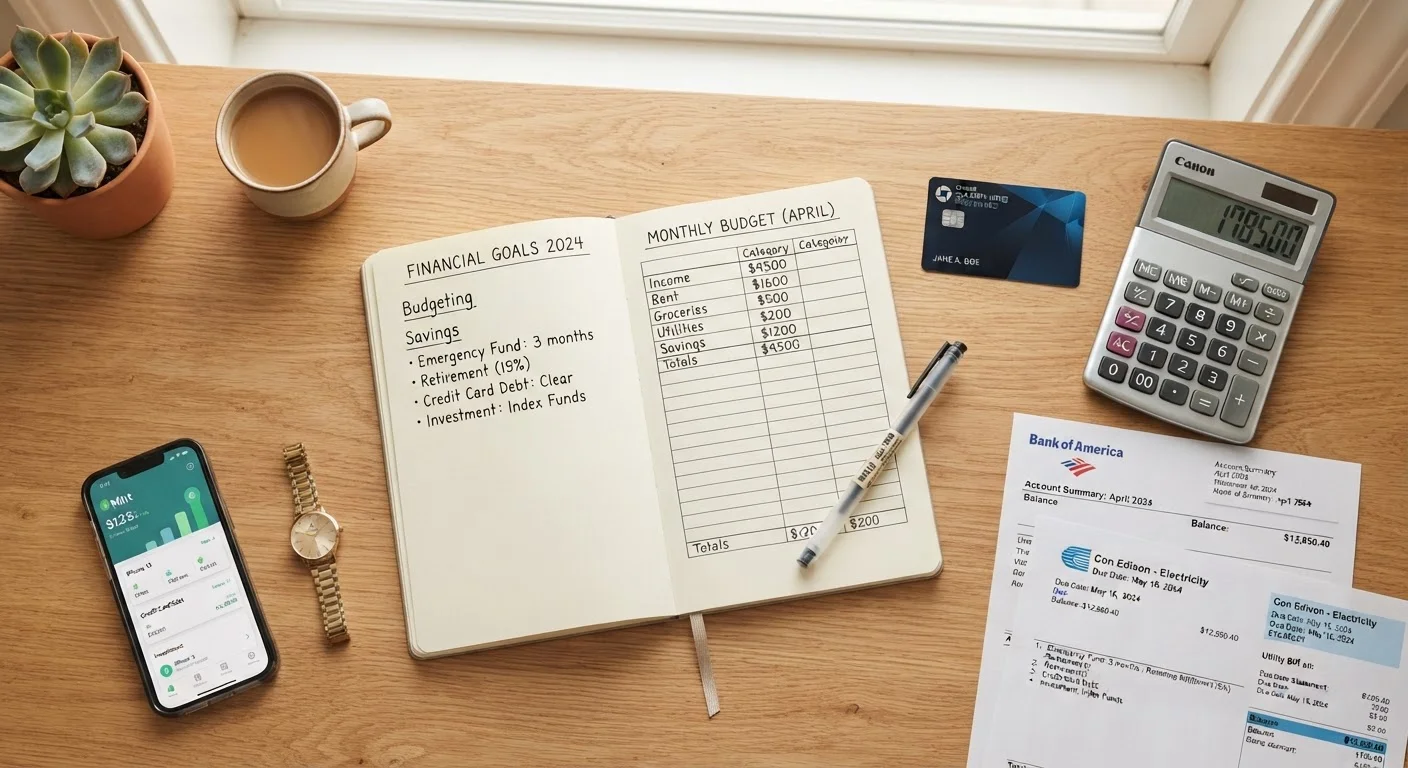
Photo credit: ExplorerGrid.com | Endless Grid Of Factual Content
In this article
New to credit or carrying debt for the first time? This guide explains the essential concepts, terms, and habits that shape your financial health.
Key Takeaways
- Credit is a record of how reliably you repay borrowed money — lenders use it to decide whether to lend to you.
- Interest is the cost of borrowing; a higher APR means you pay more over time for the same loan amount.
- Your credit score is calculated from five factors, with payment history and amounts owed carrying the most weight.
- Paying on time and keeping credit card balances low are the two most impactful habits you can build.
- Nonprofit credit counselors can help you create a repayment plan at little or no cost if debt feels unmanageable.
What Credit Actually Is — and Why It Matters
Credit is simply the ability to borrow money or access goods and services now with the agreement to pay later. When a lender — a bank, credit union, or card issuer — extends credit to you, they're betting that you'll repay what you owe. The record they use to make that bet is your credit history: a running log of every account you've opened, every payment you've made (or missed), and how much you currently owe.
That history is compiled by three major credit bureaus — Equifax, Experian, and TransUnion — into a credit report. A mathematical formula then distills your report into a three-digit credit score, which lenders use as a shorthand for how risky it is to lend to you. Scores generally range from 300 to 850; higher is better.
Why does this matter day-to-day? Your credit profile affects more than loan approvals. Landlords often review credit before renting to you, employers in certain industries check it during hiring, and insurers in many states use credit-based factors when pricing policies. Building a solid credit foundation is one of the most broadly useful financial moves you can make.
Credit History
A record of how you've managed borrowed money over time, including accounts opened, payment patterns, and outstanding balances.
APR (Annual Percentage Rate)
The yearly cost of borrowing money, expressed as a percentage. A higher APR means you pay more in interest charges over time.
Credit Utilization Ratio
The percentage of your available revolving credit (like a credit card limit) that you're currently using. Lower ratios generally help your credit score.
Hard Inquiry
A check of your credit report that happens when you apply for new credit. It can temporarily lower your score by a few points.
Minimum Payment
The smallest amount you're required to pay on a debt each billing cycle. Paying only the minimum keeps you current but results in significant interest costs over time.
Debt Management Plan (DMP)
A structured repayment arrangement, typically set up through a nonprofit credit counselor, that consolidates your monthly debt payments and may negotiate lower interest rates with creditors.
For a plain-language breakdown of the specific terms you'll encounter in credit and debt conversations, see our debt and credit glossary.
How Debt Works: The Basic Mechanics
Debt is borrowed money you're obligated to repay, usually with interest — the fee a lender charges for the use of their money. Interest is typically expressed as an Annual Percentage Rate (APR). A 20% APR on a $1,000 balance means you'd owe roughly $200 in interest if you carried that balance for a full year without paying it down.
Debt comes in two broad forms. Revolving debt — like credit cards — lets you borrow up to a set limit, repay some or all of it, and borrow again. Installment debt — like auto loans or student loans — gives you a lump sum upfront that you repay in fixed monthly payments over a set term. Each type behaves differently and affects your credit profile in distinct ways. Our article on revolving vs. installment debt explains the nuances in depth.
The core principle to internalize: every dollar of debt costs more than a dollar to repay. The longer you carry a balance, the more interest accumulates. Paying more than the minimum payment — even a small amount more — meaningfully reduces the total interest you'll pay over the life of a loan.
Your Credit Score: What Drives It
The most widely used scoring model, FICO, calculates your score from five factors. Understanding each one helps you see exactly which actions move the needle.
- Payment history (35%): Whether you pay on time. A single missed payment can cause a significant drop.
- Amounts owed (30%): How much of your available credit you're using, known as your credit utilization ratio. Lower utilization generally means a higher score.
- Length of credit history (15%): How long your accounts have been open. Older accounts help.
- Credit mix (10%): Having a variety of account types — cards, loans — can help modestly.
- New credit (10%): Applying for several new accounts in a short window can lower your score temporarily.
Payment history and amounts owed together account for 65% of your score. Focus there first. Everything else is secondary.
Healthy Habits to Build From Day One
Automate the Basics First
Before optimizing anything else, set up automatic payments for every account — at least the minimum due. Late payments are the single biggest damage to a credit score, and automation eliminates the risk of forgetting. Once that safety net is in place, you can focus on paying more than the minimum whenever your budget allows.
Good credit is built through consistency, not one-time actions. These habits, practiced regularly, compound over time.
- Pay every bill on time. Set up autopay for at least the minimum amount so you never miss a due date accidentally.
- Keep card balances low. Try to use no more than 30% of any card's limit — and ideally less.
- Monitor your credit reports. You're entitled to free weekly reports from each bureau at AnnualCreditReport.com. Review them for errors and dispute anything inaccurate.
- Avoid opening many accounts at once. Each application triggers a hard inquiry, which can temporarily lower your score.
- Build a budget that makes debt repayment a line item. Our budgeting basics hub offers practical frameworks for tracking spending and carving out room for debt payments.
If you have an auto loan or are considering one, keep in mind that vehicle debt fits into the same credit framework. Our car ownership costs guide breaks down the full financial picture of owning a vehicle, including how financing choices affect your long-term costs.
When to Ask for Help
Debt can feel isolating, but you don't have to navigate it alone. If you're struggling to make minimum payments or don't know where to start, nonprofit credit counseling agencies can provide free or low-cost guidance. Many offer debt management plans (DMPs) that consolidate payments and may reduce interest rates — without the credit score damage that comes with settlement or bankruptcy.
Look for agencies affiliated with the National Foundation for Credit Counseling (NFCC) or the Financial Counseling Association of America (FCAA). Avoid for-profit debt relief companies that charge large upfront fees or make guarantees they can't back up.
This article is for general informational and educational purposes only and does not constitute personalized financial, legal, or tax advice. For guidance specific to your situation, consult a qualified, licensed financial professional.
Frequently Asked Questions

Author
Personal Finance Editorial Team
Personal Finance Editorial Team is the collective byline for our editorial team and contributor network. Articles published under this byline or an editorial pen name are researched, written, and reviewed according to our editorial standards for clarity, consistency, and independence before publication.
View all articles →