
Building Your First Savings Plan from Scratch
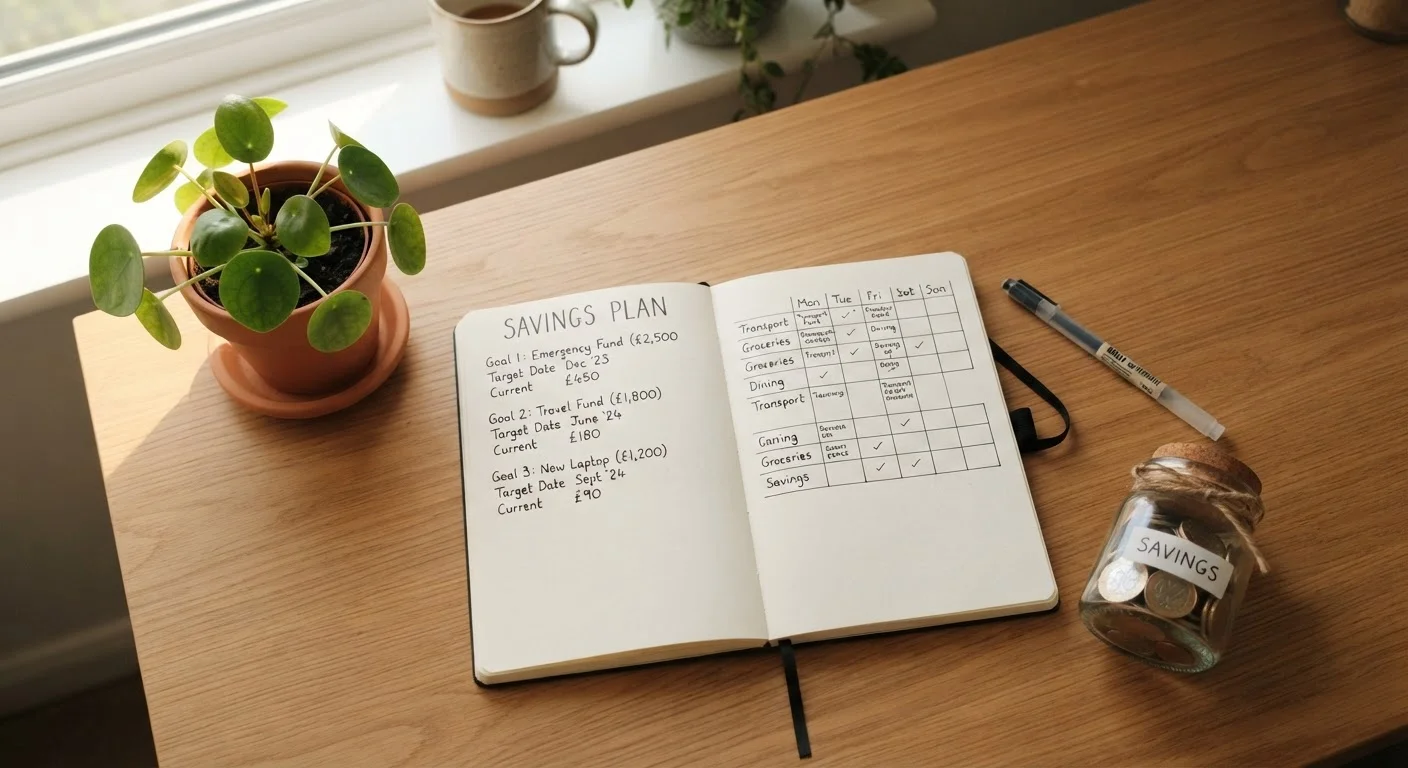
Photo credit: ExplorerGrid.com | Endless Grid Of Factual Content
In this article
Never had a structured savings plan? This beginner-friendly guide walks through every foundational concept you need to get started.
Key Takeaways
- Understanding your current spending is the essential first step before setting any savings target.
- Specific, time-bound goals are far more effective than vague intentions to "save more."
- Even small, consistent contributions compound into meaningful progress over time.
- Automating your savings removes the need for daily willpower and reduces the chance of skipping.
- Your plan should evolve as your income and priorities change — flexibility is a feature, not a flaw.
Why a Savings Plan Matters
Most people intend to save money. Far fewer do it consistently, and not because they lack willpower — it's usually because they never built a structure to support the behavior. A savings plan turns a vague intention into a repeatable system: it tells you how much to save, where it goes, and what it's for.
Without that structure, savings is whatever is left at the end of the month — which is often nothing. A plan flips that equation. It treats saving as a fixed commitment, not an afterthought, and gives every dollar a job before spending begins.
This guide is built for readers starting from zero: no existing savings habit, no spreadsheet, no financial background required. If you've already begun pairing this with a broader budget, the plain-language budgeting walkthrough covers that foundation in depth.
This article provides general financial education, not personalized financial advice. For guidance tailored to your situation, consider consulting a qualified financial professional.
Know Where Your Money Goes First
Before you can decide how much to save, you need an honest picture of your current cash flow — what comes in and what goes out each month. This doesn't require a sophisticated tool; a simple list of monthly income and recurring expenses will do.
Start by listing your take-home pay (after taxes). Then list all fixed expenses — rent or mortgage, utilities, insurance, loan payments, subscriptions. Next, estimate variable expenses: groceries, transportation, dining out, personal spending. The gap between income and total expenses is your current theoretical saving capacity.
Take-home pay
The amount of income you actually receive after taxes and any payroll deductions — sometimes called net pay. This is the number to use when budgeting, not your gross salary.
Fixed expenses
Bills that stay the same amount each month, such as rent, loan payments, or a set subscription fee. These are the easiest to plan around because they don't change.
Variable expenses
Spending that fluctuates month to month, such as groceries, gas, and dining out. These require estimates rather than exact figures and are usually where spending adjustments are easiest to find.
Emergency fund
A pool of money set aside specifically for unexpected financial shocks — job loss, medical bills, urgent repairs — so you don't need to borrow or derail other savings goals.
Automation
Setting up a recurring, scheduled transfer so savings happen without requiring a manual decision each time. Automation reduces the reliance on daily willpower to stay consistent.
Cash flow
The movement of money in and out of your finances over a period of time. Positive cash flow means income exceeds spending; negative means spending exceeds income.
If that gap is smaller than expected, that's useful information — not a reason to give up. It means your first task is finding small spending adjustments before setting a savings target. Even freeing up $50 a month from a category you'd barely notice creates room to begin. For readers planning a major expense like vehicle ownership, the car ownership financial roadmap shows how to account for those costs in your overall picture.
Set Goals That Are Real and Specific
"Save more money" is not a goal — it's a wish. Effective savings goals have three qualities: they're specific, they're time-bound, and they're connected to something you actually care about.
For example: "Save $1,200 for an emergency fund over the next 12 months" is specific and measurable. It breaks down to $100 per month — a clear, trackable target. Compare that to "save more," which provides no signal about whether you're on track or falling behind.
Most people benefit from holding two kinds of goals simultaneously: a short-term goal (3–18 months) and a longer-range goal (2+ years). An emergency fund, a travel fund, or a car down payment are common short-term targets. Retirement contributions or a home down payment are longer-range. The article structuring savings around time explains how to manage both without sacrificing one for the other.
Write your goals down. Research in behavioral economics consistently shows that written goals with deadlines are acted on more reliably than mental intentions alone.
Choose a Saving Method That Fits Your Life
Start With One Goal, Not Five
When building your first savings plan, resist the urge to fund multiple goals simultaneously from a thin budget. Pick your single most important goal — often a starter emergency fund — and direct all available savings there first. Once that goal is funded, redirect that same monthly amount toward the next priority. Focused momentum is more effective than spreading contributions so thin that progress feels invisible.
Once you know your capacity and your goals, you need a mechanism — a repeatable way to move money from your checking account into savings before it gets spent on something else.
Two approaches work well for beginners:
- Pay yourself first: A portion of every paycheck goes directly to savings before you pay any discretionary expenses. Many employers allow split direct deposit, making this automatic. This approach is powerful because it removes the temptation to spend first and save what's left. The pay-yourself-first method has genuine trade-offs worth understanding before committing to it fully.
- Fixed monthly transfer: You schedule an automatic transfer from checking to savings on a set date — ideally the day after payday. The automation does the work; you just set it up once.
Either method works. The critical feature is automation: when saving happens automatically, you don't have to decide to do it every month. That decision fatigue is what derails most informal savings efforts.
Build the Habit and Protect Your Progress
A savings plan is not a one-time setup — it's an ongoing practice. Life changes: income shifts, expenses rise, priorities evolve. Your plan should be reviewed at least every six months and updated whenever a major change occurs. The guide on keeping savings on track through life changes offers practical strategies for adapting without abandoning your progress.
A few habits that support long-term consistency:
- Track monthly: Check your savings balance against your target once a month. A quick check-in keeps you connected to your progress and surfaces problems early.
- Celebrate milestones: When you hit 25%, 50%, or 100% of a goal, acknowledge it. Small recognitions reinforce the behavior.
- Keep an emergency fund separate: A dedicated emergency buffer prevents you from raiding your savings goals when something unexpected happens. This is the single most protective financial habit a new saver can build.
You don't need a perfect plan to start — you need a plan you'll actually follow. Begin with what your budget allows, automate it, and build from there. The structure matters more than the initial dollar amount.
Frequently Asked Questions

Author
Personal Finance Editorial Team
Personal Finance Editorial Team is the collective byline for our editorial team and contributor network. Articles published under this byline or an editorial pen name are researched, written, and reviewed according to our editorial standards for clarity, consistency, and independence before publication.
View all articles →