
Short-Term vs. Long-Term Savings Goals: Structuring Your Money Around Time
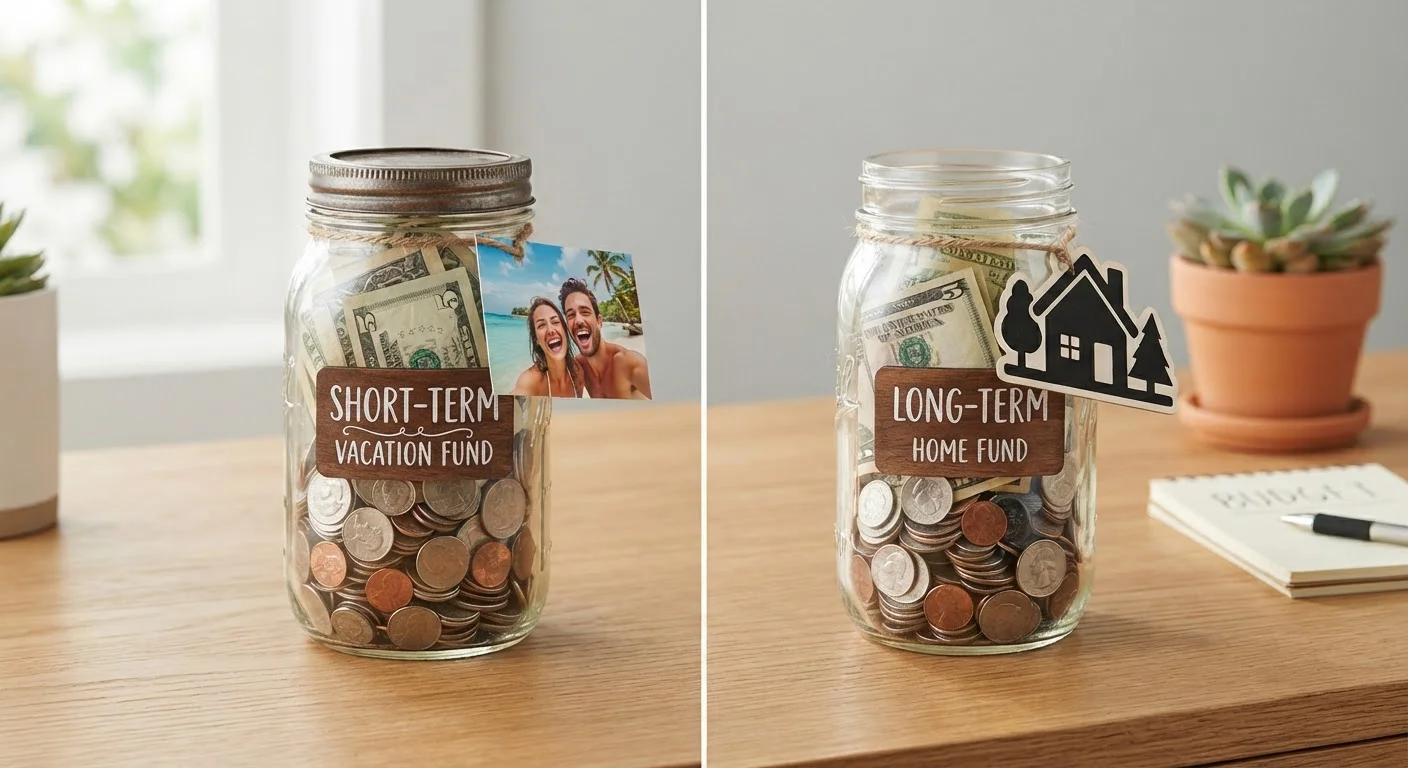
Photo credit: ExplorerGrid.com | Endless Grid Of Factual Content
In this article
Understand the key differences between short- and long-term savings goals and how to manage both without sacrificing one for the other.
Key Takeaways
- Short-term goals typically span one to three years; long-term goals extend beyond five years.
- Each time horizon calls for a different savings vehicle and level of liquidity.
- Both types of goals can coexist in a budget when you assign dedicated amounts to each.
- Automating contributions reduces the mental load of managing multiple savings targets.
- Neglecting either time horizon creates real financial risk — balance is essential.
What Separates a Short-Term Goal from a Long-Term One
The most useful way to classify a savings goal is by its timeline — specifically, when you expect to need the money. Short-term goals are generally those you plan to fund within one to three years: an emergency fund, a vacation, a car repair reserve, or holiday spending. Long-term goals extend five years or more and typically involve larger sums: a home down payment, a child's education fund, or retirement.
The middle ground — goals in the three-to-five-year range — borrows characteristics from both. A planned home purchase in four years, for example, demands liquidity but also benefits from modest growth potential.
Recognizing which category a goal falls into matters because it determines where you should hold the money and how aggressively you need to save. Putting retirement funds in an account you might raid for a car repair undercuts both goals. If you're building your first savings plan from scratch, clarifying your time horizons before choosing accounts is a foundational step.
Choosing the Right Account for Each Horizon
Time horizon should drive account selection. For short-term goals, accessibility and capital preservation matter most. A high-yield savings account or money market account typically fits this need — the balance stays liquid and isn't exposed to market volatility. For a deeper comparison of account types, see high-yield vs. traditional savings accounts.
Long-term goals, especially retirement, can tolerate more risk because they have time to recover from market downturns. Tax-advantaged accounts such as employer-sponsored retirement plans or individual retirement accounts (IRAs) are commonly used vehicles. Growth-oriented options generally make more sense here than low-yield liquid accounts — keeping decades of retirement savings in a standard savings account leaves significant potential growth on the table.
| Short-Term Goals | Long-Term Goals | |
|---|---|---|
| Typical timeline | 1–3 years | 5+ years |
| Common examples | Emergency fund, vacation, car repair | Retirement, home down payment, education |
| Priority account type | High-yield savings, money market | Tax-advantaged retirement or investment accounts |
| Liquidity need | High — funds may be needed quickly | Low — money stays invested long-term |
| Risk tolerance | Low — preserve capital | Moderate to high — pursue long-term growth |
| Contribution flexibility | Adjust freely as needs shift | Consistency over time matters most |
The key rule: money you may need within three years should not be placed where market risk or withdrawal penalties could reduce it unexpectedly. Money you will not touch for a decade or more can reasonably pursue higher long-term returns.
Balancing Both Without Starving Either
The most common mistake savers make is treating their goals as sequential — finishing one before starting another. In practice, that approach means retirement contributions get deferred while short-term goals are funded, and then short-term needs get neglected once someone shifts focus to the future. Both gaps carry real costs.
A more sustainable approach assigns a specific dollar amount or percentage of income to each category every month. Even a modest allocation to long-term goals — started early — benefits from compounding over time. Similarly, maintaining even a small short-term buffer prevents you from disrupting long-term savings when an unplanned expense arises.
Pay-yourself-first budgeting can support this approach by automatically directing a portion of each paycheck toward savings before other spending occurs. The method works best when you've pre-assigned amounts to each goal category rather than treating savings as a single undifferentiated pool. For households navigating shared finances, coordinating goals with a partner adds another layer of planning that's worth addressing directly.
Keeping Goals on Track as Life Changes
Savings plans rarely survive unchanged. Income shifts, family changes, and unexpected costs can all knock contributions off course. The solution is not to abandon the plan but to adapt it — adjusting amounts while preserving the structure of funding both time horizons.
A useful habit is conducting a periodic review of your savings goals, perhaps once or twice a year, to check whether your contribution amounts still reflect your current income and priorities. The annual savings audit framework offers a structured set of questions to guide that review.
When short-term financial pressure is severe, it may be necessary to temporarily reduce — but not eliminate — long-term contributions. Even a small continued contribution maintains the habit and avoids the friction of restarting from zero. For practical strategies when income is limited, saving on a tight income covers approaches designed for constrained budgets. If a specific goal has stalled, understanding why savings goals stall can help identify and fix the friction point.
This article is for general informational and educational purposes only and does not constitute personalized financial, investment, or tax advice. Consult a qualified financial professional for guidance tailored to your individual circumstances.

Author
Personal Finance Editorial Team
Personal Finance Editorial Team is the collective byline for our editorial team and contributor network. Articles published under this byline or an editorial pen name are researched, written, and reviewed according to our editorial standards for clarity, consistency, and independence before publication.
View all articles →