
Dental Disease in Dogs and Cats: The Overlooked Health Crisis
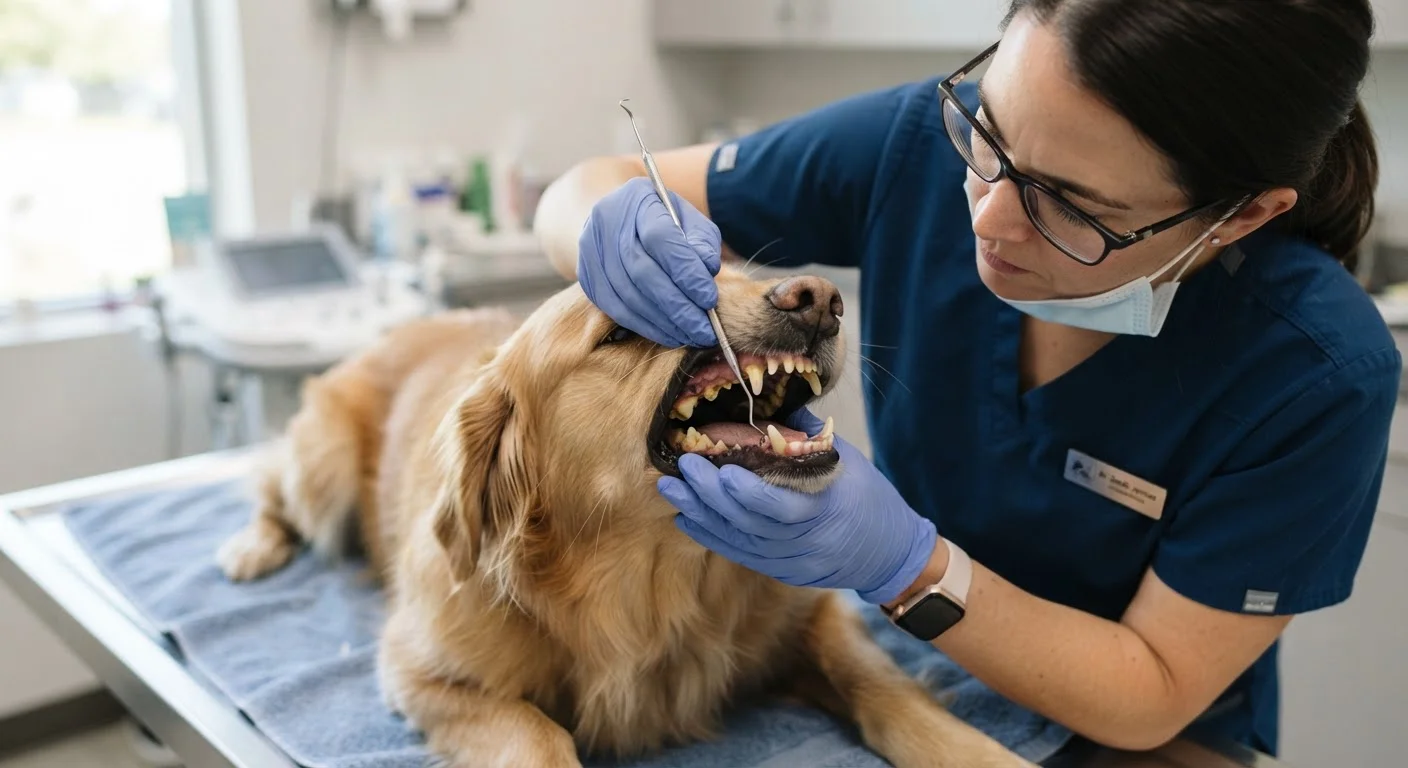
Photo credit: ExplorerGrid.com | Endless Grid Of Factual Content
In this article
Most pets over age three have some form of dental disease. Learn how it develops, what it affects beyond the mouth, and how prevention works.
Key Takeaways
- An estimated 80% of dogs and 70% of cats show signs of dental disease by age three.
- Periodontal disease can contribute to heart, kidney, and liver problems if left untreated.
- Daily tooth brushing is the single most effective at-home prevention tool.
- Professional cleanings require anesthesia and are the only way to treat below the gumline.
- Diet and chew habits can meaningfully affect plaque accumulation between vet visits.
How Common Is Dental Disease in Pets?
Dental disease is the most frequently diagnosed health condition in adult dogs and cats — yet it remains one of the most undertreated. According to the American Veterinary Medical Association (AVMA), an estimated 80% of dogs and 70% of cats show evidence of periodontal disease by the time they reach three years of age. Despite those numbers, most pet owners never brush their pet's teeth, and many don't schedule professional dental cleanings until visible problems emerge.
The gap between prevalence and treatment is largely invisible — pets can't describe tooth pain, and early dental disease carries no obvious outward symptoms. By the time an owner notices bad breath or difficulty eating, disease has typically been progressing for months or years.
80%
Dogs with dental disease by age 3
According to the American Veterinary Medical Association (AVMA), most adult dogs show evidence of periodontal disease by their third year.
70%
Cats with dental disease by age 3
The AVMA estimates the majority of adult cats have some form of dental disease, often progressing silently without visible symptoms.
20–60%
Adult cats affected by tooth resorption
Feline tooth resorption is a distinct, painful condition that destroys tooth structure and frequently requires dental X-rays to detect.
How Dental Disease Develops
The process begins with plaque — a sticky film of bacteria that forms on tooth surfaces within hours of eating. If not removed by brushing or mechanical action, plaque mineralizes into tartar (also called calculus) within days. Tartar cannot be removed by brushing alone and accumulates both above and below the gumline.
Bacteria in tartar trigger an inflammatory response in surrounding gum tissue — a condition called gingivitis. At this stage, the process is still reversible with professional cleaning. Left untreated, however, inflammation progresses into periodontitis, where the structures supporting the teeth — the periodontal ligament, cementum, and alveolar bone — begin to break down. Teeth become loose, painful, and eventually lost.
Cats are also susceptible to a distinct and poorly understood condition called feline tooth resorption, in which the tooth structure itself is gradually destroyed, often beginning at the gumline. It affects an estimated 20–60% of adult cats and is frequently painful and difficult to detect without dental X-rays.
Diet plays a supporting role in plaque accumulation. Our guide on how kibble and wet food affect dental health explores the mechanical differences between food formats and what they mean for your pet's teeth.
Beyond the Mouth: Systemic Health Consequences
Dental disease is not confined to the oral cavity. The same bacteria responsible for periodontal infection can enter the bloodstream through inflamed gum tissue — a process called bacteremia. Research has linked chronic periodontal disease in pets to changes in the heart, kidneys, and liver, though the nature of these relationships (causal versus associative) is still being studied.
The heart is a particular area of concern. Studies in dogs have found associations between periodontal disease and changes in cardiac parameters, with some evidence pointing to increased risk of endocarditis (infection of the heart's inner lining). The kidneys, which filter the blood continuously, and the liver, which processes toxins, may also be affected by the chronic bacterial load from untreated oral disease.
For older pets, these stakes are higher. The veterinary care needs of senior pets often include increased attention to oral health precisely because concurrent systemic conditions make untreated dental disease more consequential.
Recognizing the Warning Signs
Because pets instinctively mask discomfort, owners often misinterpret dental pain as normal aging behavior. Key signs to watch for include:
- Persistent bad breath — often the earliest and most consistent indicator
- Yellow or brown buildup on tooth surfaces, particularly near the gumline
- Red, swollen, or bleeding gums when examined
- Pawing at the mouth or rubbing the face on surfaces
- Difficulty chewing, dropping food, or chewing on one side only
- Reduced appetite or reluctance to eat hard food or treats
- Loose or missing teeth
- Excessive drooling, sometimes tinged with blood
Cats in particular may simply eat less and become quieter — behavioral changes that owners frequently attribute to mood rather than oral pain. Any of these signs warrants a veterinary evaluation, ideally including a dental exam under anesthesia where a full assessment is possible.
Prevention: What Actually Works
The gold standard for at-home dental care remains daily tooth brushing with a pet-formulated toothpaste (never human toothpaste, which contains xylitol — a compound toxic to dogs). Enzymatic pet toothpastes help break down plaque chemically even when brushing is imperfect. Consistency matters far more than technique; even 30 seconds of brushing on accessible tooth surfaces provides meaningful benefit when done daily.
Start brushing your pet's teeth as early as possible — ideally in kittenhood or puppyhood — using gradual desensitization with a finger before introducing a brush.
Pets introduced to mouth handling early are significantly more tolerant of dental procedures and home care throughout their lives, improving long-term compliance.
When evaluating dental chews, look specifically for the VOHC Seal of Acceptance rather than relying on packaging claims like 'dental' or 'cleans teeth,' which have no standardized definition.
The VOHC requires product efficacy data from controlled trials before granting its seal, making it the most reliable consumer shortcut for evaluating dental adjuncts.
For pets that won't tolerate brushing, the Veterinary Oral Health Council (VOHC) maintains a list of products — water additives, dental chews, and specially formulated diets — that have met defined standards for plaque or tartar reduction in controlled trials. These are useful adjuncts but generally less effective than brushing alone.
It's worth noting that everyday feeding habits such as frequent high-sugar treats or free-feeding can worsen the oral environment by sustaining elevated bacterial activity throughout the day.
Professional Dental Cleanings: What to Expect
Home care alone cannot remove tartar or treat disease below the gumline. Professional veterinary dental cleanings — performed under general anesthesia — are the only way to properly scale teeth, probe periodontal pockets, and take dental radiographs (X-rays). Anesthesia is not optional: it allows safe, thorough evaluation and protects the airway during the procedure.
A complete professional cleaning typically includes:
- Pre-anesthetic bloodwork to assess organ function and anesthetic risk
- Full-mouth dental radiographs to identify disease invisible to the naked eye
- Scaling above and below the gumline with ultrasonic instruments
- Periodontal probing of each tooth
- Extraction of non-salvageable teeth, if indicated
- Polishing to smooth enamel surfaces and slow future plaque adhesion
The frequency of professional cleanings varies by individual — some pets need annual cleanings, others less often. Breed, genetics, diet, and the consistency of at-home care all factor in. Small-breed dogs and flat-faced (brachycephalic) breeds tend to experience more rapid dental disease progression due to tooth crowding and alignment.
This article is for general informational purposes only and does not constitute veterinary medical advice. Always consult a licensed veterinarian for guidance specific to your pet's health needs.

Author
Pets & Animals Editorial Team
Pets & Animals Editorial Team is the collective byline for our editorial team and contributor network. Articles published under this byline or an editorial pen name are researched, written, and reviewed according to our editorial standards for clarity, consistency, and independence before publication.
View all articles →