
Dry Kibble vs. Wet Food: How Each Format Affects Your Pet's Health
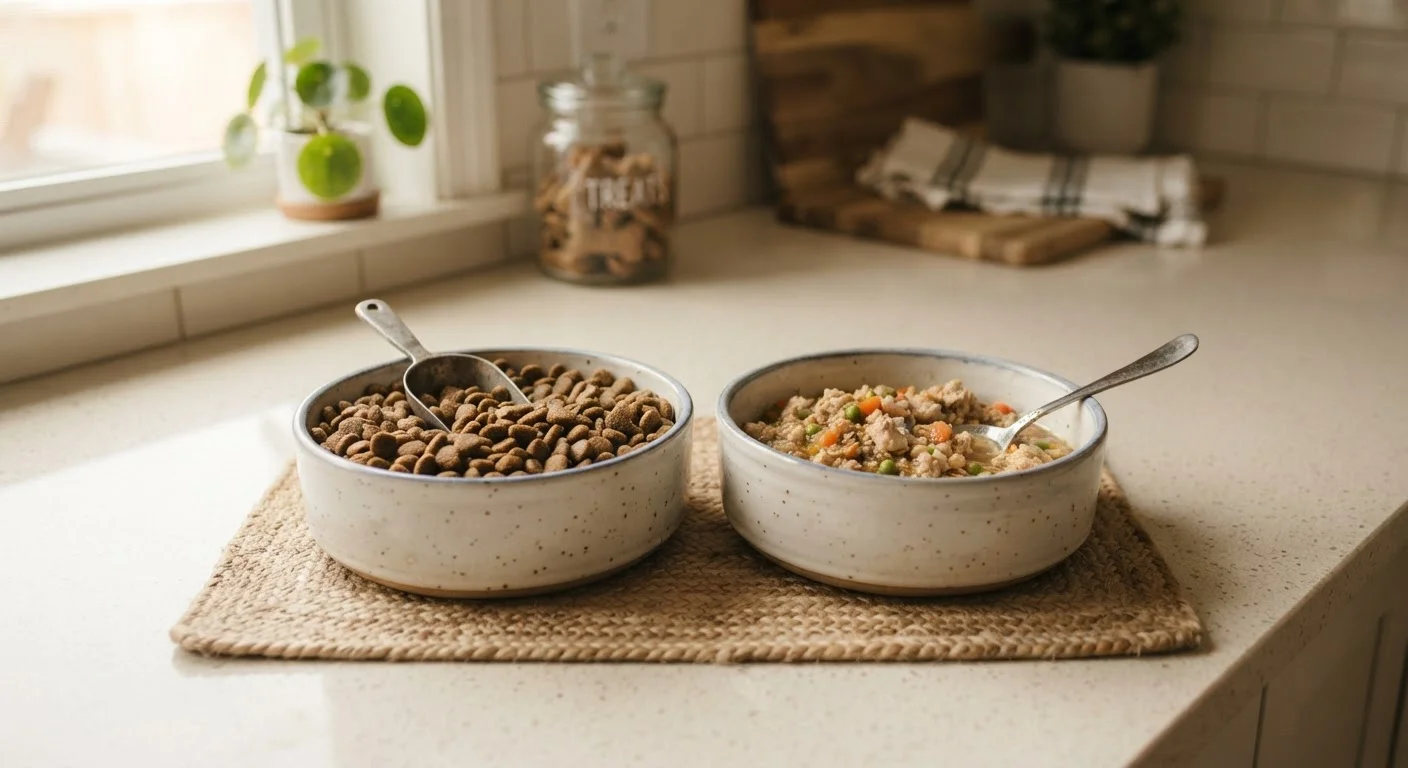
Photo credit: ExplorerGrid.com | Endless Grid Of Factual Content
In this article
A side-by-side look at how dry and wet pet foods differ in moisture, nutrition density, dental impact, and cost-effectiveness.
Key Takeaways
- Wet food contains 70–85% moisture, making it significantly more hydrating than dry kibble's 8–12% moisture content.
- Kibble's crunch does not reliably prevent dental disease; professional dental care remains essential for both formats.
- Wet food is typically more expensive per calorie than kibble, so cost-effectiveness depends on portion requirements.
- Many veterinary nutritionists support mixed feeding as a practical middle ground for most healthy pets.
- Life stage, health conditions, and hydration habits should guide format choice — consult your veterinarian for individual guidance.
What's Actually Inside Each Format
The most striking difference between dry kibble and wet food isn't the ingredients list — it's water content. Dry kibble typically contains 8–12% moisture, whereas wet food ranges from 70–85% moisture. This gap has cascading effects on caloric density, palatability, and how much your pet needs to eat per meal.
Because kibble is so much denser, a small cup packs significantly more calories than the same volume of wet food. This means pet owners must be careful not to overfeed kibble by volume, and equally careful not to underfeed wet food. Both formats can meet AAFCO (Association of American Feed Control Officials) nutritional adequacy standards, so the label phrase "complete and balanced" applies to both — but the nutrient profiles can still vary meaningfully between specific products.
Protein and fat percentages on labels are reported on an as-fed basis, which makes direct comparisons misleading. A wet food showing 9% protein and a kibble showing 28% protein may actually deliver similar protein on a dry-matter basis once moisture is accounted for. To compare formats accurately, convert values to dry-matter basis by dividing the nutrient percentage by the percentage of dry matter in the food.
| Criterion | Dry Kibble | Wet Food |
|---|---|---|
| Moisture content | 8–12% | 70–85% |
| Caloric density | High (per volume) | Lower (per volume) |
| Cost per calorie | Generally lower | Generally higher |
| Shelf life after opening | 4–6 weeks (airtight) | 3–5 days (refrigerated) |
| Dental benefit | Minimal unless VOHC-approved | No mechanical benefit |
| Palatability | Moderate | High (stronger aroma) |
| Best hydration support | Requires ample fresh water | Built-in via high moisture |
| Feeding convenience | High (stable, free-feedable) | Moderate (spoils quickly) |
Hydration, Dental Health, and Digestibility
Hydration is where wet food holds a genuine, documented advantage — particularly for cats. Cats have a lower baseline thirst drive than dogs, a trait inherited from desert-dwelling ancestors. Relying solely on dry kibble can leave many cats in a mild chronic state of underhydration, which is associated with higher rates of feline lower urinary tract disease (FLUTD) and chronic kidney disease. Cat nutrition across life stages covers how hydration needs shift as cats age.
The dental question is more nuanced. For years, the conventional wisdom held that kibble's abrasive texture helped scrub plaque from teeth. Current veterinary consensus, however, is more cautious. The AVMA and VOHC (Veterinary Oral Health Council) note that unless a kibble is specifically formulated and VOHC-approved for dental benefit, its effect on plaque and tartar is minimal — most pets swallow kibble whole rather than chewing it thoroughly. Dental disease in dogs and cats remains a serious concern regardless of food format, affecting the majority of pets over age three.
Digestibility varies by formulation rather than format. High-quality wet and dry foods both achieve strong digestibility scores. However, some pets with sensitive gastrointestinal tracts respond better to wet food's softer composition, while others tolerate kibble without issue. Loose stool, gas, or inconsistent appetite can signal a food isn't working — see signs your pet's diet may not be working for a fuller list of physical indicators.
70–85%
Moisture in wet pet food
Compared to just 8–12% in dry kibble, this gap in water content has direct implications for urinary and kidney health in cats.
~70%
Pets over 3 with dental disease
The American Veterinary Medical Association estimates most cats and dogs over age three show some degree of periodontal disease, regardless of food format.
AAFCO
Nutritional adequacy standard
Both kibble and wet food can carry AAFCO 'complete and balanced' certification, meaning the format alone does not determine nutritional completeness.
Cost, Convenience, and Practical Feeding
On a cost-per-calorie basis, dry kibble is almost always less expensive than wet food. A typical large bag of kibble can cost a fraction of an equivalent caloric supply provided by canned food. For households with multiple pets, or large-breed dogs with high caloric needs, this difference compounds quickly.
Wet food also requires refrigeration after opening and should not sit out longer than four hours, per general food safety guidelines. Kibble can be portioned, stored, and left in a bowl for grazing without spoilage risk — a practical advantage for owners with irregular schedules. That said, once a bag is open, kibble is susceptible to fat oxidation and should be stored in an airtight container and used within the manufacturer's recommended window, typically four to six weeks.
Many veterinary nutritionists see merit in a mixed feeding approach — using wet food to boost hydration and palatability while relying on kibble for the bulk of caloric needs. This can balance cost and nutritional variety. If you're exploring other dietary formats beyond kibble and wet food, raw diets for dogs presents a separate set of considerations backed by current research. For those decoding ingredient labels more broadly, grain-free pet food evidence vs. marketing is a useful companion read.
This article is for general informational purposes only and does not constitute veterinary or medical advice. Always consult a licensed veterinarian before making significant changes to your pet's diet, especially if your pet has an existing health condition.

Author
Pets & Animals Editorial Team
Pets & Animals Editorial Team is the collective byline for our editorial team and contributor network. Articles published under this byline or an editorial pen name are researched, written, and reviewed according to our editorial standards for clarity, consistency, and independence before publication.
View all articles →