
Raw Diets for Dogs: What the Research Says and What Owners Should Weigh
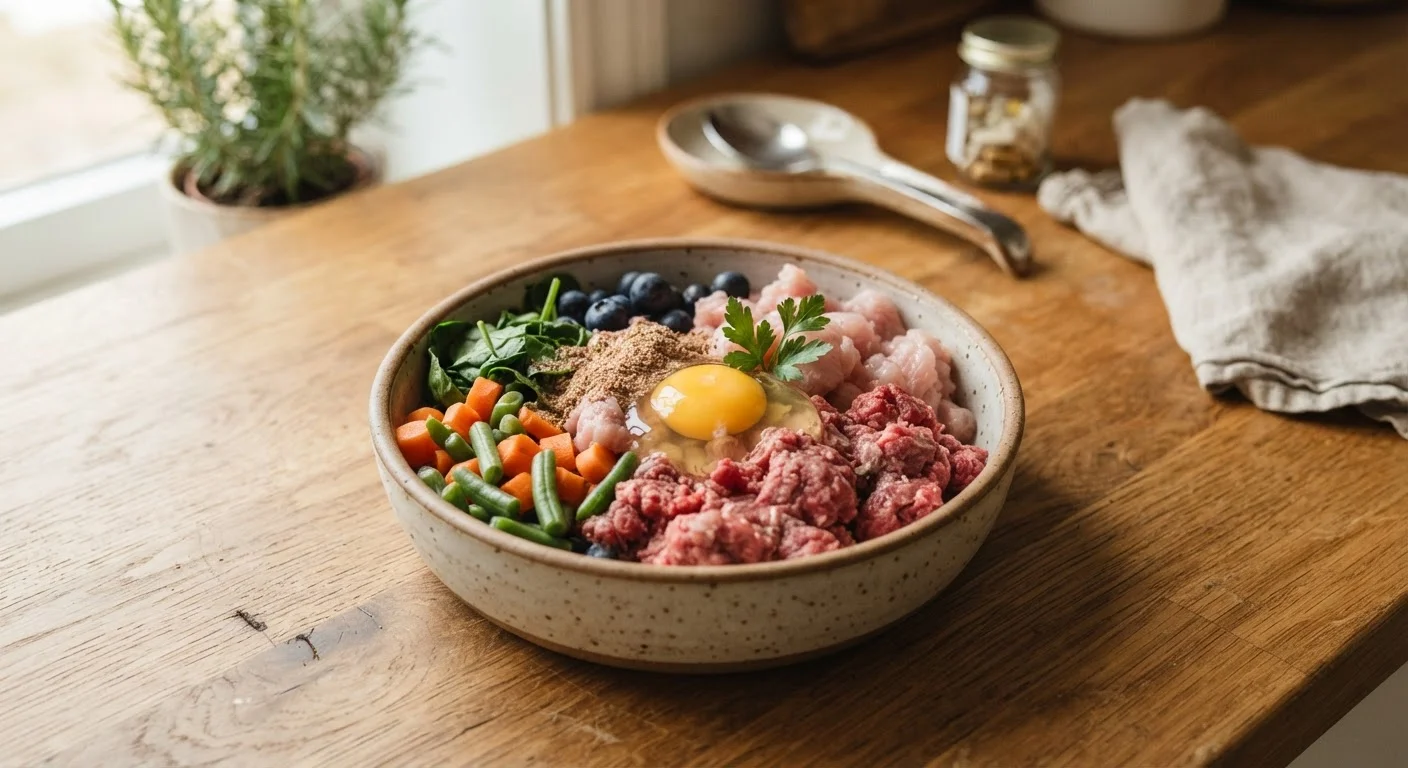
Photo credit: ExplorerGrid.com | Endless Grid Of Factual Content
In this article
A balanced look at the claimed benefits, documented risks, and practical considerations of feeding dogs a raw food diet.
Key Takeaways
- Raw diets lack long-term peer-reviewed safety data supporting widespread use in dogs.
- Bacterial contamination in raw meat poses documented risks to both dogs and their human households.
- Nutritional imbalance is common in homemade raw diets without veterinary nutritionist input.
- Some owners report coat, stool, and energy improvements, though evidence remains largely anecdotal.
- Dogs with compromised immune systems, young puppies, and households with young children face elevated risks.
- Always consult a veterinarian or board-certified veterinary nutritionist before switching your dog's diet.
Minimally processed ingredients with no artificial additives
Raw diets avoid synthetic preservatives, artificial colors, and flavor enhancers common in some commercial foods, which appeals to owners seeking simpler ingredient lists.
Reported improvements in coat quality and skin health
Many owners report shinier coats after switching to raw, possibly linked to higher fat content and the absence of heat-damaged fatty acids from cooking.
Smaller, firmer stools noted by many raw feeders
The lower carbohydrate content of most raw diets produces less fermentable substrate in the gut, which can result in reduced stool volume and odor.
High protein content with real whole-food sources
Raw diets are typically high in animal protein, which is dogs' primary macronutrient need, and deliver it in a form that some nutritionists consider highly bioavailable.
Greater owner visibility into what their dog is eating
Preparing or selecting raw meals gives owners direct knowledge of every ingredient, which can be reassuring for those concerned about commercial food recalls or undisclosed additives.
High risk of bacterial contamination in raw meat
Studies consistently detect Salmonella, Listeria, and E. coli in commercial and home-prepared raw dog foods, posing infection risks to dogs and their human families.
Nutritional imbalance is extremely common
Research shows most homemade raw diets are deficient in multiple essential nutrients, including calcium, zinc, and vitamins D and E, which can cause long-term health problems.
Raw bones pose choking and injury risks
While raw bones are generally softer than cooked, they can still splinter, cause gastrointestinal perforations, or create dental fractures, particularly in aggressive chewers.
Not appropriate for all dogs or all households
Puppies, immunocompromised dogs, senior animals, and households with young children, pregnant individuals, or elderly members face disproportionately elevated risks.
Costly, time-intensive, and logistically demanding
Sourcing quality raw ingredients, maintaining safe storage temperatures, and meeting nutritional targets requires significant ongoing effort and often higher food costs than commercial diets.
Not endorsed by major veterinary health organizations
The AVMA, AAHA, and CDC have all issued statements discouraging raw protein diets for pets based on pathogen and nutritional risk evidence.
What Is a Raw Diet for Dogs?
A raw diet — sometimes called BARF (Biologically Appropriate Raw Food) or a "prey model" diet — typically consists of uncooked muscle meat, organ meat, raw meaty bones, and varying amounts of fruits, vegetables, and dairy. Commercial raw options come frozen or freeze-dried, while many owners prepare meals at home.
Interest in raw feeding has grown alongside broader skepticism about heavily processed foods, but the scientific community and veterinary organizations — including the American Veterinary Medical Association (AVMA) and the American Animal Hospital Association (AAHA) — have published position statements discouraging raw protein diets due to public and animal health concerns.
For those building a broader understanding of dog nutrition, our complete feeding guide for new dog owners provides a solid foundation before exploring specialized diets.
The Case for Raw: What Proponents Claim
Advocates of raw feeding point to a range of reported benefits, many of which are plausible in principle but not yet established through controlled clinical research.
Minimally processed ingredients with no artificial additives
Raw diets avoid synthetic preservatives, artificial colors, and flavor enhancers common in some commercial foods, which appeals to owners seeking simpler ingredient lists.
Reported improvements in coat quality and skin health
Many owners report shinier coats after switching to raw, possibly linked to higher fat content and the absence of heat-damaged fatty acids from cooking.
Smaller, firmer stools noted by many raw feeders
The lower carbohydrate content of most raw diets produces less fermentable substrate in the gut, which can result in reduced stool volume and odor.
High protein content with real whole-food sources
Raw diets are typically high in animal protein, which is dogs' primary macronutrient need, and deliver it in a form that some nutritionists consider highly bioavailable.
Greater owner visibility into what their dog is eating
Preparing or selecting raw meals gives owners direct knowledge of every ingredient, which can be reassuring for those concerned about commercial food recalls or undisclosed additives.
It's worth noting that many of these reported benefits — shinier coats, firmer stools, higher energy — are difficult to separate from the effect of simply moving away from a lower-quality processed food, rather than from the raw format itself. The comparison matters when evaluating claims.
The Documented Risks: What the Research Shows
Veterinary and public health research has identified several consistent concerns with raw diets that owners must take seriously before making a switch.
High risk of bacterial contamination in raw meat
Studies consistently detect Salmonella, Listeria, and E. coli in commercial and home-prepared raw dog foods, posing infection risks to dogs and their human families.
Nutritional imbalance is extremely common
Research shows most homemade raw diets are deficient in multiple essential nutrients, including calcium, zinc, and vitamins D and E, which can cause long-term health problems.
Raw bones pose choking and injury risks
While raw bones are generally softer than cooked, they can still splinter, cause gastrointestinal perforations, or create dental fractures, particularly in aggressive chewers.
Not appropriate for all dogs or all households
Puppies, immunocompromised dogs, senior animals, and households with young children, pregnant individuals, or elderly members face disproportionately elevated risks.
Costly, time-intensive, and logistically demanding
Sourcing quality raw ingredients, maintaining safe storage temperatures, and meeting nutritional targets requires significant ongoing effort and often higher food costs than commercial diets.
Not endorsed by major veterinary health organizations
The AVMA, AAHA, and CDC have all issued statements discouraging raw protein diets for pets based on pathogen and nutritional risk evidence.
86%
Of raw pet foods testing positive for pathogens
A 2018 study published in Vet Record found that 86% of commercial raw dog food samples tested positive for Enterobacteriaceae, with many also containing Salmonella or Listeria.
60%+
Of home-prepared raw diets found nutritionally deficient
Multiple peer-reviewed analyses of home-prepared raw diets found the majority were deficient in at least one essential nutrient, according to research reviewed in the Journal of Nutritional Science.
4x
Greater Salmonella shedding in raw-fed dogs
Studies have found raw-fed dogs are significantly more likely to shed Salmonella in their feces compared to dogs on cooked or commercial diets, increasing household transmission risk.
Nutritional imbalance is one of the most frequently documented problems. A study published in the Journal of Nutritional Science found that the majority of home-prepared raw diets analyzed were deficient in key nutrients such as calcium, phosphorus, zinc, and vitamins D and E. Unlike commercial kibble, raw diets are not required to meet AAFCO (Association of American Feed Control Officials) nutrient profiles unless the manufacturer voluntarily complies.
For context on how raw feeding compares with other alternative diet formats, see our article on what a balanced homemade pet food recipe actually requires.
Food Safety: A Risk That Extends Beyond Your Dog
One of the most significant — and often underappreciated — concerns with raw diets is the risk to human household members, not just the dog. Raw meat commonly carries pathogens including Salmonella, Listeria monocytogenes, E. coli, and Campylobacter. Dogs that consume raw food can shed these bacteria in their feces and saliva for days, even when showing no signs of illness themselves.
Vulnerable Household Members and Raw Pet Food
The CDC advises that households containing children under five, adults over 65, pregnant individuals, or anyone with a weakened immune system should not use raw pet food diets. Dogs on raw diets can carry and shed foodborne pathogens in saliva and feces without appearing ill. If someone in your household falls into one of these categories, discuss the risks thoroughly with both your physician and your veterinarian before considering a raw feeding approach.
The CDC and AVMA both recommend that households with infants, elderly individuals, pregnant people, or immunocompromised members avoid raw pet diets entirely due to the elevated transmission risk. Even in otherwise healthy households, strict hygiene protocols — separate prep surfaces, dedicated utensils, thorough handwashing — are essential.
If you're weighing raw against more conventional options, our comparison of dry kibble and wet food covers how standard formats differ in safety profile, nutrition, and practicality.
Making an Informed Decision
If you're considering a raw diet for your dog, the quality of the decision depends heavily on the quality of the information behind it. Here's what a responsible approach looks like:
- Consult a board-certified veterinary nutritionist (DACVN credential) before starting. They can design or review a diet formulated to meet your dog's life stage, breed, and health status.
- Get bloodwork done before and after any major dietary transition to catch deficiencies early.
- Consider commercial raw options that carry an AAFCO statement of nutritional adequacy — these offer more consistency than homemade preparations.
- Never feed raw to puppies, senior dogs, or immunocompromised animals without explicit veterinary guidance.
Raw feeding sits within the broader conversation about what "natural" means for our pets — a conversation that also touches on grain-free trends. Separating grain-free evidence from marketing offers a useful parallel look at how diet trends can outpace the science.
This article is for general informational purposes only and does not constitute veterinary or medical advice. Always consult a licensed veterinarian or board-certified veterinary nutritionist before making significant changes to your pet's diet.

Author
Pets & Animals Editorial Team
Pets & Animals Editorial Team is the collective byline for our editorial team and contributor network. Articles published under this byline or an editorial pen name are researched, written, and reviewed according to our editorial standards for clarity, consistency, and independence before publication.
View all articles →