
Clicker Training vs. Verbal Markers: Which Communication Style Works Better?
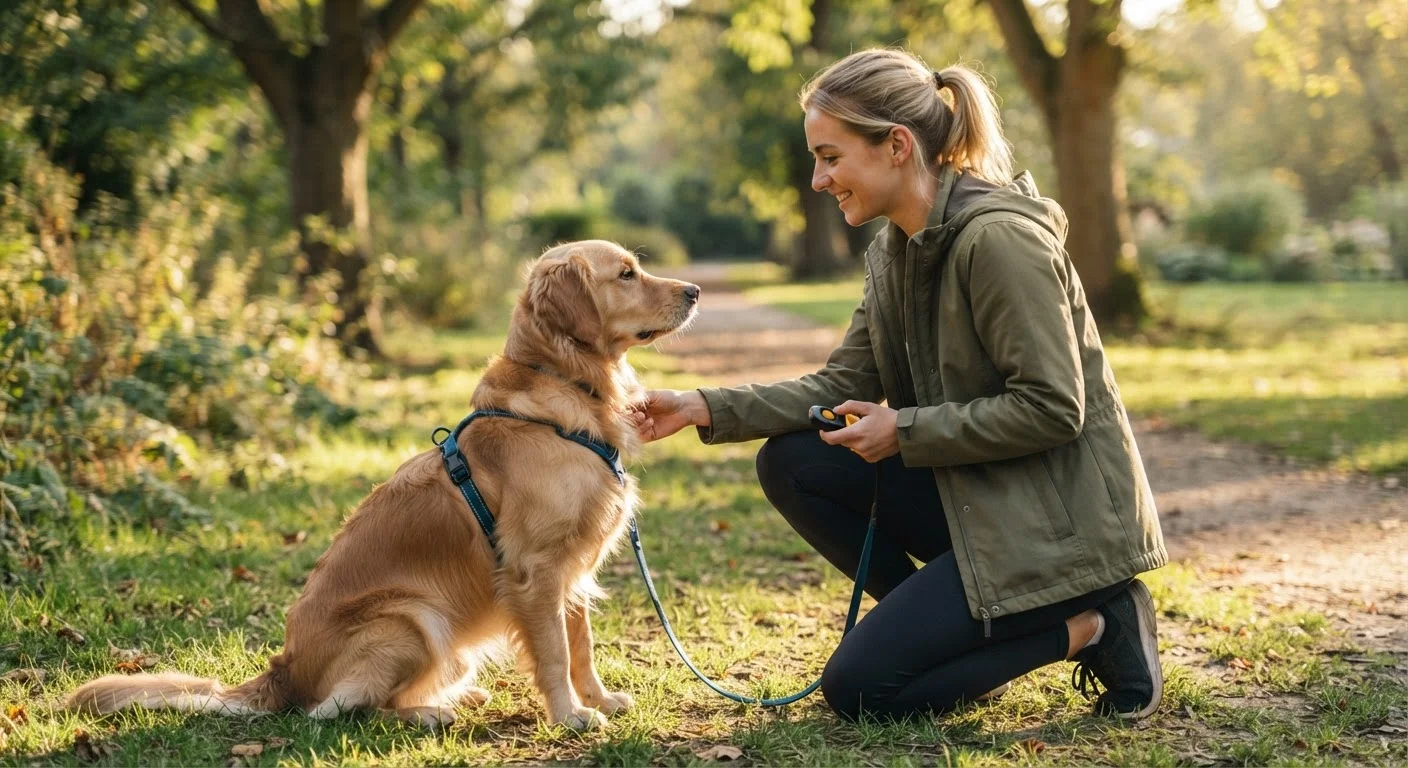
Photo credit: ExplorerGrid.com | Endless Grid Of Factual Content
In this article
Both clicker and verbal marker training use the same principles — but they're not identical. Here's how to weigh the tradeoffs for your situation.
Key Takeaways
- Both methods use operant conditioning: the marker signals to the animal that a reward is coming.
- Clickers offer greater acoustic consistency, which can accelerate early learning in some animals.
- Verbal markers are more practical for daily life — you always have your voice with you.
- Neither method is universally superior; individual animals and owner lifestyles matter most.
- Whichever marker you choose, timing and reinforcement quality drive training outcomes.
- Some trainers successfully combine both, using a clicker during skill acquisition and a verbal marker for maintenance.
The Science Behind Marker-Based Training
Both clicker training and verbal markers are rooted in the same learning principle: conditioned reinforcement. The marker — whether a click or a word like "Yes!" — starts out as a neutral stimulus. Through repeated pairing with a primary reward (typically food), it acquires its own reinforcing value and, critically, communicates to the animal the precise moment a rewarded behavior occurred.
This process, grounded in classical and operant conditioning research associated with behaviorists including B.F. Skinner, is well established in applied animal behavior science. The marker's power lies in its timing: it bridges the gap between the behavior and the delivery of the actual reward, which may take a second or two to arrive. A well-timed marker means the animal receives clear information about what earned reinforcement — even if the treat arrives slightly later.
For a deeper look at how reward-based approaches compare to correction-based methods overall, see our overview of positive reinforcement vs. correction-based training.
| Criterion | Clicker Training | Verbal Markers |
|---|---|---|
| Acoustic consistency | Identical every repetition | Varies with tone and mood |
| Availability | Requires carrying a device | Always available |
| Hands required | One hand to operate | Hands-free |
| Best phase of training | Skill acquisition | Maintenance and daily life |
| Learning curve for handler | Moderate — timing practice needed | Low — familiar tool |
| Adaptability to environment | Fixed sound regardless of context | Volume and tone adjustable |
| Use in competitive training | Widely preferred | Common in maintenance phase |
Where Clickers Outperform Verbal Markers
The clicker's primary advantage is acoustic consistency. Every click sounds identical — the same pitch, duration, and volume regardless of your emotional state, fatigue level, or ambient noise. Human voices, by contrast, shift naturally with mood. A marker word delivered with excitement or frustration carries different tonal qualities even if the word itself is the same, and animals are sensitive to those variations.
This consistency is particularly valuable during the acquisition phase — the earliest stage of learning a new behavior. Research in comparative psychology suggests that a temporally precise, distinctive stimulus can improve the speed and accuracy of initial skill formation. This is one reason professional trainers, especially those working in competitive obedience, agility, or marine mammal training, have long favored clickers and similar bridge signals.
Clicker training also enforces good habits in the trainer: because you have to deliberately press the device, it encourages more intentional, conscious marker delivery rather than reflexive or habitual vocalizations that can lose their meaning over time.
Where Verbal Markers Have the Edge
The practical case for verbal markers is compelling. Your voice is always available — in the middle of a trail run, during an unexpected training opportunity, or in a veterinary waiting room. There's no equipment to forget at home, no battery to replace, and no free hand required.
Verbal markers also adapt naturally to context. A calm, quiet "good" for a dog in an anxious state, or an enthusiastic "yes!" during an upbeat agility drill, can communicate both the marker information and an appropriate emotional tone. While clicker advocates see tonal variation as a flaw, some trainers and behaviorists argue that relevant emotional signaling has its own value in building the human-animal relationship.
For owners who are simultaneously managing a leash, treats, and a reactive dog in a busy environment, eliminating one handheld device meaningfully reduces cognitive load — and trainer attention is always better directed toward timing than toward tool management. For context on how training tools fit into broader behavior work, our guide on accidental reinforcement is a useful companion read.
~0.05s
Typical reaction window for effective marker timing
Animal behavior researchers generally note that markers must bridge a reward delay of up to a few seconds — precision within fractions of a second meaningfully affects learning clarity.
10–15 reps
Conditioning trials to establish a new marker
Most applied behavior resources recommend pairing a new marker with a primary reinforcer for 10 to 15 repetitions per session before relying on it in active training.
3–5 min
Recommended session length for marker training
Short, focused training sessions are consistently recommended by certified animal trainers to maintain engagement and prevent frustration in both the animal and handler.
How to Condition Either Marker — and When to Switch
Regardless of which marker you choose, the conditioning process is the same. Begin in a low-distraction environment. Present the marker (click or verbal cue), then immediately deliver a high-value food reward. Repeat 10–15 times across several short sessions. You'll know the marker is conditioned when your animal orients toward you — ears prick, eyes focus — at the sound of it alone.
Switching between markers mid-training is possible but should be done deliberately. Many trainers use a clicker during early skill acquisition, then fade to a verbal marker once the behavior is reliably established. This hybrid approach can offer the precision benefits of the clicker where they matter most, with the convenience of a verbal marker for everyday reinforcement.
Whatever format your training takes, consistency in timing and reinforcement quality matters far more than the specific marker chosen. If you're weighing structured training options, our article on group classes vs. private sessions vs. online programs can help you find the right environment to practice these techniques.
This article is for general educational purposes. For animals with significant behavioral challenges or anxiety, consult a certified applied animal behaviorist or veterinary behaviorist for individualized guidance.

Author
Pets & Animals Editorial Team
Pets & Animals Editorial Team is the collective byline for our editorial team and contributor network. Articles published under this byline or an editorial pen name are researched, written, and reviewed according to our editorial standards for clarity, consistency, and independence before publication.
View all articles →