
Group Classes, Private Sessions, and Online Programs: Choosing the Right Training Format
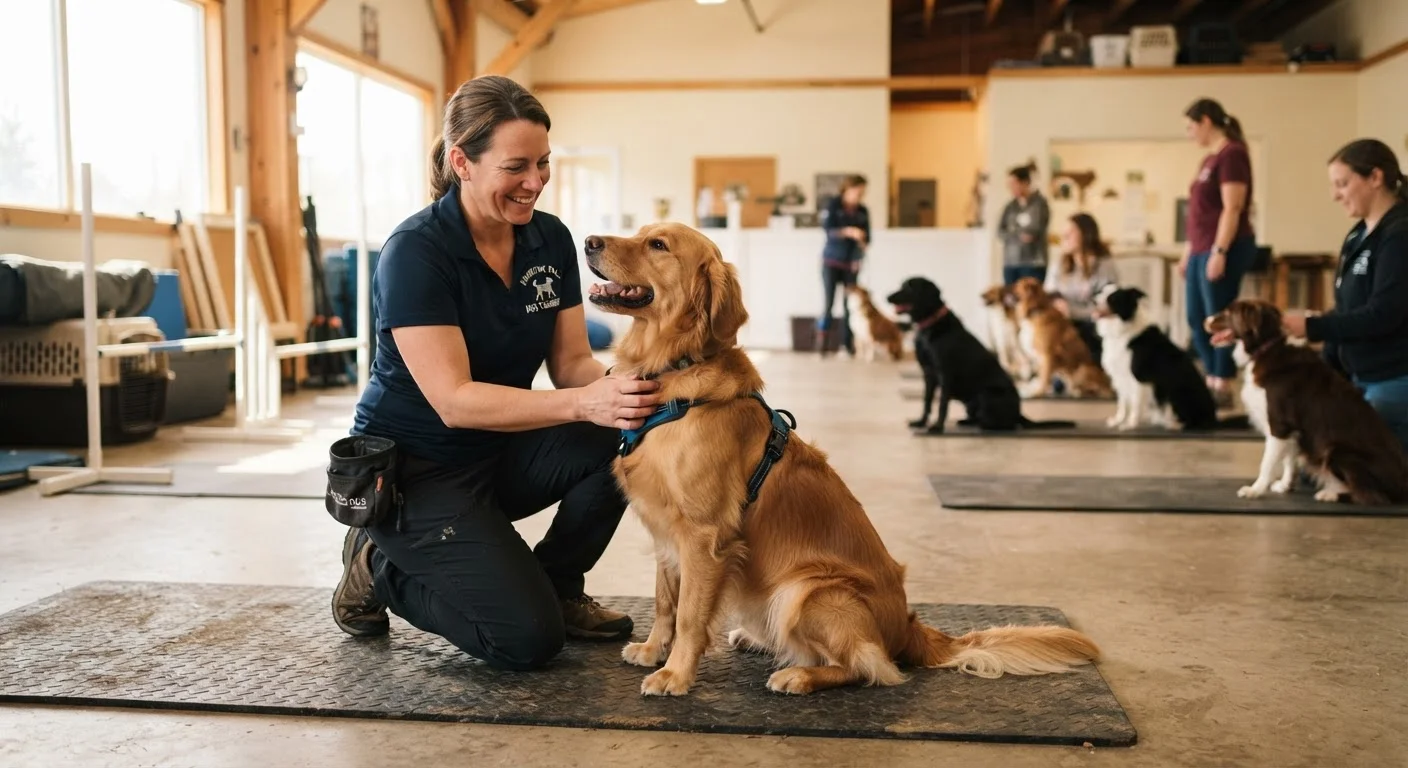
Photo credit: ExplorerGrid.com | Endless Grid Of Factual Content
In this article
Each training format suits different goals, dogs, and schedules. Here's what to weigh when deciding which structure fits your situation.
Key Takeaways
- Group classes build socialization skills alongside obedience, making them ideal for puppies and social dogs.
- Private sessions offer individualized attention best suited for dogs with behavioral challenges or specific goals.
- Online programs provide flexibility but require strong handler self-discipline and observation skills.
- Your dog's temperament, your budget, and your schedule all influence which format delivers the best results.
- Many owners combine formats at different stages of training for the most effective outcomes.
Why Format Matters as Much as Method
The techniques a trainer uses — whether reward-based shaping, luring, or marker training — often get most of the attention. But the format in which those techniques are delivered shapes how effectively they transfer to real life. A dog who learns to sit perfectly in a quiet living room via a video tutorial may struggle to replicate that behavior at a busy park. A reactive dog placed in a crowded group class before being ready can have setbacks rather than breakthroughs.
Understanding the structural differences between group classes, private sessions, and online programs helps owners set realistic expectations and choose the environment most likely to support their dog's progress. For more on how environmental setup influences outcomes, see our training session preparation checklist.
Group Classes: Socialization Built Into the Curriculum
Group classes typically run four to eight weeks, with six to twelve dog-and-handler pairs attending each session. This format offers a structured curriculum, peer accountability, and — critically — a controlled distraction environment that mirrors real-world conditions.
The presence of other dogs is a feature, not a flaw. Puppies especially benefit from learning to focus on their handler despite nearby activity, a skill that directly supports reliability in public settings. Veterinary behaviorists and certified applied animal behaviorists consistently support early socialization within appropriately managed group environments as a core component of behavioral health.
However, group classes are not the right starting point for every dog. Animals with significant reactivity, fear responses, or a history of aggression may find the proximity of unfamiliar dogs overwhelming before foundational confidence has been built. If you have a rescue dog with an uncertain history, review guidance on training adult rescue dogs before enrolling in a group setting.
| Group Classes | Private Sessions | Online Programs | |
|---|---|---|---|
| Cost | Lower per session | Higher per session | Lowest overall |
| Trainer feedback | Shared attention | Full individualized attention | Limited or none (pre-recorded) |
| Socialization opportunity | High — built into format | Low — one-on-one only | None |
| Scheduling flexibility | Fixed weekly schedule | Negotiable with trainer | Maximum flexibility |
| Best dog profile | Social, stable temperament | Reactive, fearful, or complex | Calm, motivated dog with prior training |
| Best handler profile | Beginner to intermediate | Any level needing targeted help | Experienced, self-directed |
| Distraction environment | Realistic, managed | Controlled by trainer | Typically home-based only |
Private Sessions: Precision for Complex Needs
One-on-one sessions with a qualified trainer allow instruction to be tailored entirely to a specific dog's temperament, learning pace, and behavioral profile. There are no scheduling compromises around other students, and the trainer's full attention goes toward diagnosing what the dog and handler actually need — not a standardized curriculum.
This format is particularly well-suited for dogs working through reactive behavior, leash frustration, separation anxiety, or resource guarding, where the environment and approach must be precisely controlled. It also benefits handlers who are new to training and need more hands-on coaching before they can reliably execute techniques independently.
The primary trade-off is cost — private sessions are consistently more expensive per hour than group formats. They also require the handler to take on more responsibility for practice between sessions, since peer modeling and group reinforcement are absent.
Whatever collar or equipment a trainer recommends in a private session, understanding the tools being used is important. Our guide to training collars explains how each type functions and the contexts in which trainers typically use them.
Online Programs: Flexibility With Real Limitations
Online dog training programs range from pre-recorded video libraries to live video sessions with a trainer. Pre-recorded content offers maximum scheduling flexibility and is often the most affordable option, while live virtual sessions blend some individualization with remote convenience.
The core limitation of fully self-directed online programs is feedback. A trainer watching video can observe a dog's body language, timing errors, and handler mechanics — but pre-recorded content cannot. Owners must develop strong observational skills to assess their own technique honestly, which is a meaningful skill gap for many beginners.
Online formats work best for handlers who have already completed foundational in-person training and want to expand their knowledge, or for those in rural areas where qualified local trainers are scarce. The parallels to self-directed human learning are real: as explored in the context of structured versus self-directed learning, motivated learners with clear goals tend to get more from independent formats than those who benefit from external structure.
For dogs working on precision behaviors like a reliable stay, self-paced video content can supplement in-person instruction effectively — particularly when using a framework like the three-dimension stay progression that breaks the skill into manageable steps.
Choosing the Right Fit for Your Dog and Schedule
Matching format to need requires honest assessment across a few key dimensions: your dog's current behavioral baseline, your own skill level as a handler, your budget, and your weekly availability.
- Puppies (8–16 weeks): Professionally run puppy classes during the socialization window offer socialization benefits that are difficult to replicate privately or online.
- Dogs with behavioral concerns: Start with private sessions to establish a safe baseline before transitioning to group settings.
- Experienced handlers refreshing skills: Online programs, especially live virtual formats, can be highly efficient and cost-effective.
- Handlers working on marker timing: Group or private formats allow a trainer to provide real-time feedback that recordings cannot replace. See our comparison of clicker training versus verbal markers for more on timing-dependent techniques.
Many successful training journeys combine formats: private sessions to address a specific challenge, group classes to generalize skills in a social context, and online content to support ongoing practice at home. The format is a vehicle — what matters most is that it keeps both dog and handler engaged, safe, and making consistent progress.
This article is for general informational purposes only and does not substitute for guidance from a certified professional dog trainer or veterinary behaviorist. For dogs showing significant behavioral concerns, consult a qualified professional.

Author
Pets & Animals Editorial Team
Pets & Animals Editorial Team is the collective byline for our editorial team and contributor network. Articles published under this byline or an editorial pen name are researched, written, and reviewed according to our editorial standards for clarity, consistency, and independence before publication.
View all articles →