
Leash Reactivity in Dogs: What's Actually Happening and How to Address It
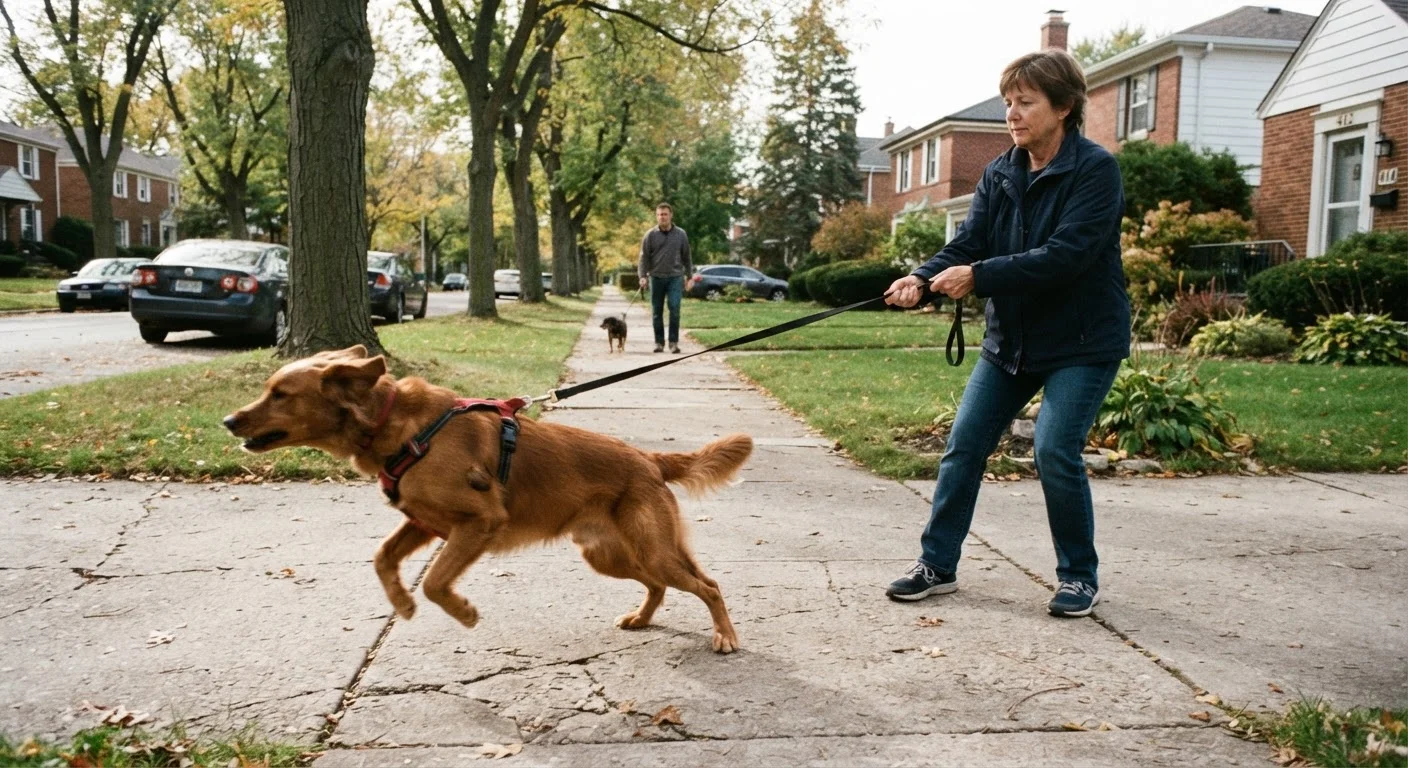
Photo credit: ExplorerGrid.com | Endless Grid Of Factual Content
In this article
Lunging, barking, and pulling at other dogs on leash is one of the most common behavior complaints. Understand the root causes and training approaches.
Key Takeaways
- Leash reactivity is usually rooted in fear, frustration, or a lack of early socialization — not aggression.
- The leash itself constrains a dog's natural flight-or-fight options, often amplifying its emotional response.
- Punishment-based approaches can increase anxiety and worsen reactivity over time.
- Desensitization and counter-conditioning are the most evidence-supported training approaches.
- Most leash-reactive dogs improve significantly with consistent, positive-reinforcement-based training.
- A veterinary behaviorist or certified trainer can help in cases where reactivity is severe or persistent.
What Is Actually Happening in a Reactive Dog
When a leash-reactive dog spots another dog across the street and erupts into barking and lunging, it is not staging a performance or trying to dominate the situation. What is happening is a genuine emotional event, most commonly rooted in one of two experiences: fear or frustration.
Fear-based reactivity occurs when a dog perceives the approaching trigger as a threat. Because the leash removes the option to flee, the dog defaults to the other half of the stress response: fight. This is sometimes called 'fight or flight on a leash,' and it explains why many dogs who react intensely on leash are perfectly sociable off it.
Frustration-based reactivity looks similar on the surface but has a different origin. Dogs who were frequently greeted by other dogs on leash as puppies can develop an intense, aroused desire to approach every dog they see. When the leash prevents that, frustration spills over into barking and pulling. Understanding which type is driving the behavior matters, because the training approach and timeline can differ.
To understand why these behaviors become habits, it helps to know how reinforcement shapes them — our article on why dogs repeat behaviors that seem to get them in trouble explains the underlying science of operant conditioning in plain terms.
Why the Leash Makes It Worse
A dog's first line of defense in a stressful encounter is usually distance — moving away, curving, or offering calming signals. On leash, those options are significantly restricted. The handler's tension on the lead (often unconscious when a dog reacts) can transmit anxiety directly through the leash, compounding the dog's stress.
This is why leash reactivity often looks dramatically worse than the same dog's behavior in a fenced yard or dog park. The environment, not the dog's character, is shaping the response. Owners sometimes interpret the intensity of an on-leash reaction as evidence of dangerous aggression, leading them to pull harder, yell, or apply corrections — responses that typically escalate the situation rather than resolve it.
Watch Your Own Body Language on Walks
Dogs are highly attuned to their handler's tension, pace, and leash pressure. If you spot a trigger and immediately tighten your grip or hold your breath, your dog may pick up on that signal before it even processes what you saw. Practice keeping your shoulders relaxed and the leash loose as a default habit — it can make a measurable difference in your dog's baseline arousal on walks.
It is also worth noting that some dogs who appear reactive are reacting to the owner's own anxiety. Dogs are sensitive readers of human body language and leash tension. Staying calm and keeping slack in the leash when possible can meaningfully reduce some dogs' arousal level.
Evidence-Supported Training Approaches
The two most well-supported techniques for leash reactivity are desensitization and counter-conditioning, typically used together. Desensitization means exposing the dog to its trigger at a low enough intensity that it does not react — this is called working 'under threshold.' Counter-conditioning means pairing the presence of that trigger with something the dog genuinely values, usually high-value food, to shift the emotional association from negative to neutral or positive.
In practice, this looks like positioning your dog far enough from another dog that it notices but doesn't react, then marking that moment of awareness with a calm word and immediately delivering a treat. Over many repetitions, the dog begins to associate the sight of another dog with good things happening — and the arousal response diminishes.
What does not work well — and can make things worse — is suppressing the behavior through intimidation or punishment. Correcting a growl, for example, removes the warning signal without resolving the underlying emotion. This is consistent with the broader body of evidence reviewed in the what pet owners get wrong about dominance and pack behavior article.
Owners sometimes inadvertently reinforce reactivity through their own responses — tightening the leash, offering soothing talk, or retreating in ways the dog finds rewarding. The hidden ways owners accidentally reward the behaviors they're trying to stop covers this dynamic in detail.
Managing the Environment While Training
Training takes time, and in the meantime, reactive dogs still need walks. Practical management reduces the frequency of full reactions, which matters because every intense reactive episode can reinforce the pattern. Strategies include:
- Walking during quieter times of day to reduce trigger exposure
- Crossing the street or turning around when a trigger appears at close range
- Using a well-fitted front-clip harness to reduce pulling without causing pain
- Learning to read your dog's early stress signals — lip licking, stiffening, intense staring — before a full reaction occurs
Rescue dogs often arrive with heightened stress responses and uncertain histories, which can make reactivity more pronounced in the early months. The article on training an adult rescue dog addresses how to calibrate expectations and methods for dogs still building trust.
If reactivity is severe, interfering significantly with quality of life, or escalating despite consistent training, consulting a board-certified veterinary behaviorist (DACVB) or a certified applied animal behaviorist (CAAB) is a reasonable and often very effective next step. In some cases, a veterinarian may discuss whether anti-anxiety medication is appropriate to support the training process — this is a conversation to have with a professional, not a decision to make independently.
This article is for general informational and educational purposes only and does not constitute professional veterinary or behavioral advice. If your dog's reactivity is severe, escalating, or involves biting, please consult a licensed veterinary professional or certified animal behaviorist.
Frequently Asked Questions

Author
Pets & Animals Editorial Team
Pets & Animals Editorial Team is the collective byline for our editorial team and contributor network. Articles published under this byline or an editorial pen name are researched, written, and reviewed according to our editorial standards for clarity, consistency, and independence before publication.
View all articles →