
Training an Adult Rescue Dog: Adjusting Your Expectations and Methods
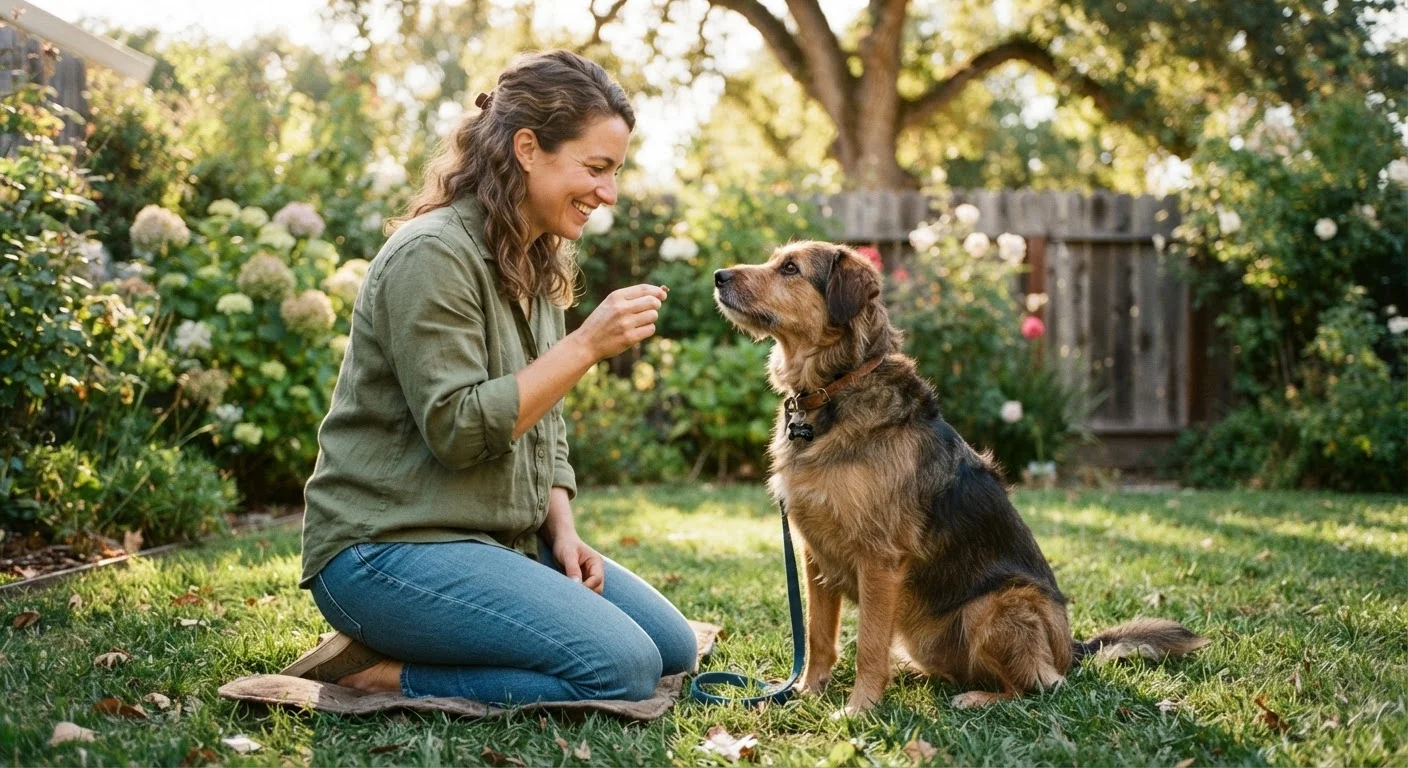
Photo credit: ExplorerGrid.com | Endless Grid Of Factual Content
In this article
Rescue dogs don't arrive as blank slates. Understand how prior experience, stress responses, and trust-building shape what training looks like for them.
Key Takeaways
- Adult rescue dogs carry behavioral histories that directly influence how and how quickly they learn.
- Trust-building is a prerequisite — training is far less effective when a dog feels unsafe or uncertain.
- Positive reinforcement is the most evidence-supported approach for dogs with unknown or stressful backgrounds.
- Slow, incremental progress is normal; setbacks don't mean failure.
- Many rescue dogs have no foundational training and benefit from starting at the very basics.
Why Adult Rescue Dogs Aren't Blank Slates
A common misconception is that an older rescue dog is a clean canvas. In reality, every dog that has lived through relinquishment, shelter stays, or neglect arrives with a nervous system shaped by those experiences. Prior learning — whether formal, accidental, or trauma-driven — doesn't disappear when a dog crosses your threshold.
Research in animal behavior consistently shows that early and ongoing environmental exposure alters stress-response systems. A dog that learned barking brings attention, or that humans are unpredictable, has formed associations that take time and repetition to modify. That's not a character flaw; it's neurobiology.
Understanding this reframes your role. You're not starting from zero — you're working alongside an animal that already has a behavioral vocabulary, and your job is to expand it while making the existing context feel safe.
The Decompression Period: Give It Time Before You Push
Most animal behaviorists and shelter professionals recommend a structured decompression window — commonly described as the first two to four weeks — before introducing formal training expectations. During this time, the dog is adjusting to a new sensory environment: new smells, sounds, routines, and relationships.
Pushing obedience drills too early can raise cortisol levels and interfere with learning. A dog in a chronic state of low-grade stress will have difficulty retaining new information and may show regression rather than progress.
Begin with foundation behaviors your dog likely never learned
Many rescue dogs missed early socialization and basic training entirely. Starting with simple cues like 'sit,' 'look,' and name recognition establishes communication without triggering frustration. Foundation skills build the dog's confidence and your relationship simultaneously.
Use positive reinforcement exclusively, especially in the early months
Positive reinforcement — rewarding desired behaviors with something the dog values — is supported by decades of behavioral science and is particularly important for dogs with stressful histories. Punishment-based methods can erode trust quickly in dogs that already have reasons to be wary of humans.
Keep early sessions very short — five minutes or fewer
Stress limits learning capacity. Short sessions end on a positive note before the dog becomes fatigued or frustrated, making each session feel like a win. Frequent short sessions accumulate more learning than occasional long ones.
Read and respect stress signals; stop before the dog shuts down
Yawning, lip licking, turning away, whale eye (showing the whites of the eyes), and stiffening are all early stress signals. Continuing past these signs teaches the dog that their communication is ignored, which damages trust and can escalate behavior.
Maintain predictable routines throughout the training period
Predictability reduces baseline anxiety, which directly improves a dog's capacity to learn. When a dog knows what to expect — feeding, walks, training, rest — their stress response system has less to monitor, freeing cognitive resources for learning.
Simple structure is your friend during decompression: consistent feeding times, predictable potty schedules, and calm, positive interactions. Let the dog observe without pressure. For guidance on how to structure those first crucial weeks, see the first 30 days with a new dog.
Core Training Principles That Work for Rescue Dogs
Once your dog is showing signs of settling — relaxed body language, voluntary engagement, appetite — you can begin introducing basic training. The following principles are especially well-suited to dogs with uncertain histories.
When working on specific skills like impulse control or stationary cues, build each behavior incrementally. Teaching a solid stay is a good illustration: skilled trainers layer duration, distance, and distraction separately, never all at once. This principle applies to virtually every behavior you'll teach.
If your dog is displaying leash reactivity — one of the most common issues seen in rescue dogs — it's worth understanding the underlying mechanics. Leash reactivity often has anxiety or arousal at its root, not aggression, and training that misidentifies the cause can make the problem worse.
Choosing the Right Training Format for a Rescue Dog
Not every training environment suits every rescue dog. Group classes offer socialization and real-world distraction practice, but a dog that is still building foundational trust or managing fear responses may be overwhelmed before they can absorb anything useful. Private sessions allow a trainer to tailor the approach to your dog's specific history and responses.
Choosing the right training format is worth thinking through carefully — factors like your dog's reactivity level, your own experience, and realistic scheduling all matter. A certified professional trainer or veterinary behaviorist can help assess where your dog is developmentally and recommend an appropriate starting point.
This article is for general informational and educational purposes only. For dogs showing signs of significant fear, aggression, or trauma-related behavior, consult a certified professional dog trainer (CPDT-KA) or a board-certified veterinary behaviorist.

Author
Pets & Animals Editorial Team
Pets & Animals Editorial Team is the collective byline for our editorial team and contributor network. Articles published under this byline or an editorial pen name are researched, written, and reviewed according to our editorial standards for clarity, consistency, and independence before publication.
View all articles →