
Airport Security Myths That Are Slowing You Down
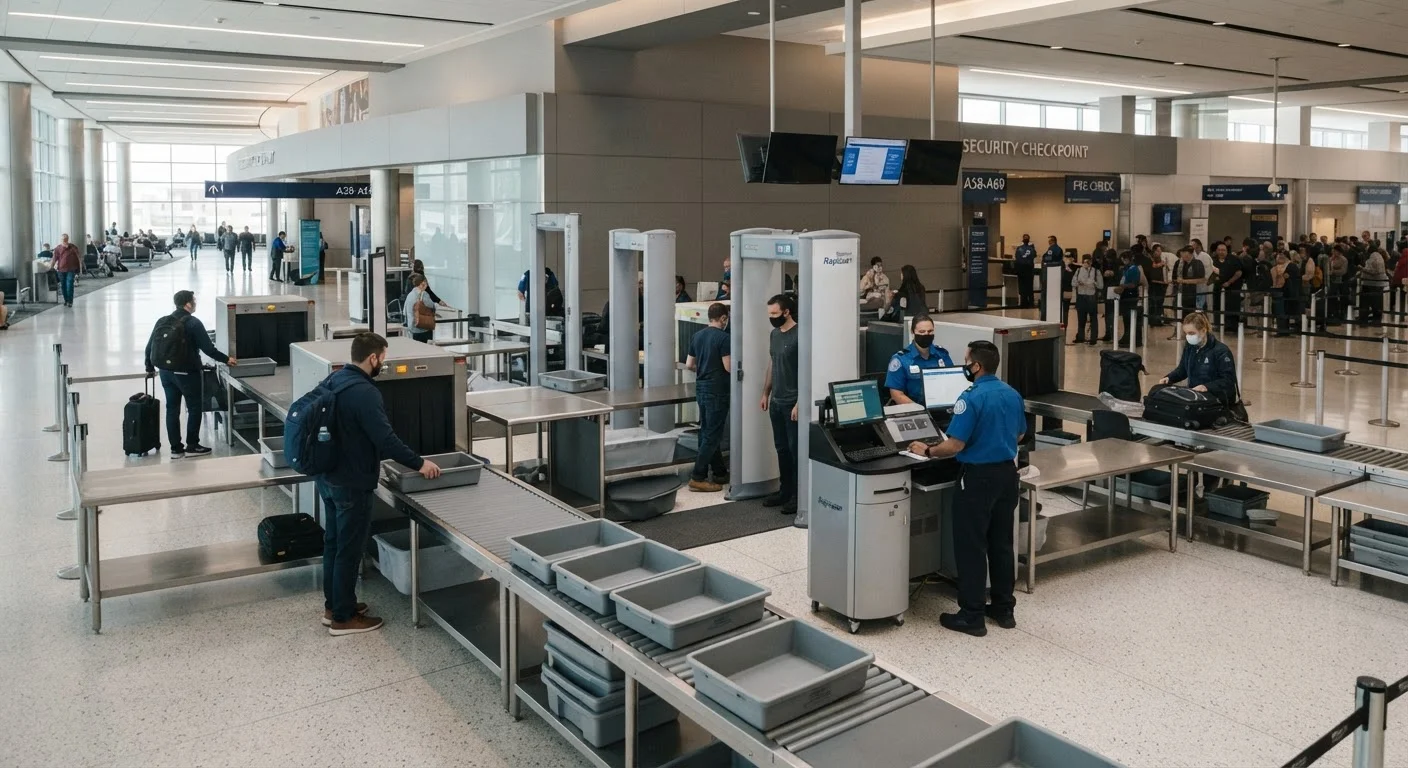
Photo credit: ExplorerGrid.com | Endless Grid Of Factual Content
In this article
From laptop rules to footwear, many TSA assumptions travelers hold are outdated or flat-out wrong. Here's what the checkpoints actually require.
Key Takeaways
- You do not need to remove shoes at every checkpoint — TSA PreCheck members and children under 12 are exempt.
- Laptops only need to leave your bag if you're in a standard screening lane, not TSA PreCheck.
- The 3-1-1 liquid rule has specific exceptions, including medically necessary liquids and breast milk.
- Metal detectors don't catch everything — body scanners are now the standard at most major US airports.
- Arriving excessively early does not always speed things up; knowing the rules is what saves real time.
Why Security Myths Survive the Check-In Line
Airport security feels high-stakes, so travelers cling to whatever "rules" they've heard — from a nervous friend, a half-remembered news segment, or simply habit formed years ago. The result is a checkpoint full of people doing things that aren't required while accidentally skipping the things that are. The TSA updates its procedures regularly, and many assumptions travelers carry are outdated or never were true in the first place.
Understanding what checkpoints actually require doesn't just save time — it makes the whole experience less stressful. And for more prep wisdom, see our carry-on packing guide for how smart packing works hand-in-hand with smoother security.
Myth
Everyone has to take their shoes off at airport security.
Fact
TSA PreCheck members and children under 12 are not required to remove shoes. Adults in standard lanes must remove them.
The shoes-off rule applies to adult travelers aged 13 and older in standard TSA screening lanes. TSA PreCheck members keep their shoes on as one of the program's core perks. Children 12 and under are also exempt in standard lanes. If you're routinely removing footwear in a PreCheck lane, you're adding effort the program was built to eliminate.
Myth
You always have to take your laptop out of your bag.
Fact
Only standard-lane travelers must remove laptops. TSA PreCheck members keep laptops and most electronics inside their bags.
Standard screening requires laptops and most devices larger than a cell phone to be placed separately in a bin for X-ray imaging. TSA PreCheck lanes use advanced imaging that reads through bags effectively, so devices stay put. Removing your laptop unnecessarily in a PreCheck lane creates clutter and slows you — and the people behind you — down.
Myth
The 3-1-1 rule applies to all liquids with no exceptions.
Fact
Medically necessary liquids, prescription medications, and breast milk or infant formula are permitted beyond the 3.4 oz limit.
The 3-1-1 rule covers typical toiletries and beverages, but the TSA explicitly permits medically necessary liquids and medications in quantities that exceed 3.4 oz. These items must be declared to an officer at the beginning of screening and may be subject to additional inspection, but they will not automatically be rejected. Breast milk, formula, and juice for infants also fall under this exception.
Myth
Metal detectors catch everything — if nothing beeps, you're fine.
Fact
Most major US airports now use body scanners, not just metal detectors. These detect density, not only metal.
Walk-through metal detectors are increasingly supplemented or replaced by millimeter-wave body scanners at major US airports. These scanners detect anomalies based on density and shape, not just metallic material. Items like certain dense plastics or ceramics can flag the system. Removing bulky, dense objects — not just metal — is what the pre-scan bin process is designed to address.
Myth
Arriving 3 hours early guarantees you'll make your flight.
Fact
Arrival time alone doesn't protect you — knowing the rules and preparing your bag in advance is what prevents delays.
Extra buffer time helps on busy travel days, but it doesn't substitute for preparation. Travelers who pack prohibited items, don't know their lane type, or aren't ready at the document checkpoint create their own delays regardless of how early they arrived. Preparation — checking the TSA's prohibited items list, packing strategically, and understanding your screening program — is more reliably protective than extra minutes alone.
Liquid Rules, Electronics, and Other Frequently Misread Policies
The 3-1-1 rule — containers of 3.4 oz or less, in one quart-sized clear bag, one bag per traveler — is real, but the exceptions are widely misunderstood. Medically necessary liquids, prescription medications, and breast milk or infant formula are permitted in reasonable quantities beyond 3.4 oz and do not need to fit in your quart bag. They should be declared to the officer at the start of screening, but they will not automatically be confiscated.
Electronics rules are similarly tangled with myth. Standard-lane travelers must remove laptops and large electronics from bags for separate X-ray screening. TSA PreCheck members do not — their bags go through as-is. If you're constantly pulling out devices in PreCheck, you're doing extra work the program was designed to eliminate.
~2.9M
Daily travelers screened by TSA
The TSA screens approximately 2.9 million passengers per day across US airports, according to TSA checkpoint data.
~15M
Active TSA PreCheck members
TSA reported approximately 15 million enrolled PreCheck members, a program designed to reduce checkpoint friction for frequent flyers.
One more note worth flagging: the "anything metal triggers the alarm" belief sends people removing belts, coins, and jewelry they don't need to touch. Modern body scanners detect density anomalies, not just metal. Dense objects of any material — certain plastics, ceramics — can warrant a secondary check. The goal is removing bulky items that could obscure imaging, not chasing every piece of metal on your body.
What Actually Slows Lines Down — and How to Move Faster
The biggest delays at security don't come from policy complexity — they come from unpreparedness. Travelers who haven't thought through their bag, who pack prohibited items, or who don't know their screening lane type create bottlenecks for everyone behind them. A few practical habits consistently help:
- Know your lane. TSA PreCheck, Clear, and standard lanes have different rules. Don't apply standard-lane habits in PreCheck — it slows you and others down.
- Keep your ID and boarding pass accessible before you reach the document checker, not while you're standing at the podium.
- Front-load prohibited-item checks. The TSA's official website lists prohibited items by category. Reviewing it before you pack — especially for carry-on bags — prevents confiscation surprises.
- Wear low-profile footwear if you're in a standard lane. Shoes must come off in standard screening (adults aged 13 and older). Boots with complex lacing are a real time cost.
Planning well before the airport is where security prep begins. Our hidden trip costs guide also covers overlooked expenses — like checked bag fees that force last-minute repacking at the counter, which can cascade into security delays. And if you're traveling internationally, common myths about international travel planning addresses entry-requirement misconceptions that can affect more than just your security experience.
Don't Rely on Secondhand Security Rules
TSA policies are updated periodically, and what applied two years ago — or what your travel companion swears by — may be outdated or airport-specific. Always verify current rules directly on the TSA's official website (tsa.gov) before your trip, especially for specialty items like sporting equipment, medications, or tools. When in doubt, ask a TSA officer at the checkpoint rather than guessing.

Author
Travel & Trips Editorial Team
Travel & Trips Editorial Team is the collective byline for our editorial team and contributor network. Articles published under this byline or an editorial pen name are researched, written, and reviewed according to our editorial standards for clarity, consistency, and independence before publication.
View all articles →