
Carry-On Packing Without the Last-Minute Scramble
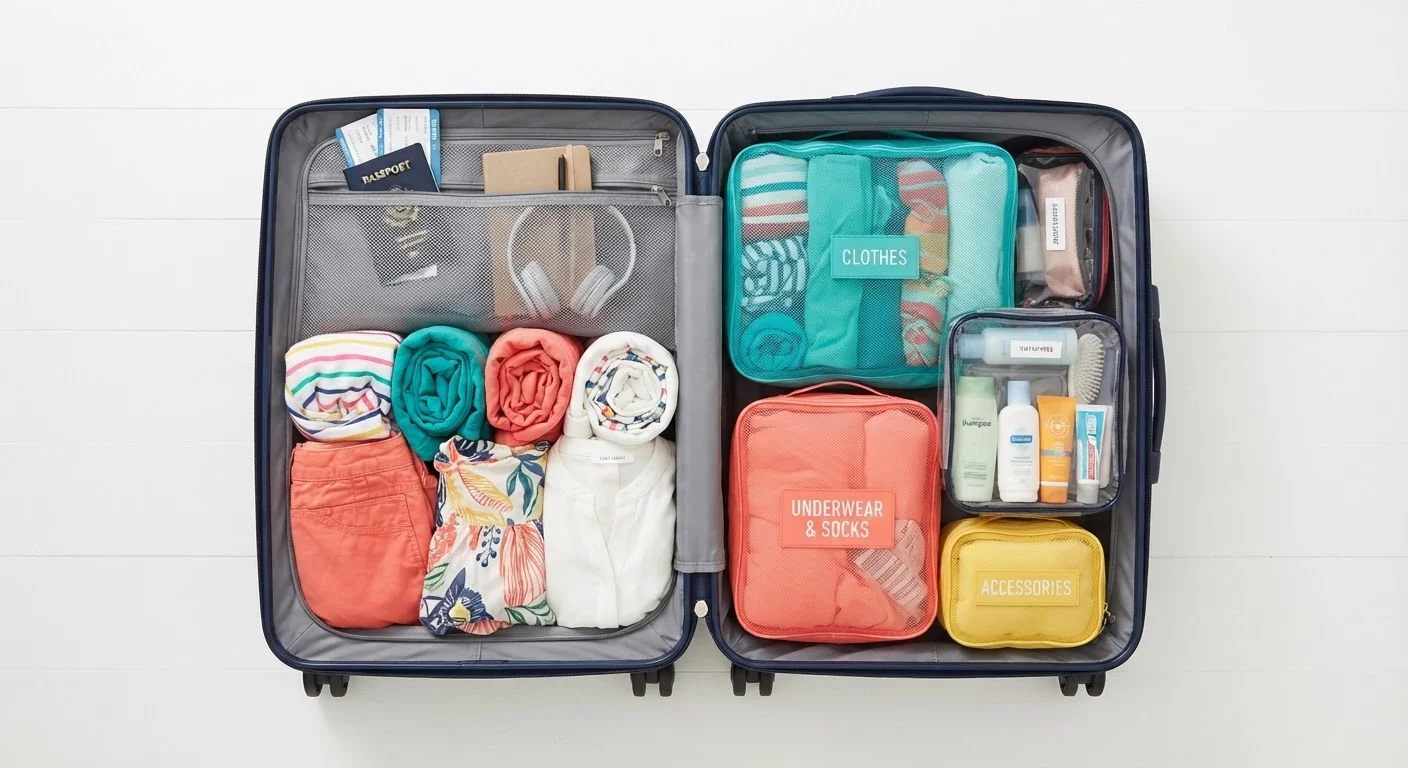
Photo credit: ExplorerGrid.com | Endless Grid Of Factual Content
In this article
Learn how experienced travelers pack a carry-on efficiently, from clothing folds to liquid rules, so you never check a bag again.
Key Takeaways
- TSA's 3-1-1 liquids rule limits containers to 3.4 oz each, all fitting in one quart-sized clear bag.
- Rolling or bundle-packing clothes reduces wrinkles and maximizes space more than flat folding.
- Packing cubes compress soft items and keep your bag organized throughout the trip.
- Wearing your bulkiest items on travel day frees up significant space inside the bag.
- A 7-day trip can realistically fit in a standard carry-on with a mix-and-match wardrobe strategy.
- Checking your airline's specific carry-on size limits before packing prevents gate surprises.
Why Carry-On Packing Is Worth Mastering
Skipping checked baggage isn't just a money-saver — it's a full travel upgrade. No waiting at the carousel, no risk of lost luggage, and the freedom to move directly from the gate to wherever you're headed. For most domestic trips and even many international ones, a carry-on is genuinely all you need. The trick is knowing how to use every cubic inch of it strategically.
Before you pack a single sock, check your airline's published carry-on dimensions and weight limits — these vary, and discovering your bag is too large at the gate is an avoidable headache. Most US carriers allow a standard overhead bag around 22 x 14 x 9 inches, but regional flights sometimes enforce stricter limits. Once you know your constraints, the packing process becomes a satisfying puzzle rather than a stressful scramble. If you want a broader framework for trip prep, the pre-trip preparation checklist pairs well with this guide.
What You Actually Need (and What to Leave Behind)
Overpacking almost always stems from packing for hypotheticals — the maybe-fancy dinner, the just-in-case rainy day outfit. The cure is a mix-and-match wardrobe built around a single neutral color palette. Choose two or three base colors that all work together, then add one or two accent pieces. This approach multiplies outfit combinations without multiplying items.
A practical clothing formula for a five- to seven-day trip: three to four tops, two bottoms, one lightweight layer, one versatile dress or casual blazer, underwear and socks for each day, and one pair of shoes beyond what you wear. That's it. For context on why it's so hard to stop there, why travelers overpack and the habits that break the cycle breaks down the psychology behind over-stuffed bags.
TSA Liquids Rule: No Exceptions at the Checkpoint
The 3-1-1 rule applies to every passenger, every time — there are no exemptions for over-the-counter products or cosmetics. Containers larger than 3.4 oz will be confiscated even if they're mostly empty. Prescription medications in liquid form are exempt but may require additional screening, so carry documentation and declare them to the officer. Always verify the latest TSA guidelines at the official TSA website before you fly, as rules can be updated.
Toiletries deserve their own audit. The TSA's 3-1-1 rule — containers of 3.4 oz (100 ml) or less, all fitting in one quart-sized clear zip-top bag, one bag per passenger — applies to all liquids, gels, aerosols, creams, and pastes in carry-on bags. Solid alternatives like shampoo bars, solid cologne, and powder sunscreen sidestep this limit entirely and are worth considering for longer trips.
Step-by-Step: Packing the Bag
With your clothing list finalized and toiletries sorted, it's time to pack with intention. Sequence matters — what goes in first, and where, determines whether you arrive with neat clothes or a wrinkled mess.
Pack shoes and heavy items first, along the back panel
Place shoes sole-down along the back panel of the bag (the side that rests against the overhead bin wall). Stuff socks inside each shoe to save space. Heavy items like a laptop, books, or a travel umbrella go here too — keeping weight near the bag's wheels improves balance when rolling.
Layer in packing cubes with rolled or bundle-packed clothing
Roll lightweight items like t-shirts, underwear, and socks tightly and stack them vertically in a packing cube so you can see everything at a glance. For wrinkle-prone clothes — dress shirts, trousers, blazers — use the bundle-packing method: lay each item flat, overlapping them in alternating directions, then fold them around a soft core item like a sweater. This cushions the garments and minimizes creases.
Place the liquids bag and electronics in accessible spots
Your TSA quart-sized liquids bag and any electronics you'll need to remove at security (laptop, tablets) should go in the top layer or an external pocket — somewhere you can reach in seconds. Fumbling at the security bin slows everyone down and adds stress to your morning.
Wear your bulkiest items on travel day
Bulky boots, a heavy jacket, or thick jeans take up a disproportionate amount of space in a carry-on. Wear them instead. A jacket can be stowed in the overhead bin separately or layered on your lap during a short flight. This one habit alone can free up several liters of bag space.
Do a final weight and dimension check before leaving home
Use a handheld luggage scale to weigh your packed bag and a tape measure to confirm dimensions. Do this the night before, not in the parking garage. Some airlines — particularly budget carriers — weigh carry-ons at the gate and charge fees for overweight bags. Knowing your bag is within limits removes one more variable from your travel day.
Once everything is inside, do a final zip-test. The bag should close without force. If it doesn't, remove one item — not rearrange everything. That rule keeps future packing honest. For the airport experience itself, airport security myths that are slowing you down is worth a read before your next flight.
Staying Organized Once You're There
A well-packed bag only helps if it stays organized mid-trip. Packing cubes earn their keep here: dedicate one to tops, one to bottoms, and one to worn-but-not-yet-done clothing so clean and used items never mix. When you arrive, you can slide cubes directly into drawers without fully unpacking.
Plan for the return trip by reserving one packing cube as empty space for souvenirs or anything you pick up along the way. If you know you'll shop, pack a compact tote bag inside your carry-on — it doubles as a personal item on the way home when your main bag is fuller. For long travel days, pairing smart packing with physical comfort matters too; staying healthy on long-haul flights offers practical strategies for arriving in good shape. And when you're ready to map out what you'll actually do once there, building a travel itinerary that actually works helps you plan with the same intentionality you brought to your bag.

Author
Travel & Trips Editorial Team
Travel & Trips Editorial Team is the collective byline for our editorial team and contributor network. Articles published under this byline or an editorial pen name are researched, written, and reviewed according to our editorial standards for clarity, consistency, and independence before publication.
View all articles →