
Staying Healthy on Long-Haul Flights
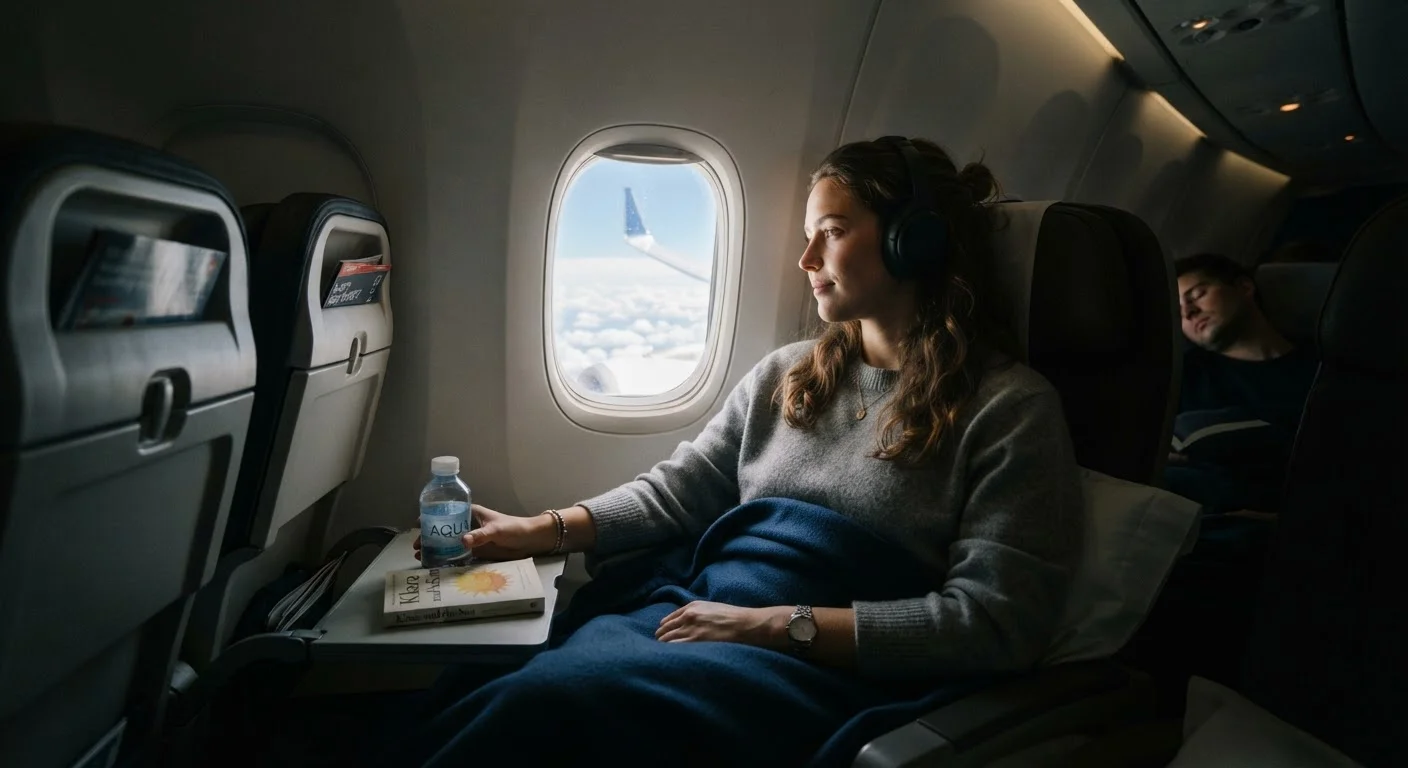
Photo credit: ExplorerGrid.com | Endless Grid Of Factual Content
In this article
Cabin pressure, dehydration, and limited movement affect your body on long flights. General strategies to arrive feeling as good as possible.
Key Takeaways
- Cabin humidity on long-haul flights is extremely low, making deliberate hydration essential throughout the journey.
- Sitting still for hours slows circulation — regular movement and simple leg exercises significantly reduce discomfort and risk.
- Sleep quality, meal timing, and light exposure before you board all influence how well your body tolerates a long flight.
- Compression socks, a neck pillow, and an eye mask are low-effort additions that measurably improve in-flight comfort.
- Consult a healthcare professional before flying if you have circulatory, respiratory, or other chronic health conditions.
Why Long Flights Are Hard on Your Body
A 10-plus-hour flight places your body in an environment it simply wasn't built for. Cabin air pressure is typically maintained at the equivalent of 6,000–8,000 feet of altitude, which means there's slightly less oxygen available than at sea level. Combined with humidity levels that commonly drop below 20% — far drier than most deserts — and the physical reality of sitting still for hours, the cumulative effect can leave you feeling sluggish, stiff, and dehydrated long before you land.
Understanding what's actually happening to your body is the first step toward managing it. Reduced air pressure can cause gas to expand in the digestive tract (hello, bloating), dry out mucous membranes, and mildly reduce blood oxygen saturation. Immobility slows circulation in the legs, increasing the risk of discomfort and, in some travelers, more serious issues. None of this means flying is dangerous for healthy adults — but it does mean a little preparation pays off. See our pre-trip preparation checklist to get your health prep sorted before departure day.
Hydration: The Single Biggest Lever You Can Pull
Dehydration is the most common and most avoidable complaint on long flights. The dry cabin air causes moisture to evaporate from your skin, eyes, and airways faster than you'd notice on the ground. Alcohol and caffeine accelerate the effect, which is worth knowing before you accept that complimentary wine.
The practical approach: drink water consistently throughout the flight rather than waiting until you feel thirsty — thirst is already a sign of mild dehydration. A general guideline cited by travel medicine practitioners is roughly 8 ounces of water per hour of flight, though individual needs vary. Bring an empty reusable bottle through security and fill it at the gate. Moisturizing eye drops and a small travel-size facial mist can also ease the dryness you feel in your eyes and skin.
Keep Your Body Moving — Even in a Tiny Seat
Prolonged sitting restricts blood flow, particularly in the lower legs. For most healthy travelers this results in swelling and stiffness, but for those with certain circulatory conditions the risks can be more significant. Your healthcare provider is the right person to consult about your individual situation before a long-haul trip.
Wear graduated compression socks for any flight lasting more than four hours.
Compression socks apply gentle pressure that helps prevent blood from pooling in the lower legs during long periods of immobility. Travel medicine guidelines widely endorse them as a simple, low-cost way to reduce leg swelling and discomfort.
Do seated leg exercises every 30–45 minutes during the flight.
Calf muscles act as a secondary pump for venous blood return. Activating them regularly counteracts the circulation-slowing effects of prolonged sitting, reducing stiffness and swelling.
Choose water over alcohol or excessive caffeine when ordering from the beverage cart.
Both alcohol and caffeine have diuretic effects that worsen the dehydration already caused by dry cabin air. Water keeps mucous membranes, joints, and cognitive function better supported throughout the flight.
Time your in-flight sleep to align with your destination's nighttime hours.
Anchoring your sleep window to your destination's time zone helps your body clock begin adjusting during the flight itself, shortening jet lag recovery once you land.
Stand up and walk the aisle at least once every 90 minutes when it's safe to do so.
Brief walks engage large muscle groups, boost circulation, ease back tension from sustained posture, and provide a mental reset that improves overall comfort on very long journeys.
The good news is that even small movements help. Set a reminder to get up and walk the aisle every 60–90 minutes when the seatbelt sign is off. While seated, flex and extend your ankles, press your heels into the floor, and rotate your feet in circles — these simple micro-movements activate the calf muscles that help pump blood back toward the heart. Compression socks (typically 15–30 mmHg for travel) are widely recommended by travel medicine guidelines and are worth packing in your carry-on bag.
Sleep, Timing, and Arrival Strategy
Whether you sleep on the plane or stay awake often depends on your destination time zone — and having a plan matters. Eastbound flights tend to be harder on the body clock than westbound ones, largely because most people find it easier to delay sleep than advance it. For more on the science, see how your body clock works during jet lag.
To encourage sleep on overnight flights, bring a quality neck pillow, an eye mask, and earplugs or noise-canceling headphones. Avoid screens for 30 minutes before your intended sleep window if possible, and skip alcohol as a sleep aid — it fragments sleep quality even if it helps you doze off initially. Melatonin is commonly used for jet lag, but dosing and timing vary; discuss this with your doctor rather than guessing. Arriving with even a few solid hours of rest makes the first day at your destination far more enjoyable — which means your carefully built travel itinerary won't be wasted on a groggy haze.
A Note on Individual Health Conditions
Travelers with cardiovascular disease, deep vein thrombosis history, respiratory conditions, or recent surgery face different risk profiles on long-haul flights than the general population. The strategies in this article reflect general wellness guidance for healthy adults. If you have an existing medical condition, please speak with your healthcare provider before booking or boarding a long international flight — they can offer advice tailored to your specific situation.
This article provides general travel wellness information and is not a substitute for medical advice. Travelers with existing health conditions — including cardiovascular, respiratory, or clotting disorders — should consult a qualified healthcare provider before undertaking long-haul flights.

Author
Travel & Trips Editorial Team
Travel & Trips Editorial Team is the collective byline for our editorial team and contributor network. Articles published under this byline or an editorial pen name are researched, written, and reviewed according to our editorial standards for clarity, consistency, and independence before publication.
View all articles →