
Chicago vs. San Francisco: Two Cities, Very Different Travel Personalities
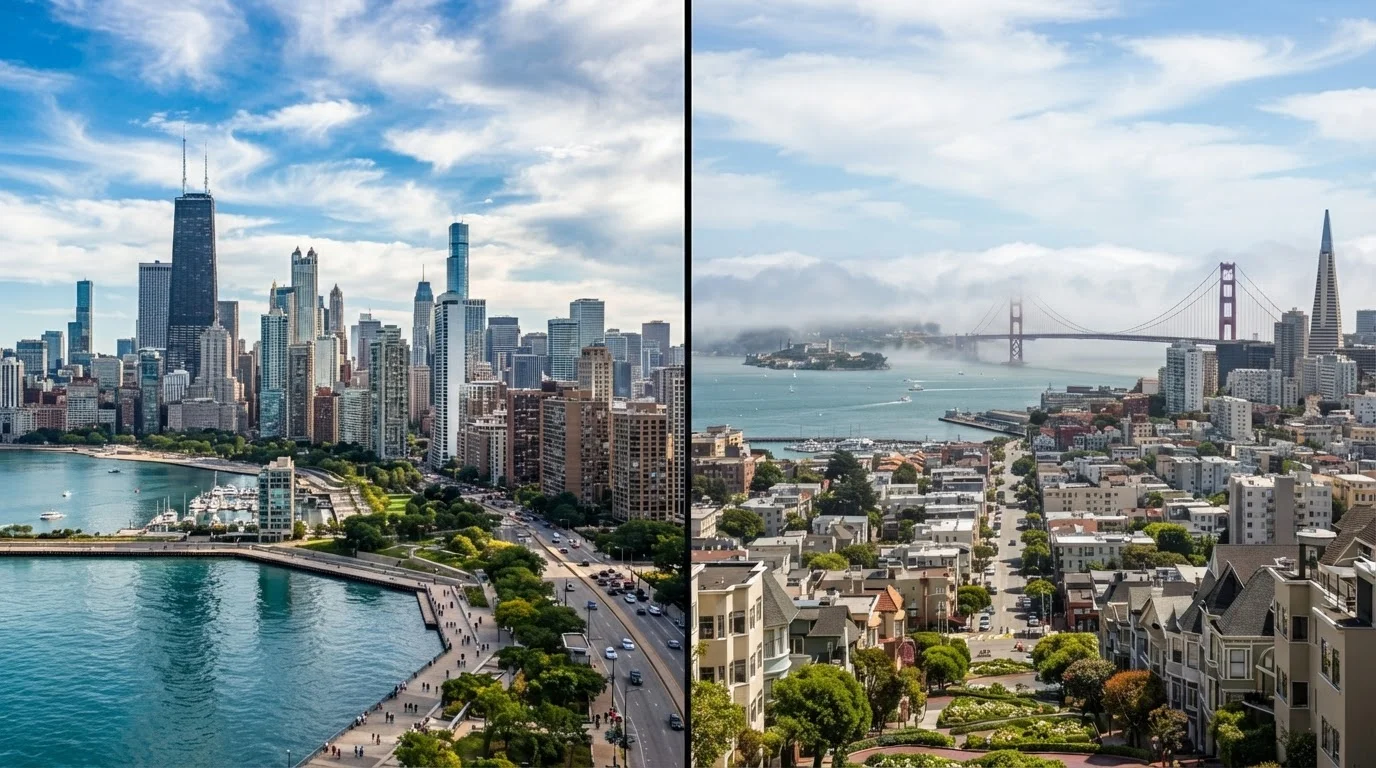
Photo credit: ExplorerGrid.com | Endless Grid Of Factual Content
In this article
Both rank among the US's most visited cities, but Chicago and San Francisco suit different kinds of travelers. See how they compare across key dimensions.
Key Takeaways
- Chicago generally offers lower hotel and dining costs than San Francisco, making it easier on tighter budgets.
- San Francisco's compact, walkable neighborhoods sit beside iconic natural backdrops Chicago simply can't match.
- Chicago excels in architecture tours, blues and jazz history, and lakefront outdoor activities.
- San Francisco is a gateway to Napa, Muir Woods, and coastal Highway 1 road-trip territory.
- Both cities have excellent public transit, but Chicago's L train covers more ground at lower fares.
- Weather dramatically shapes each trip — Chicago winters are brutal; San Francisco summers are famously foggy and cool.
Character and Vibe: Midwest Hustle vs. West Coast Cool
Chicago wears its ambitions openly. The city that rebuilt itself after the Great Fire of 1871 never stopped reaching upward — literally. Walking the Loop, you're surrounded by landmark skyscrapers, public art installations, and a river that reflects it all back at you. The energy is direct, friendly, and proudly unpretentious. Locals will tell you exactly where to find the best Italian beef sandwich.
San Francisco operates at a different frequency. Neighborhoods feel almost like separate villages — the Mission's murals and taquerias, the Castro's Victorian homes, the Financial District's glass towers — all stitched together by steep hills and the occasional wall of fog rolling in off the Bay. The city rewards slow exploration and rewards curiosity about its layered counterculture history.
Neither vibe is better; they just speak to different travel personalities.
Getting Around: Transit, Terrain, and Walkability
Chicago's CTA elevated train — known as the L — is a genuine workhorse. It runs 24 hours on most lines and connects O'Hare and Midway airports to the city center cleanly and cheaply. The city is flat, which makes cycling and walking between neighborhoods surprisingly easy.
San Francisco's BART system handles airport connections and East Bay routes, while the iconic cable cars handle a few steep tourist corridors. The city's hills are part of its charm but can be genuinely exhausting on foot — rideshare usage is high here for good reason. BART and Muni fares have risen in recent years, and the city is denser with fewer flat walking corridors than Chicago.
| Criterion | Chicago | San Francisco |
|---|---|---|
| Typical hotel cost | Generally lower | Among highest in US |
| Primary transit system | CTA L train (24-hr) | BART + Muni + cable cars |
| Terrain | Flat, very walkable | Hilly, tiring on foot |
| Best travel season | May–September | September–October |
| Signature natural feature | Lake Michigan waterfront | San Francisco Bay + hills |
| Day-trip options | Milwaukee, Galena, Indiana dunes | Napa, Muir Woods, Highway 1 |
| Iconic food | Deep-dish pizza, Italian beef | Sourdough, Dungeness crab, Mission burrito |
Food, Culture, and What You'll Actually Do
Chicago's culinary identity runs deep: deep-dish pizza (yes, it's worth having at least once), Chicago-style hot dogs, Italian beef, and a thriving fine-dining scene anchored by restaurants that consistently earn national recognition. Beyond food, the Chicago Architecture Center's river tours are genuinely unmissable, and the city's blues and jazz history is embedded in live-music venues throughout the South and West Sides.
San Francisco's food scene leans toward California fresh — sourdough, Dungeness crab, Mission-style burritos, and some of the most diverse Asian cuisine outside of Asia, particularly in the Richmond and Sunset Districts. Culturally, the city offers world-class museums, the historic Haight-Ashbury district, and Alcatraz tours that book up fast. It also sits at the edge of wine country and redwood forests — experiences you can fold into a longer trip. For travelers weighing other dramatic US destinations, our Alaska vs. Hawaii comparison explores another set of bucket-list contrasts worth considering.
2.7M+
Annual domestic visitors to Chicago
Chicago consistently ranks among the top three most-visited US cities, according to Choose Chicago tourism data.
~25M
Annual visitors to San Francisco Bay Area
The San Francisco Travel Association reports the broader Bay Area draws tens of millions of visitors annually across leisure and business travel.
$2.75
Chicago CTA single-ride fare
Chicago's flat CTA fare is one of the more affordable major-city transit prices in the US, covering trains and buses.
Weather Windows: When to Go and What to Expect
Timing matters enormously for both cities. Chicago's winters are genuinely harsh — bitter wind off Lake Michigan earns the "Windy City" nickname in the coldest months. However, late spring through early fall (May through September) is spectacular: long sunny days, lakefront festivals, and warm evenings on restaurant patios. Summer is peak season for good reason.
San Francisco's seasons are counterintuitive. Summers — particularly June and July — are often the city's foggiest and coolest months due to marine layer from the Pacific. September and October tend to bring the clearest skies and warmest temperatures, making fall arguably the best time to visit. Spring is mild but variable. Travelers who arrive in August expecting California sunshine sometimes leave in fleece.
In short: visit Chicago in summer, and consider San Francisco in early fall for the best weather experience.
Check Entry and Safety Conditions Before You Travel
Both Chicago and San Francisco have neighborhoods with varying safety profiles. As with any major US city, it's worth researching specific areas and checking current local advisories before your trip. Weather forecasts and major event schedules can also shift travel plans significantly — verify conditions close to your departure date through official city tourism and local government sources.

Author
Travel & Trips Editorial Team
Travel & Trips Editorial Team is the collective byline for our editorial team and contributor network. Articles published under this byline or an editorial pen name are researched, written, and reviewed according to our editorial standards for clarity, consistency, and independence before publication.
View all articles →