
Alaska vs. Hawaii: Weighing Two Bucket-List US States as Travel Destinations
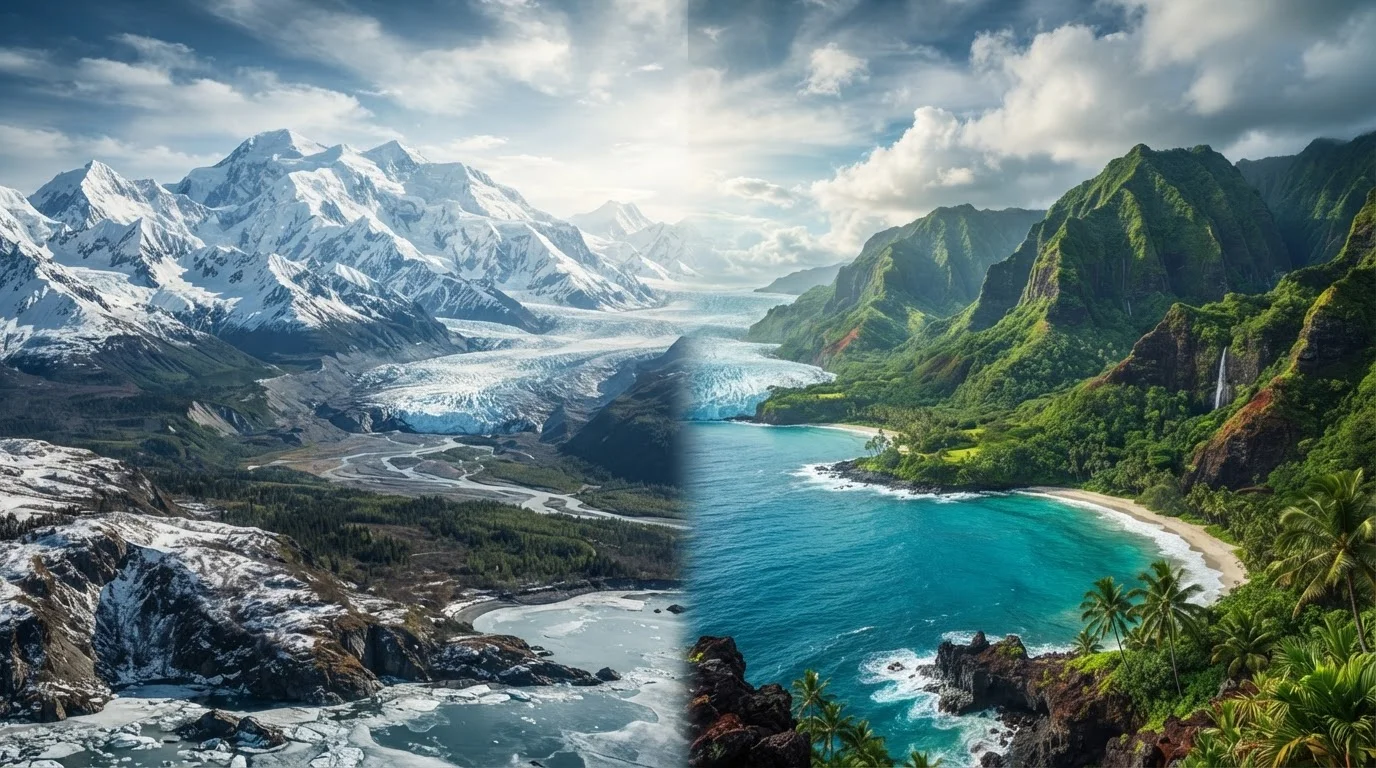
Photo credit: ExplorerGrid.com | Endless Grid Of Factual Content
In this article
Alaska and Hawaii both promise dramatic scenery, but they offer very different experiences. Here's how to decide which belongs on your itinerary.
Key Takeaways
- Alaska suits adventure-focused travelers comfortable with rugged, unpredictable conditions and cooler temperatures.
- Hawaii offers more accessible infrastructure, consistent warm weather, and a wider range of relaxation options.
- Both destinations require flights from the contiguous US, but Alaska also demands more planning for remote access.
- Alaska peaks in summer (June–August); Hawaii is welcoming year-round with distinct dry and wet seasons.
- Budget expectations differ significantly: Hawaii tends to be more predictable; Alaska costs vary widely by tour and access type.
- Your ideal choice depends on whether you want wilderness immersion or a tropical cultural experience.
The Core Experience: Wilderness vs. Island Life
Alaska and Hawaii share exactly two things: both are non-contiguous US states, and both reliably appear on bucket lists. Beyond that, they are strikingly different travel propositions.
Alaska is scale. The state covers over 663,000 square miles — larger than Texas, California, and Montana combined. Its appeal lies in raw, humbling nature: Denali rising above the clouds, coastal brown bears fishing for salmon, tidewater glaciers calving into steel-blue fjords. This is a destination where the land dominates, and travelers are guests in it.
Hawaii, by contrast, is intimacy and warmth. Six main visitor islands each carry their own personality — Oahu's vibrant energy, Maui's scenic roads and beaches, the Big Island's active volcanoes, Kauai's lush cliffs. The ocean is central to everything, whether you're snorkeling coral reefs, learning to surf, or simply sitting at the edge of the Pacific. See our comparison of other distinct US destinations for more examples of how location personality shapes a trip.
| Criterion | Alaska | Hawaii |
|---|---|---|
| Primary draw | Wilderness, wildlife, glaciers | Beaches, ocean, island culture |
| Best travel season | June–August | Year-round (dry season: April–October) |
| Typical climate | Cool to cold; highly variable | Warm and tropical; mild variation |
| Ease of independent travel | Moderate to challenging | Easy to moderate |
| Physical activity level | Often high; rugged terrain | Flexible; from beach days to hikes |
| Popular experiences | Bear viewing, glacier hikes, cruises | Snorkeling, surfing, volcano tours |
| Cultural highlights | Alaska Native heritage, gold rush history | Native Hawaiian culture, Pearl Harbor |
| Cost predictability | Variable; remote access adds cost | Relatively predictable island pricing |
Logistics, Timing, and What to Realistically Expect
Getting to either state requires a flight from the lower 48, but what happens after you land is quite different. Hawaii's major islands have solid airport infrastructure, rental car availability, and well-marked roads. Travelers can navigate independently with ease.
Alaska is more complex. Anchorage and Fairbanks are manageable, but many of the state's most extraordinary places — remote lodges, fly-in fishing spots, interior national parks — require small planes, ferries, or guided expeditions to reach. This adds both cost and planning time. A well-structured itinerary matters enormously here; our guide on building a travel itinerary that actually works can help you sequence it intelligently.
Timing matters too. Alaska's prime season runs June through August, when daylight stretches past midnight and wildlife activity peaks. Shoulder seasons can bring dramatic conditions — and dramatic beauty — but require preparation. Hawaii is a year-round destination; winter months (December–March) tend to see bigger surf on north shores, while summer is drier on most islands. Always verify current entry requirements and travel conditions through official government and airline sources before booking.
Cost, Comfort, and Trip Style
Neither Alaska nor Hawaii is a budget destination by US standards. Hawaii's costs are well-documented: accommodation, dining, and activities carry island premiums, but pricing is relatively predictable and there are options across a range of budgets. You can camp in state parks, eat at food trucks, and still have a spectacular trip.
Alaska's costs are harder to generalize. A cruise through the Inside Passage can be comparatively accessible; a fly-in wilderness lodge or guided bear-viewing experience can run significantly higher. Travelers who want to go deep into the state's most remote areas should budget accordingly and plan well in advance.
663,000+
Square miles in Alaska
Alaska is by far the largest US state — more than twice the size of Texas — which shapes how travelers must plan movement and logistics.
6
Major visitor islands in Hawaii
Oahu, Maui, the Big Island, Kauai, Molokai, and Lanai each offer distinct experiences, giving travelers meaningful choices within one destination.
~10M
Annual visitors to Hawaii (pre-pandemic baseline)
Hawaii consistently ranks among the most-visited US destinations, reflecting its broad, year-round appeal across traveler types.
Trip style is a useful filter. If you lean toward open-ended exploration, both states reward it — though Alaska demands more logistical pre-work. For structured itineraries versus looser frameworks, consider reading about fixed versus flexible travel approaches before finalizing your plan.
One practical consideration: Alaska is best suited to travelers comfortable with variable weather, physical activity, and occasional remoteness. Hawaii is more universally accessible and easier to adapt for travelers with different mobility or comfort needs.
Making the Call
If your dream trip involves watching a humpback whale breach against a mountain backdrop, spotting grizzlies at close range, or standing inside a glacier, Alaska is your destination. Accept the planning complexity — it's worth it.
If you want warm water, cultural richness, a variety of island personalities to explore, and the ability to ease into your trip without significant logistical heavy lifting, Hawaii delivers that consistently. The verdict cards above can help you match your travel personality to the right choice. And once you've decided, understanding your transport options can help you think through getting there and around.
Both states are genuinely extraordinary. The question isn't which is better — it's which one is better for you, right now.

Author
Travel & Trips Editorial Team
Travel & Trips Editorial Team is the collective byline for our editorial team and contributor network. Articles published under this byline or an editorial pen name are researched, written, and reviewed according to our editorial standards for clarity, consistency, and independence before publication.
View all articles →