
DIY vs. Shop Repairs: Knowing Which Jobs Belong in Your Driveway
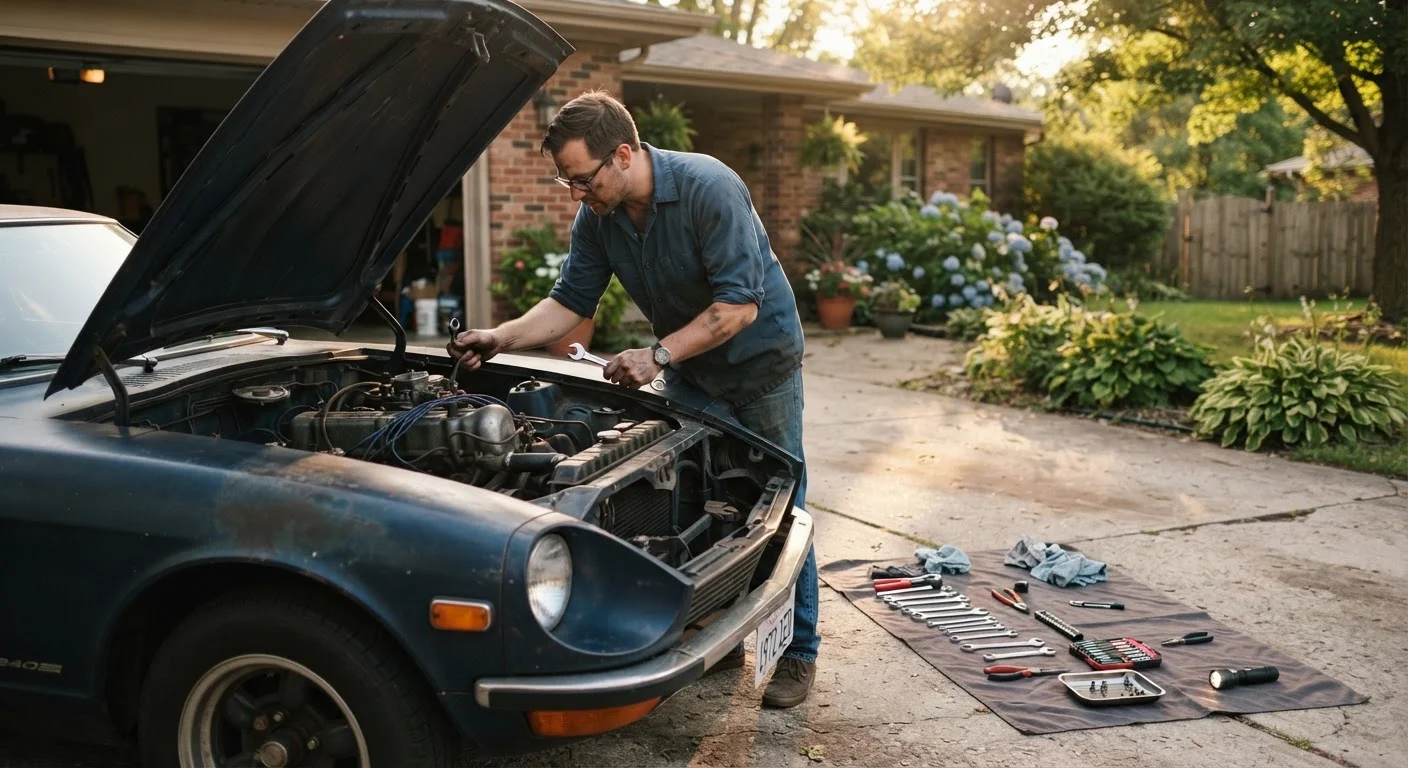
Photo credit: ExplorerGrid.com | Endless Grid Of Factual Content
In this article
Some maintenance tasks are straightforward for motivated owners; others carry real safety risks if done incorrectly. Here's how to tell the difference.
Key Takeaways
- Many routine maintenance tasks — air filters, wiper blades, cabin filters — are genuinely safe for motivated owners to handle at home.
- Brake system work, suspension components, and anything involving fuel or high-voltage systems carry real injury risk and typically require professional tools.
- The true cost of a DIY job includes parts, tools, time, and the potential cost of mistakes — not just the labor you're skipping.
- Modern vehicles with complex electronics and driver-assistance systems raise the bar on what counts as a DIY-safe repair.
- When in doubt, a professional diagnostic inspection is usually worth the cost before attempting an unfamiliar repair.
The Real Question: Risk, Not Just Difficulty
Most drivers who consider DIY repairs are asking themselves the wrong question. The issue isn't whether a job is hard — it's whether getting it wrong creates a safety hazard, causes cascading damage, or voids a warranty. A task can be technically simple but still belong at a shop if the consequences of an error are serious enough.
Think of vehicle maintenance as falling into two broad buckets: routine service tasks that tolerate a learning curve, and safety-critical repairs where a mistake can have immediate, dangerous consequences. Understanding that distinction is the foundation of a sound approach to home maintenance — and to managing lifetime ownership costs intelligently.
Jobs That Belong in the Driveway
A motivated owner with basic tools can reliably handle a meaningful list of maintenance items. These jobs share a common profile: they use widely available parts, require minimal specialized equipment, have visible results you can verify, and carry low consequences if something goes slightly off.
- Engine air filter replacement: Typically a five-minute job requiring no tools. Filters are inexpensive and accessible on most vehicles.
- Cabin air filter replacement: Usually behind the glove box. Owner's manuals walk through the process clearly.
- Wiper blade replacement: Straightforward on nearly all vehicles; packaging instructions cover most blade attachment styles.
- Exterior bulb replacement (non-HID/LED sealed units): Many turn signals and brake light bulbs are accessible without removing bumpers. Check your manual — some headlight assemblies are more involved.
- Tire pressure checks and inflation: A quality gauge and a basic compressor handle this completely.
- Windshield washer fluid top-off: No tools, no risk.
- Battery terminal cleaning: Simple on accessible batteries; use protective gloves and eye protection.
For tire rotation and related tire services, the picture is more nuanced — rotation itself requires a floor jack and jack stands, which introduces real safety considerations discussed below.
| Task | DIY-Friendly | Shop Recommended | |
|---|---|---|---|
| Engine / cabin air filter | ✓ Simple, low-risk | Not necessary | |
| Wiper blades | ✓ No tools required | Not necessary | |
| Brake pad / rotor replacement | High risk if done incorrectly | ✓ Safety-critical system | |
| Suspension / steering parts | Requires alignment after; specialized tools | ✓ Calibration required | |
| Hybrid / EV high-voltage system | Lethal voltage risk | ✓ Certified tech required | |
| ADAS sensor calibration | Cannot be done without OEM tools | ✓ Specialist equipment needed | |
| Tire pressure / fluid top-offs | ✓ Basic tools, minimal risk | Optional for convenience | |
| Fuel system repairs | Fire / inhalation hazard | ✓ Proper ventilation and tools |
Jobs That Belong at a Professional Shop
Certain repairs are categorically shop work, regardless of how many tutorial videos exist online. The shared characteristics: they involve systems where a single error has immediate safety consequences, they require calibration or specialized equipment, or they interact with other complex systems in ways that aren't obvious to a first-timer.
- Brake system work: Pad replacement looks approachable, but improper brake bleeding, incorrect rotor seating, or an overlooked caliper issue can result in brake failure. Brake hydraulics are not forgiving of guesswork.
- Suspension and steering components: Worn ball joints, tie rods, or control arm bushings affect vehicle handling directly. Alignment — which is always required after suspension work — needs specialized equipment.
- Fuel system repairs: Working around gasoline in an enclosed space creates fire and inhalation risks. Fuel injector cleaning or pump replacement isn't worth the hazard without proper equipment and ventilation.
- Transmission service beyond fluid checks: Internal transmission work is complex and unforgiving. Even external work on modern automatics often requires specialized procedures.
- High-voltage hybrid and EV systems: The high-voltage battery packs and associated wiring in hybrid and electric vehicles carry potentially lethal current. This work requires certified technicians and appropriate safety equipment — full stop.
- Advanced driver-assistance system (ADAS) calibration: Replacing a windshield or bumper cover on a vehicle with cameras and radar sensors requires recalibration that can only be done with manufacturer-level tools. An improperly calibrated lane-keeping or automatic emergency braking system is arguably more dangerous than a disabled one.
The Hidden Costs of Getting It Wrong
DIY repairs are often framed purely as money saved. In practice, the full cost equation includes the price of parts, any tools you need to purchase, the time invested, and — critically — the cost of an error. A stripped oil drain plug can mean a new oil pan. An improperly seated brake caliper can mean damaged rotors and a hazardous vehicle. A disconnected sensor can trigger a cascade of warning lights requiring a diagnostic appointment to clear.
That's not an argument against DIY; it's an argument for being honest about where your knowledge and tooling actually sits before starting a job. The strategies that keep long-term maintenance costs manageable depend on avoiding the expensive recoveries that follow botched repairs — not just avoiding shop labor fees.
Never Work Under a Vehicle Supported Only by a Jack
A hydraulic floor jack is a lifting device, not a support device. Vehicles have slipped off jacks and caused fatal injuries. Any time you need to get under a vehicle — even briefly — it must be supported on properly rated jack stands placed at manufacturer-specified lift points. Ramps are a safer alternative for basic tasks like oil changes on vehicles with sufficient ground clearance.
A Practical Framework Before You Start
Before committing to any repair, run through a short checklist:
- Consult your owner's manual first. Manufacturer procedures, fluid specifications, and torque values matter. Generic instructions from online forums may not match your vehicle's requirements.
- Identify the correct parts before ordering. Year, make, model, trim, and sometimes engine code all affect compatibility. An incorrect part can cause immediate problems or subtle long-term damage.
- Assess your jack and support equipment honestly. Any job requiring the vehicle to be raised off the ground demands proper floor jacks and rated jack stands — never a scissor jack alone. This is a genuine safety issue, not a technicality.
- Know when to stop. If you encounter unexpected corrosion, seized fasteners, or a component that looks different from what the guide describes, pausing and consulting a professional is always the right call. A partially disassembled vehicle is a worse outcome than one you never started on.
The same practical thinking applies in other domains — the decision framework for DIY versus professional home repairs follows nearly identical logic when safety-critical systems are involved.

Author
Automotive Editorial Team
Automotive Editorial Team is the collective byline for our editorial team and contributor network. Articles published under this byline or an editorial pen name are researched, written, and reviewed according to our editorial standards for clarity, consistency, and independence before publication.
View all articles →