
Tire Rotation, Balancing, and Alignment: Three Services That Often Get Confused
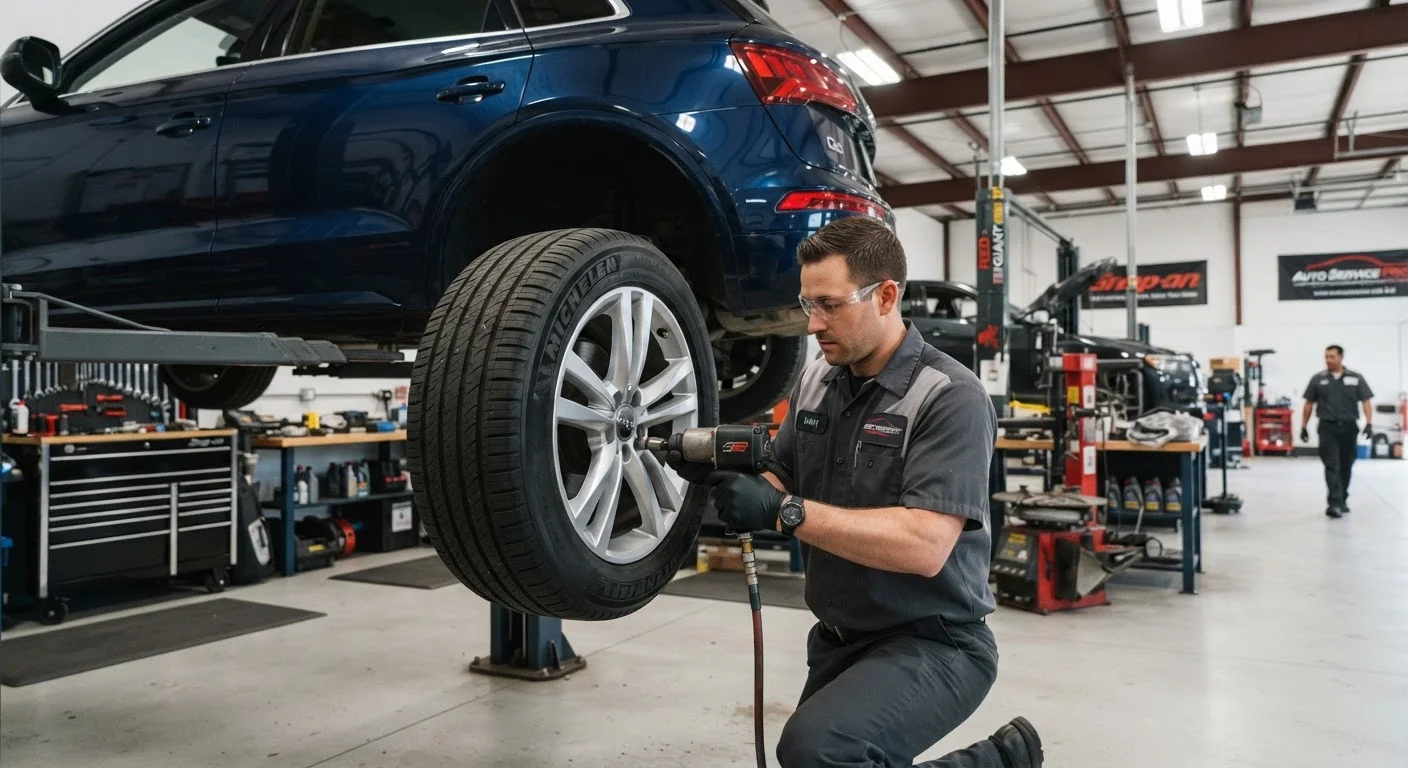
Photo credit: ExplorerGrid.com | Endless Grid Of Factual Content
In this article
These three tire services are frequently conflated but address entirely different problems. Here's what each one does and why timing matters.
Key Takeaways
- Rotation, balancing, and alignment are three distinct services that address different problems.
- Tire rotation is typically recommended every 5,000–7,500 miles to even out tread wear.
- Balancing is needed when you feel vibration, especially at highway speeds.
- Alignment should be checked after hitting a significant pothole or curb, and at least once a year.
- Neglecting any of these services can shorten tire life and hurt fuel efficiency.
- Your owner's manual is the authoritative source for your vehicle's specific service intervals.
Why These Three Services Get Mixed Up
Ask most drivers what tire rotation, balancing, and alignment have in common, and the answer is usually: they all involve tires. That's technically true — but it's also where the similarity ends. These three services are frequently lumped together or used interchangeably, which leads to real consequences: wrong service ordered, real problems ignored, and money spent on the wrong fix.
Understanding what each service actually does — and doesn't do — is the foundation of informed tire maintenance. It also helps you push back if a shop recommends something that doesn't match your symptoms. For a broader look at how this kind of confusion affects your wallet, see our piece on car ownership assumptions that cost drivers more than they should.
5,000–7,500
Miles between recommended tire rotations
This is the interval cited by most vehicle manufacturers; confirm the exact figure in your owner's manual.
~$50–$100
Typical cost of a four-wheel alignment
Costs vary by region, shop type, and vehicle; complex suspensions or worn components may increase the price.
1 in 5
Vehicles estimated to have significant alignment issues
Industry estimates suggest a meaningful share of vehicles on the road are operating outside manufacturer alignment specifications at any given time.
Tire Rotation: Managing Uneven Wear Before It Happens
Rotation is the most routine of the three services. It means physically moving tires from one position on the vehicle to another — front to back, side to side, or in an X-pattern — depending on your drivetrain and tire type. The goal is to equalize the rate at which each tire wears down.
Front tires on a front-wheel-drive vehicle handle acceleration, steering, and a significant portion of braking. They wear faster than rear tires under those conditions. Left uncorrected, you'd replace two tires much sooner than the other two, shortening the life of the full set. Rotating tires distributes that load over time.
Most manufacturers recommend rotation every 5,000–7,500 miles, though your owner's manual has the definitive interval for your specific vehicle. Reading your owner's manual is the most reliable way to confirm the right schedule — generic advice won't account for your drivetrain or tire type.
Wheel Balancing: When Weight Distribution Goes Off
Balancing addresses a different problem entirely: mass distribution within a tire-and-wheel assembly. Even a new tire mounted on a new wheel won't have perfectly uniform weight around its circumference. Technicians use a spin balancer to detect these imbalances, then attach small lead or zinc weights to the wheel rim to compensate.
The most common symptom of an out-of-balance tire is vibration — often felt in the steering wheel or through the seat — that intensifies at highway speeds and may smooth out at lower speeds. This happens because the imbalance creates a wobble that becomes more pronounced as rotational speed increases.
Balancing is typically needed when new tires are installed, after a flat tire repair, or when vibration symptoms appear. It's also worth revisiting if a wheel weight falls off, which happens more often than drivers expect. Keep in mind that tire pressure also affects ride quality and wear — incorrect tire pressure can compound these issues in ways that overlap with balancing symptoms.
Wheel Alignment: Correcting How Tires Contact the Road
Alignment has nothing to do with moving tires or correcting weight distribution. Instead, it adjusts the angles at which your tires sit relative to the road and to each other. Technicians measure three primary angles: toe (whether tires point inward or outward when viewed from above), camber (the inward or outward tilt of the tire when viewed from the front), and caster (the angle of the steering axis when viewed from the side).
When alignment is off, tires are essentially scrubbing against the road at a slight angle rather than rolling straight. This causes rapid, uneven tread wear — often more pronounced on one edge of the tire — and can make the vehicle pull to one side or cause the steering wheel to sit off-center even when driving straight.
Alignment should be checked after hitting a significant pothole or curb, after any front-end collision, and at a minimum once a year as part of routine upkeep. It's an important element of keeping maintenance costs under control over a vehicle's lifetime, since misalignment is one of the fastest ways to destroy a set of tires.
Check Alignment After Any Significant Impact
You don't have to wait for visible symptoms to get an alignment check. Any time you hit a large pothole, strike a curb hard, or experience a minor front-end collision, it's worth having alignment verified. Catching a shift early prevents the kind of aggressive edge wear that can ruin a tire in a few thousand miles.
Matching the Right Service to the Right Symptom
One of the most practical things a driver can do is match symptoms to services before walking into a shop. Here's a quick framework:
- Uneven tread wear across all tires: likely a rotation interval that was missed or delayed.
- Vibration at highway speeds: points to balancing as the first thing to check.
- Pulling to one side, uneven wear on one edge of a tire, or an off-center steering wheel: classic alignment symptoms.
These categories can overlap. A car that's been misaligned for a long time may also need rotation. New tires typically benefit from balancing and alignment at installation. But understanding which symptom maps to which service keeps you from paying for something you don't need — and makes sure the actual problem gets fixed. For a broader framework on when professional service is the right call, our guide on DIY vs. shop repairs covers how to evaluate those decisions across your vehicle's maintenance needs.
Frequently Asked Questions

Author
Automotive Editorial Team
Automotive Editorial Team is the collective byline for our editorial team and contributor network. Articles published under this byline or an editorial pen name are researched, written, and reviewed according to our editorial standards for clarity, consistency, and independence before publication.
View all articles →