
Oil Change Intervals: Why the Old 3,000-Mile Rule No Longer Applies
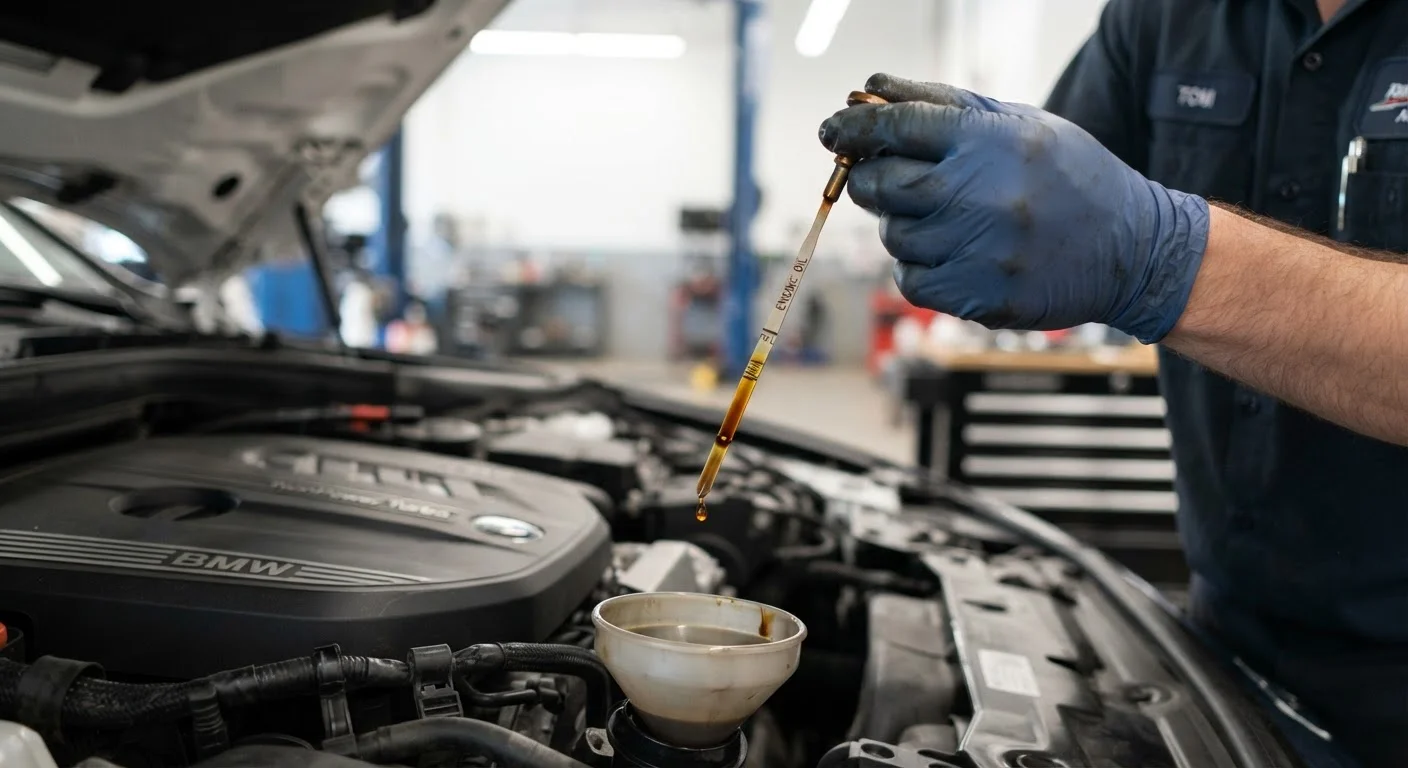
Photo credit: ExplorerGrid.com | Endless Grid Of Factual Content
In this article
Synthetic oil, longer engine tolerances, and onboard monitors have changed the math. Here's how to know when your car actually needs an oil change.
Key Takeaways
- Most modern vehicles require oil changes every 5,000 to 10,000 miles, not every 3,000.
- Synthetic oil lasts significantly longer than conventional oil and handles temperature extremes better.
- Your owner's manual and onboard oil-life monitor are the most reliable guides for your specific vehicle.
- Changing oil too frequently wastes money without providing measurable engine protection benefits.
- Driving conditions — short trips, extreme heat, towing — can shorten appropriate intervals for some drivers.
Where the 3,000-Mile Rule Came From
The 3,000-mile oil change interval wasn't invented out of thin air — it was a reasonable guideline for an earlier era of automotive engineering. Engines manufactured through the 1970s and into the 1980s had looser manufacturing tolerances, and the conventional motor oils of the time degraded more quickly under heat and friction. Service shops and oil companies promoted the interval widely, and it stuck.
The problem is that neither engines nor oils are the same today. Tighter manufacturing tolerances mean less metal-on-metal wear and less contamination entering the oil. Full and blended synthetic formulations are engineered to resist thermal breakdown far longer than their predecessors. And yet the 3,000-mile recommendation persists — largely because it's simple to remember and, frankly, because more frequent oil changes benefit service businesses.
Understanding what actually determines oil life helps you make a smarter, evidence-based decision. For a deeper look at how oil types compare, see our guide to conventional vs. synthetic motor oil.
Common Myths About Oil Change Intervals
Several stubborn misconceptions continue to push drivers toward unnecessary service visits. The myth-and-fact pairs below address the most prevalent ones directly.
Myth
You should change your oil every 3,000 miles to protect your engine.
Fact
Most modern vehicles using synthetic oil can safely go 7,500 to 10,000 miles — or more — between changes, per manufacturer specifications.
The 3,000-mile interval predates modern engine design and synthetic oil chemistry. Automakers, not quick-lube chains, set the maintenance schedule for your vehicle after rigorous testing. Following that schedule protects your engine just as effectively while eliminating unnecessary service visits. Changing oil before it has meaningfully degraded provides no added protection and generates avoidable waste.
Myth
If the oil looks dark, it needs to be changed immediately.
Fact
Oil darkens as it does its job — suspending combustion byproducts and fine particles — which is normal and expected, not a sign of failure.
Fresh oil is amber-colored, but it darkens within the first few hundred miles of use as it circulates through the engine. Dark oil is doing its job. The meaningful indicators of oil condition are its viscosity, smell (a sharp burnt odor can signal overheating), and whether the oil-life monitor has triggered an alert — not color alone. If you want to check the actual condition, understanding what each fluid tells you is a useful starting point.
Myth
Synthetic oil causes leaks in older engines, so you should stick with conventional.
Fact
Synthetic oil does not cause leaks; pre-existing seal wear or degradation does. Synthetic oil may reveal leaks that were already present.
This myth originated decades ago when some early synthetic formulations were incompatible with certain seal materials. Modern synthetic oils are engineered to be compatible with contemporary and most legacy gasket and seal compounds. If switching to synthetic reveals a leak in an older engine, the seal was already compromised — the oil didn't cause the problem. A qualified mechanic can assess whether seal condition warrants attention before switching formulations.
Myth
Skipping one oil change will cause serious engine damage.
Fact
A single delayed oil change is unlikely to harm a well-maintained engine, though consistently overextending intervals causes cumulative wear over time.
Engine damage from oil neglect is the result of sustained, repeated overextension — not one missed appointment. That said, habitually running an engine well past its recommended interval allows oil to oxidize, lose viscosity, and accumulate sludge that can restrict oil flow to critical components. The goal is a consistent schedule aligned to your manufacturer's guidance, not anxiety over a few hundred extra miles in an exceptional situation.
Myth
The oil change reminder sticker on your windshield tells you when to change your oil.
Fact
Those stickers are set by service shops, not your vehicle's manufacturer, and often default to 3,000 miles regardless of your car's actual needs.
Quick-lube shops apply windshield stickers as a customer-return prompt, typically defaulting to 3,000 miles or three months. These are not calibrated to your vehicle's specifications, oil type, or driving conditions. Your owner's manual and onboard oil-life monitor are the authoritative sources — not a sticker placed at the discretion of whoever serviced your vehicle last.
How to Find Your Actual Interval
The single most authoritative source for your oil change interval is your vehicle's owner's manual. Manufacturers specify intervals based on extensive testing of your exact engine design, oil type, and expected operating conditions. Many manuals now list two schedules: one for normal driving and one for severe service — which includes frequent short trips under five miles, sustained stop-and-go traffic, towing, or operation in extreme temperatures. If your daily commute fits the severe-service profile, a shorter interval may genuinely apply to you.
Beyond the manual, most vehicles built after 2010 include an onboard oil-life monitoring system. These systems use algorithms that factor in engine temperature cycles, RPM load, and mileage to estimate remaining oil life as a percentage. When the system alerts you — typically at 15% or lower — that's your cue to schedule service. It is not a reminder that resets automatically at a fixed mileage.
If your vehicle is older or high-mileage, slightly more attentive monitoring makes sense. Our high-mileage vehicle upkeep guide covers what changes after 100,000 miles. And for help navigating your manual's maintenance schedule, see how to actually use your owner's manual.
Staying on the right schedule — not too early, not too late — is one of the more straightforward ways to manage long-term ownership costs. For a broader view, our guide to keeping maintenance costs under control puts oil changes in context alongside other upkeep decisions.

Author
Automotive Editorial Team
Automotive Editorial Team is the collective byline for our editorial team and contributor network. Articles published under this byline or an editorial pen name are researched, written, and reviewed according to our editorial standards for clarity, consistency, and independence before publication.
View all articles →