
Reading Your Owner's Manual: The Most Underused Maintenance Resource You Already Own
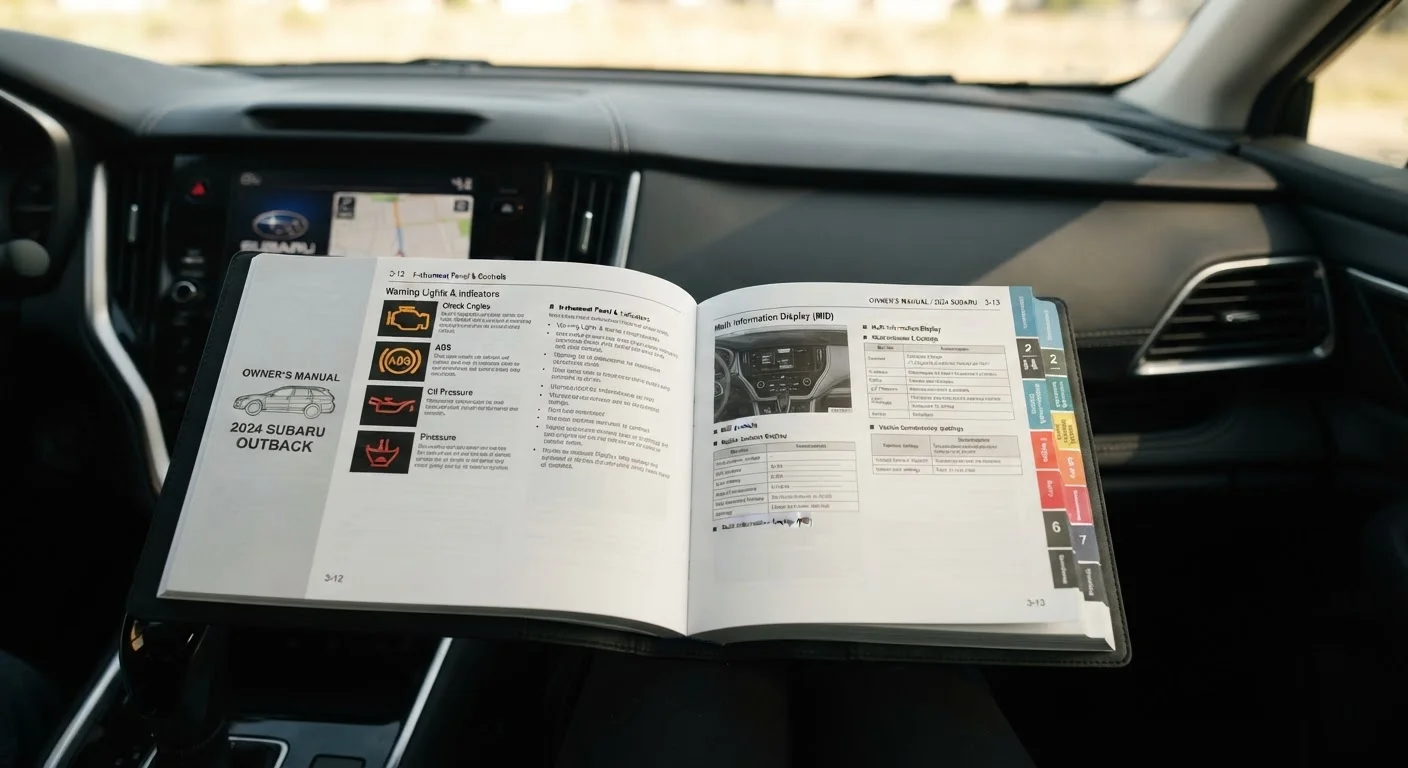
Photo credit: ExplorerGrid.com | Endless Grid Of Factual Content
In this article
Your owner's manual contains manufacturer-specific schedules and specs that generic advice can't match. Learn how to actually use it.
Key Takeaways
- Your owner's manual contains manufacturer-specific intervals and specs no generic checklist can replicate.
- Most manuals are organized into consistent sections — knowing where to look saves significant time.
- The maintenance schedule overrides common rules of thumb like the 3,000-mile oil change.
- Fluid specifications and tire pressure vary by trim and engine — your manual has the exact figures.
- A digital copy is often available through the manufacturer's website if your printed manual is missing.
Why the Owner's Manual Gets Ignored — and Why That's Costly
Most drivers crack open the owner's manual once — to figure out how to set the clock — then bury it under paperwork in the glovebox. It's an understandable habit. The manuals are thick, the language can feel dry, and generic maintenance advice is everywhere online. The problem is that generic advice is, by definition, not tailored to your vehicle.
Your manual is written specifically for your make, model, trim level, and engine. It tells you exactly which oil viscosity your engine requires, what your cold-tire pressure should be, when your transmission fluid actually needs changing, and which warning lights demand immediate attention versus a scheduled service visit. No online article — including this one — can substitute for that level of specificity.
The financial stakes are real. Following the wrong maintenance interval can void powertrain warranty coverage. Using the wrong fluid spec can cause premature wear. These are avoidable outcomes. Understanding the full cost of car ownership starts with following the schedule your manufacturer designed, not a generic approximation of it.
Your Manual Beats Generic Advice Every Time
Oil change intervals, coolant flush schedules, and spark plug replacement windows all vary significantly by manufacturer and engine design. The 3,000-mile oil change rule, for example, is outdated for most modern engines — but the correct interval for your specific engine is printed in your manual. When your manual and a shop's recommendation differ, ask the advisor to show you where in the manufacturer's documentation that service is specified.
How Your Manual Is Organized
Owner's manuals follow a fairly consistent structure across manufacturers, which makes navigating them easier once you know the pattern. Most divide content into these core areas:
- Instrument cluster and warning lights — What each symbol means and how urgently it requires action.
- Controls and features — Seat adjustments, infotainment, climate systems, driver-assist settings.
- Driving and operation — Towing capacity, fuel requirements, recommended break-in procedures for new vehicles.
- Maintenance schedule — The section most drivers never read, and the most important one.
- Technical specifications — Fluid capacities, tire sizes, bulb types, fuse diagrams.
The index is your fastest entry point. If you want your recommended tire pressure, search for "tires" or "inflation" — you'll find it listed in the specs section and often on a sticker inside the driver's door jamb, but the manual will clarify if the door sticker applies to your specific trim.
Step-by-Step: Extracting Maintenance Information You'll Actually Use
Follow these steps the first time you sit down with your manual. Thirty minutes now can prevent expensive misunderstandings for years.
Locate or download your manual
Retrieve the printed manual from your glovebox, or visit your manufacturer's official website and search by VIN or model year to download the PDF. Confirm the manual matches your exact model year and trim — specifications can vary between trim levels on the same vehicle.
Find and read the maintenance schedule section
Use the table of contents or index to locate the scheduled maintenance section. Read through both the normal and severe driving condition schedules in full. Note the intervals (expressed in months or miles, whichever comes first) for oil changes, filter replacements, fluid checks, spark plugs, belts, and brake inspections.
Record your vehicle's fluid and tire specifications
Turn to the technical specifications section and write down: engine oil viscosity and capacity, coolant type, transmission fluid type, brake fluid specification, and recommended cold-tire pressure for front and rear axles. These figures are vehicle-specific and matter when purchasing fluids or verifying that a shop is using the correct product.
Review the warning light reference guide
Locate the section explaining your instrument cluster warning lights. Learn which symbols indicate stop-immediately emergencies (oil pressure, brake system, engine temperature) versus which indicate a scheduled service reminder or a monitor that can wait until your next appointment. This distinction can prevent both unnecessary panic and dangerous delays.
Cross-reference your current mileage against the schedule
Check your odometer and calculate which services are upcoming within the next 5,000 miles. Write these down or enter them into a calendar reminder. If you're unsure when certain services were last performed on a used vehicle, a qualified mechanic can inspect fluid condition and component wear to help establish a reasonable baseline.
Maintenance Schedules: Normal vs. Severe Driving Conditions
One detail most drivers miss entirely: nearly every owner's manual includes two maintenance schedules — one for normal driving conditions and one for severe or special operating conditions. Severe conditions aren't rare. They include frequent short trips under five miles, driving in extreme heat or cold, towing, stop-and-go city driving, and operating in dusty or mountainous terrain.
If your daily commute consists of short city hops, you likely fall into the severe category for some service intervals even if your total mileage seems low. The oil change interval guidance in your manual accounts for this distinction — it's worth reading both schedules side by side to determine which applies to your driving patterns.
Similarly, if you drive a higher-mileage vehicle, the factory schedule remains the baseline, but additional attention may be warranted — see our guidance on high-mileage vehicle upkeep for what shifts after 100,000 miles.
What to Do If Your Manual Is Missing
Used-car buyers frequently inherit a glovebox without a manual. This is a solvable problem. Most manufacturers host full PDF versions of their owner's manuals on their official websites, searchable by model year and VIN. Third-party manual repositories also exist but verify the source before relying on the content — an incorrect model-year manual can give you the wrong specifications.
Once you locate your manual, consider saving the PDF to your phone's cloud storage so it's accessible at service appointments. When a service writer recommends an additional fluid flush or filter replacement, you can quickly cross-reference whether the manufacturer actually schedules that service at your current mileage — or whether it's being suggested ahead of schedule.
For new drivers building maintenance habits, the owner's manual is the logical starting point. Building strong maintenance habits from the beginning is far easier than correcting neglect later. And for a broader view of how those habits affect your wallet over time, the strategies for keeping lifetime maintenance costs under control are worth understanding alongside your manual's schedule.

Author
Automotive Editorial Team
Automotive Editorial Team is the collective byline for our editorial team and contributor network. Articles published under this byline or an editorial pen name are researched, written, and reviewed according to our editorial standards for clarity, consistency, and independence before publication.
View all articles →