
Protein Sources Compared: Animal vs. Plant-Based Options
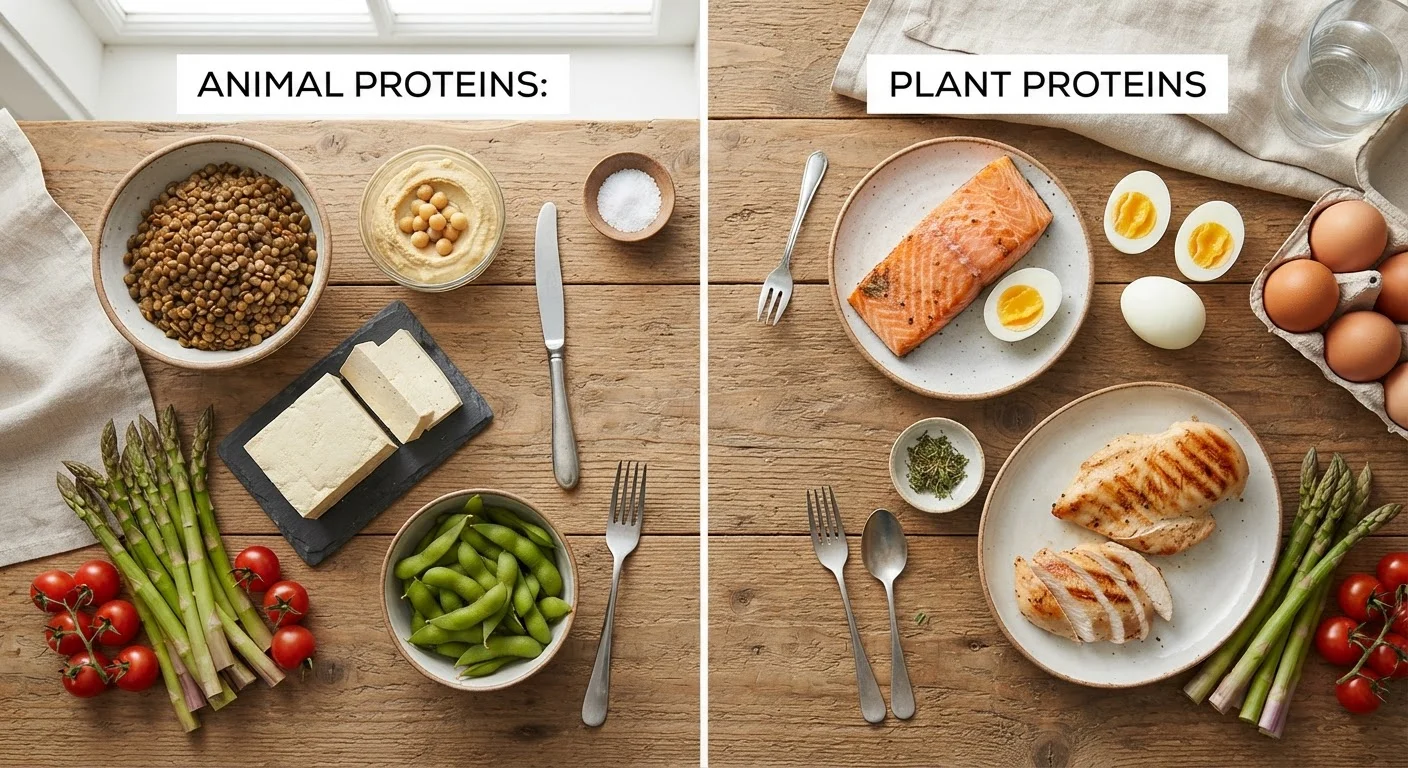
Photo credit: ExplorerGrid.com | Endless Grid Of Factual Content
In this article
How do animal and plant proteins differ in amino acid profiles, bioavailability, and dietary context? Here's a clear breakdown.
Key Takeaways
- Animal proteins are 'complete,' containing all nine essential amino acids in a single source.
- Most plant proteins are 'incomplete' individually, but combining different sources across the day fills the gap.
- Animal proteins generally have higher bioavailability, meaning the body absorbs and uses them more efficiently.
- Plant proteins deliver additional benefits — fiber, antioxidants, and phytonutrients — that animal proteins largely lack.
- Both protein types can support healthy diets; the best choice depends on individual health goals and overall eating patterns.
- Consult a registered dietitian before making significant dietary changes, especially with underlying health conditions.
What Makes a Protein 'Complete' or 'Incomplete'?
Protein is made up of amino acids — nitrogen-containing compounds the body uses to build tissues, produce enzymes, and regulate countless biological processes. Of the 20 amino acids involved, nine are classified as essential, meaning the body cannot manufacture them and must obtain them through food.
Animal proteins — including meat, poultry, fish, eggs, and dairy — contain all nine essential amino acids in proportions that closely match human needs. This is why they are described as complete proteins.
Most plant proteins are incomplete individually, meaning they are low in one or more essential amino acids. Legumes, for instance, are limited in methionine, while grains tend to be low in lysine. The practical solution is variety: eating a range of plant foods across the day — not necessarily at every meal — provides a full complement of essential amino acids. Soy and quinoa are notable exceptions among plant foods, both offering complete amino acid profiles on their own.
Understanding this distinction matters, but it rarely means plant-based eaters face a deficiency risk when their overall diet is varied and adequate in total calories. See why dietary diversity matters for a broader look at how eating across food groups protects nutritional coverage.
Bioavailability: How Much Protein Does the Body Actually Use?
Completeness isn't the only measure of protein quality. Bioavailability — the proportion of protein the body can actually digest, absorb, and utilize — varies significantly between sources.
Nutrition scientists use a metric called the PDCAAS (and its updated version, DIAAS) to rank protein quality by accounting for both amino acid profile and digestibility. Animal proteins like eggs, dairy, and meat consistently score at or near the top of these scales.
Plant proteins generally score somewhat lower, partly because plant cell walls slow digestion and partly because compounds like phytates and tannins can bind to amino acids and reduce absorption. Cooking, soaking, and fermentation can meaningfully reduce these inhibitors — for example, cooked lentils are considerably more bioavailable than raw ones.
| Criterion | Animal-Based Protein | Plant-Based Protein |
|---|---|---|
| Amino acid completeness | Complete (all 9 essential AAs) | Often incomplete; soy and quinoa are exceptions |
| Bioavailability (DIAAS score) | Generally high (0.9–1.1+) | Generally moderate (0.5–0.9) |
| Dietary fiber | None | Present in most sources |
| Saturated fat | Variable; higher in red/processed meats | Generally low (except coconut) |
| Vitamin B12 | Naturally present | Not naturally present; supplement needed |
| Iron type | Heme iron (well absorbed) | Non-heme iron (less readily absorbed) |
| Phytonutrients | Minimal | Rich and varied |
| Environmental footprint | Generally higher | Generally lower |
This difference in bioavailability does not disqualify plant proteins — it simply means plant-focused eaters may benefit from consuming a somewhat broader variety of sources to achieve comparable amino acid delivery.
Beyond Protein: What Else Comes With the Package?
Protein never arrives alone — every food source carries a broader nutritional context that shapes its overall impact on health.
Animal proteins often come paired with valuable micronutrients: heme iron (more readily absorbed than non-heme iron from plants), vitamin B12 (found almost exclusively in animal foods), zinc, and omega-3 fatty acids in fatty fish. Some animal sources — particularly red and processed meats — also carry higher saturated fat and sodium, which are worth considering within an overall eating pattern.
Plant proteins bring their own advantages. Legumes, nuts, seeds, and whole grains deliver dietary fiber, antioxidants, and phytonutrients that are largely absent from animal foods. Fiber supports gut microbiome health and satiety; phytonutrients are associated with reduced inflammation and chronic disease risk in population studies, though research continues to refine our understanding of these effects.
This is why nutrition guidance from major health organizations generally encourages a diet that draws from both categories — or, for plant-based eaters, one that is carefully planned to account for nutrients like B12, iron, zinc, and calcium. For a deeper look at how specific eating patterns approach this balance, see well-studied eating patterns explained.
The degree of processing matters too, regardless of protein source. A whole food — whether a chicken breast or a cup of lentils — differs meaningfully from a highly processed product derived from the same ingredients. Understanding the whole foods vs. processed foods distinction helps put protein choices into practical dietary context.
This article is for general informational and educational purposes only and does not constitute medical or nutritional advice. For guidance tailored to your individual health circumstances, consult a qualified healthcare professional or registered dietitian.

Author
Health & Wellness Editorial Team
Health & Wellness Editorial Team is the collective byline for our editorial team and contributor network. Articles published under this byline or an editorial pen name are researched, written, and reviewed according to our editorial standards for clarity, consistency, and independence before publication.
View all articles →