
Whole Foods vs. Processed Foods: What the Difference Means for Your Diet
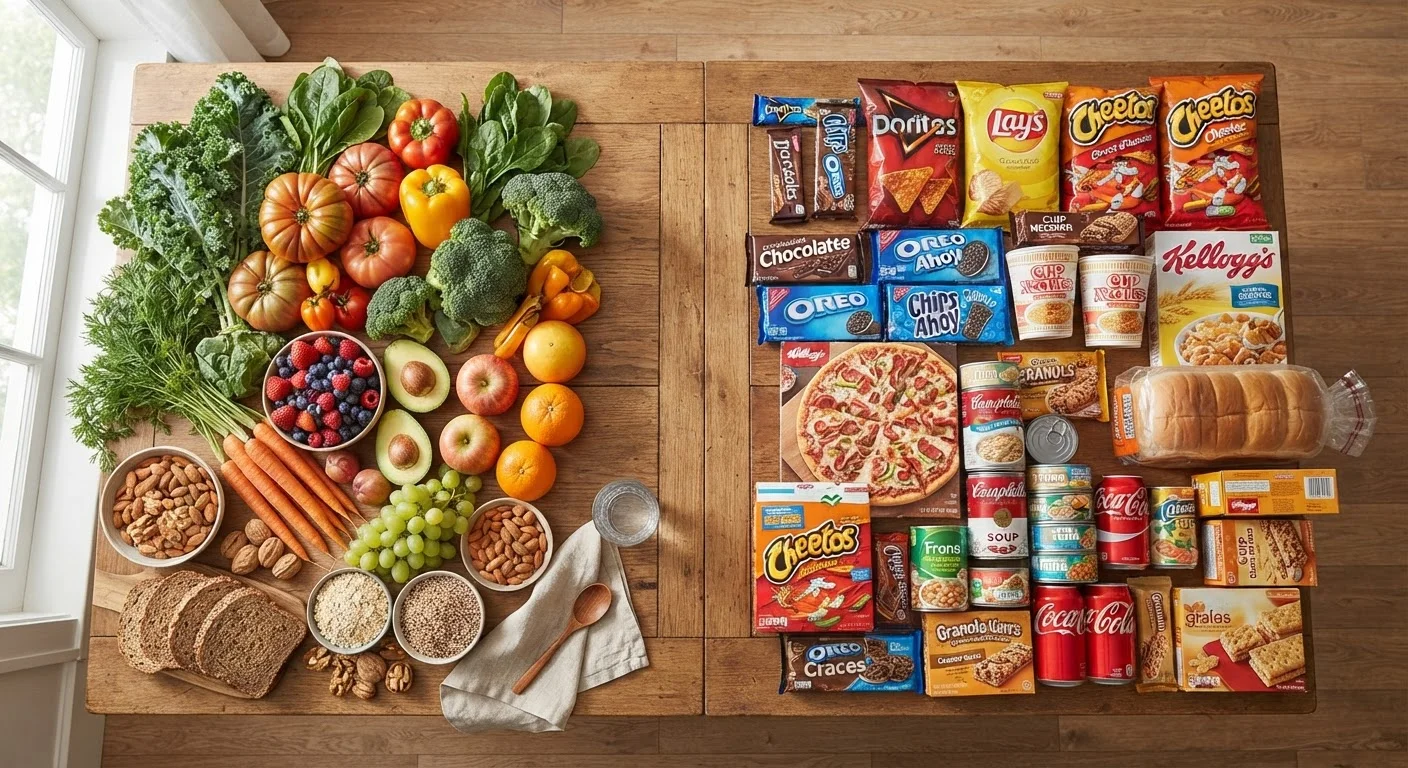
Photo credit: ExplorerGrid.com | Endless Grid Of Factual Content
In this article
Understand what separates whole and processed foods, and how the spectrum between them affects everyday nutrition.
Key Takeaways
- Processing exists on a spectrum — not all processed foods are nutritionally equivalent or harmful.
- Whole foods generally retain more fiber, vitamins, and minerals than their heavily processed counterparts.
- Ultra-processed foods are associated with higher intakes of added sugar, sodium, and unhealthy fats.
- Reading ingredient lists helps you identify where a packaged food falls on the processing spectrum.
- A practical diet can include both whole and minimally processed foods without sacrificing nutritional quality.
Defining the Terms: What Makes a Food 'Whole' or 'Processed'?
A whole food is one that has undergone little to no processing before it reaches your plate. Think fresh spinach, a raw apple, dried lentils, or a plain egg. These foods retain the structure, fiber, and nutrient profile that nature provided. They contain no added sugars, artificial preservatives, or synthetic flavorings.
Processed foods, by contrast, have been altered from their natural state in some way — and that umbrella is far broader than most people realize. Pasteurized milk, bagged salad greens, canned tomatoes, and frozen peas are all technically processed. So is a sugar-coated breakfast cereal. The critical distinction isn't whether a food was touched by industry at all, but how much it was changed — and what was added or removed in the process.
Nutrition researchers often use a classification system called NOVA, which groups foods into four categories ranging from unprocessed or minimally processed (fresh produce, plain meats) to ultra-processed (packaged snacks, reconstituted meat products, flavored instant noodles). Understanding where a food lands on this spectrum is more useful than treating "processed" as a single, blanket judgment.
How Processing Affects Nutritional Quality
The more extensively a food is processed, the greater the potential for nutrient loss — and for the addition of ingredients that affect how your body responds to it. Here's what typically changes:
- Fiber: Refining grains strips away the bran and germ, removing much of the fiber and B vitamins. Whole grain bread retains these; white bread largely does not.
- Micronutrients: Heat, pressure, and chemical processing can degrade vitamins like C and B1 (thiamine). Manufacturers sometimes add synthetic versions back — but not always in the same proportions or forms as the original.
- Added sugar and sodium: Ultra-processed foods frequently rely on sugar, salt, and fat to compensate for reduced palatability after processing. These additions can contribute meaningfully to daily intake without providing nutritional benefit.
- Additives: Emulsifiers, artificial colors, stabilizers, and preservatives serve functional roles in shelf life and texture. Research into their long-term health effects is ongoing and nuanced — not all additives pose documented risks, but their cumulative dietary presence in ultra-processed diets is an active area of study.
For a deeper look at how to decode what's actually in packaged foods, our guide to reading a Nutrition Facts label walks through ingredient lists and daily values in plain language.
| Criterion | Whole Foods | Processed Foods |
|---|---|---|
| Fiber content | Generally high and intact | Often reduced or removed |
| Added sugar | None | Varies; frequently present in ultra-processed |
| Sodium levels | Naturally low | Often elevated as a preservative or flavoring |
| Micronutrient retention | High — naturally occurring | Variable; sometimes synthetic additions |
| Shelf life | Short to moderate | Extended via additives or packaging |
| Convenience | Requires preparation | Often ready-to-eat or quick to prepare |
| Ingredient transparency | Single or few ingredients | Can involve many additives and preservatives |
Where Processed Foods Earn Their Place
Dismissing all processed foods as nutritionally inferior misses important nuance. Frozen vegetables are picked at peak ripeness and flash-frozen, which can preserve nutrients as well as — or in some cases better than — fresh produce that has spent days in transit. Plain canned beans are a fiber- and protein-rich staple. Low-sodium canned fish is one of the most convenient sources of omega-3 fatty acids available.
The problem isn't processing itself — it's the degree of processing and what gets added. A plain, single-ingredient food that happens to be pasteurized or frozen is categorically different from a product engineered with dozens of additives, refined starches, and flavor enhancers.
Understanding the difference between added and natural sugars can help you evaluate processed foods more accurately, since added sugar is one of the most consequential variables separating minimally processed from ultra-processed options.
Not All Processing Is Equal
The term 'processed food' covers an enormous range — from minimally altered staples like canned tomatoes to heavily engineered snack products with dozens of additives. When evaluating any packaged food, check both the ingredient list and the Nutrition Facts panel rather than relying on front-of-package labeling, which is not federally regulated for terms like 'natural' or 'wholesome.' The ingredient list is your most reliable guide to what's actually in the product.
Building a Practical, Balanced Approach
For most people, the goal isn't to eliminate every processed food from their diet — it's to ensure whole and minimally processed foods form the foundation. A useful guiding principle: aim for variety in your food choices, prioritizing foods with short, recognizable ingredient lists and avoiding those where sugar, refined starch, or sodium appear among the first few ingredients.
Dietary diversity — eating a wide range of vegetables, fruits, legumes, whole grains, and quality protein sources — tends to naturally crowd out ultra-processed options without requiring rigid restriction. Similarly, exploring plant and animal protein sources can help you round out a diet built on whole food foundations.
No single meal or food determines overall diet quality. Consistent patterns over time matter far more than individual choices. If heavily processed foods make up a significant portion of your regular intake, gradually shifting toward more whole and minimally processed alternatives is a well-supported, practical step — one worth discussing with a registered dietitian or healthcare provider for personalized guidance.
This article is intended as general nutrition education and is not a substitute for personalized medical or dietary advice. Consult a qualified healthcare professional for guidance specific to your health situation.

Author
Health & Wellness Editorial Team
Health & Wellness Editorial Team is the collective byline for our editorial team and contributor network. Articles published under this byline or an editorial pen name are researched, written, and reviewed according to our editorial standards for clarity, consistency, and independence before publication.
View all articles →