
Why DIY Electrical Work Goes Wrong—Even for Careful Homeowners
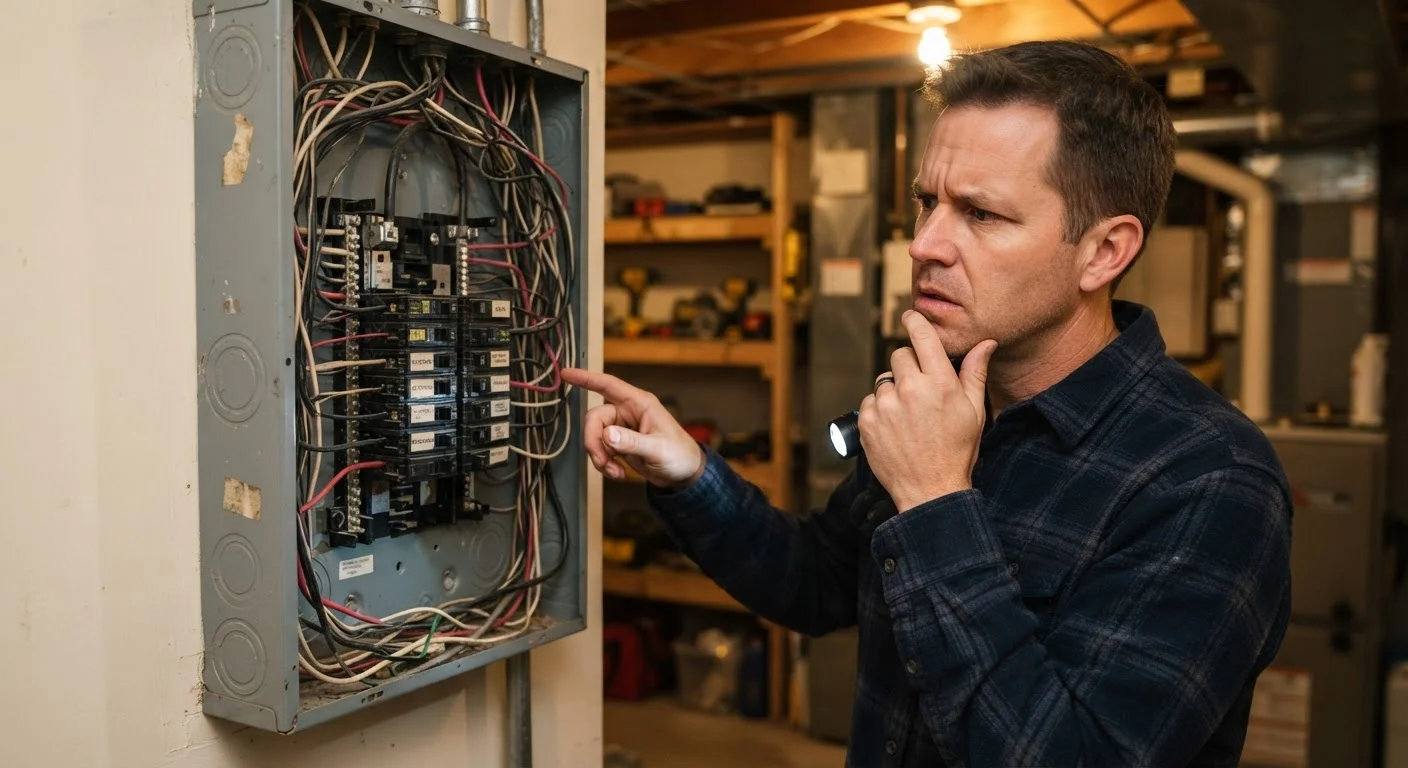
Photo credit: ExplorerGrid.com | Endless Grid Of Factual Content
In this article
Wiring errors are among the costliest and most dangerous home improvement mistakes. Learn where things go wrong and when to call a licensed electrician.
Key Takeaways
- Working on live circuits is the leading cause of DIY electrical injuries—always cut power first.
- Undersized wiring and improper connections are common causes of house fires that develop silently.
- Most electrical work requires a permit and inspection; skipping this can affect your homeowner's insurance.
- Many wiring mistakes pass visual inspection but fail under load, making professional review essential.
Why Electrical DIY Is Different From Other Home Projects
Replacing a faucet or painting a room carries limited risk if something goes wrong. Electrical work is fundamentally different: errors are often invisible, consequences can be severe, and some mistakes don't reveal themselves until years later—sometimes as a fire inside a wall. That reality doesn't mean homeowners should never touch a switch or outlet, but it does mean understanding exactly where things go wrong.
Most electrical mistakes aren't made by reckless people. They're made by careful, well-intentioned homeowners who underestimate the complexity of residential wiring or rely on incomplete information. Knowing the most common failure points puts you in a far stronger position—whether you're deciding to proceed yourself or recognizing when to call a licensed electrician. For a broader framework on making that call, see our practical guide to DIY vs. professional repairs.
The Most Common DIY Electrical Mistakes
The following errors appear repeatedly in home inspections and insurance claims. Each one is avoidable with the right knowledge.
Working on a live circuit instead of shutting off power at the breaker.
Why it happens: Homeowners assume the work is quick enough that cutting power isn't worth the extra steps, or they aren't certain which breaker controls the circuit.
Using wire gauge that is too small for the circuit's amperage rating.
Why it happens: Wire labeling can be confusing, and many homeowners don't realize that a 20-amp circuit requires 12-gauge wire, while 14-gauge is only rated for 15 amps.
Making wire connections outside of a covered junction box, or overloading a box.
Why it happens: Space is tight and it can seem easier to splice wires in an open wall cavity or stuff extra wires into a box that's already crowded.
Reversing polarity by connecting the hot wire to the neutral terminal.
Why it happens: Wire color conventions seem straightforward, but older homes may have non-standard wiring, and it's easy to misread terminal markings under poor lighting.
Failing to use arc-fault circuit interrupter (AFCI) or ground-fault circuit interrupter (GFCI) protection where required.
Why it happens: Code requirements for AFCI and GFCI protection have expanded significantly over recent code cycles, and many homeowners are unaware that older installations may not meet current standards when circuits are modified.
Beyond these individual errors, the cumulative effect of several small mistakes in the same circuit can be particularly dangerous. A contractor-style walkthrough of your home can help you spot warning signs—flickering lights, warm switch plates, or a burning smell—before a problem becomes an emergency.
Permits and Inspections: The Safety Net Most DIYers Skip
Skipping a Permit Can Cost You Later
Unpermitted electrical work is one of the most common issues flagged during home sales. Buyers' inspectors routinely check panel records and installation quality. Beyond a stalled sale, unpermitted work may void insurance coverage for fire or damage claims that originate in those circuits. Check with your local building department before starting any project beyond a simple device swap.
One of the most consequential oversights in DIY electrical work isn't a wiring error at all—it's skipping the permit process. In most US jurisdictions, any work beyond replacing a like-for-like fixture or device requires a permit, and the finished work must pass inspection by a local building official. This isn't bureaucratic formality. An inspector's review is an independent check that catches dangerous mistakes before walls are closed up.
Unpermitted electrical work can void your homeowner's insurance coverage for related claims, complicate or stall a future home sale, and leave you personally liable if the work later causes harm. Our article on permits, inspections, and building code explains the full picture of what's at stake. Always verify requirements with your local building department before starting any electrical project.

Author
Home & Garden Editorial Team
Home & Garden Editorial Team is the collective byline for our editorial team and contributor network. Articles published under this byline or an editorial pen name are researched, written, and reviewed according to our editorial standards for clarity, consistency, and independence before publication.
View all articles →