
Protein, Fat, and Fiber: What the Guaranteed Analysis Panel Doesn't Show
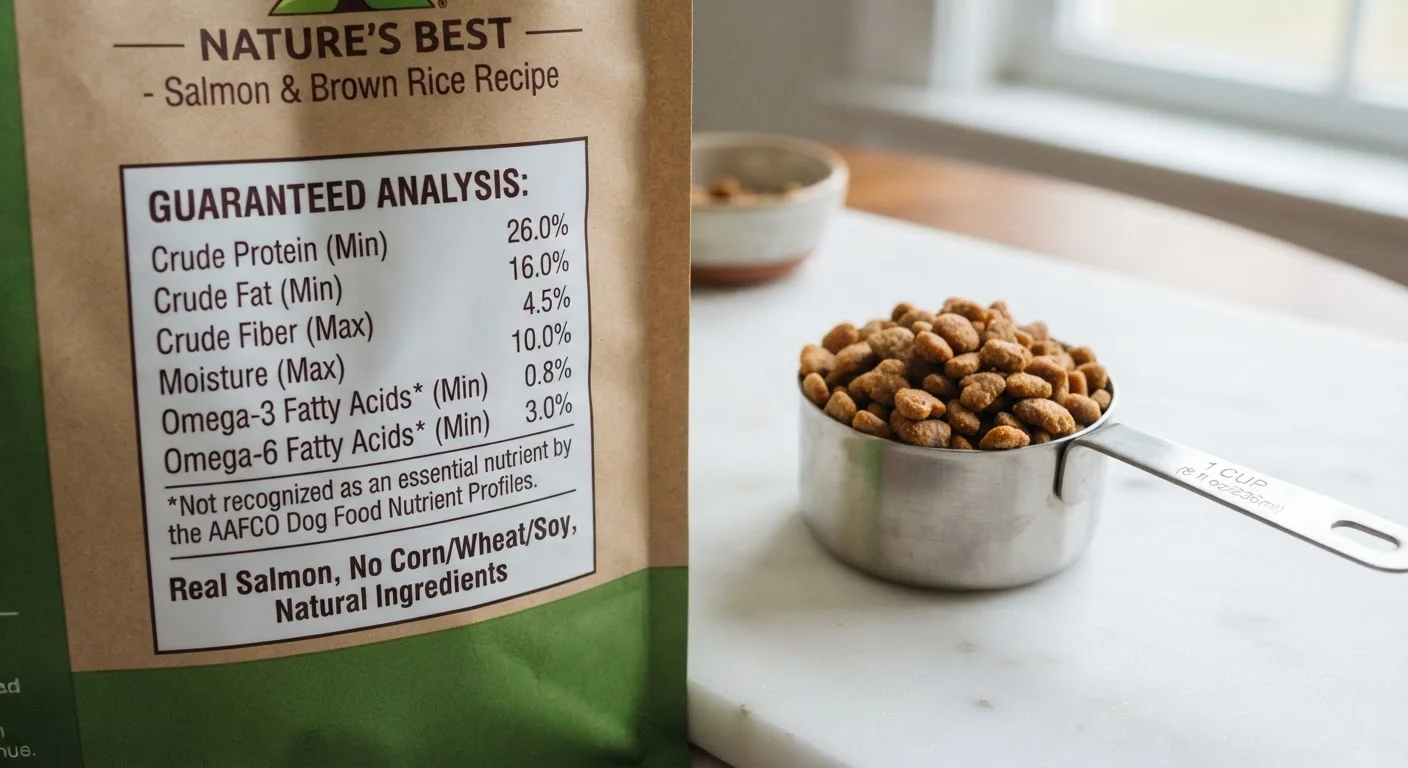
Photo credit: ExplorerGrid.com | Endless Grid Of Factual Content
In this article
The guaranteed analysis gives numbers, but not the full picture. Learn how to interpret it alongside other label information.
Key Takeaways
- The guaranteed analysis shows minimum or maximum percentages, not exact amounts — actual nutrient levels may differ.
- Crude measurements don't reflect digestibility or biological availability of protein, fat, or fiber.
- Moisture content dramatically affects how guaranteed analysis numbers compare across wet and dry foods.
- The GA panel must be read alongside the ingredient list and AAFCO nutritional adequacy statement.
- Fiber type matters as much as fiber quantity — the GA panel does not distinguish between soluble and insoluble fiber.
What the Guaranteed Analysis Actually Measures
Every bag, can, or pouch of commercial pet food sold in the US must display a guaranteed analysis panel. At first glance, it looks reassuringly precise: percentages for crude protein, crude fat, crude fiber, and moisture. In practice, those numbers are starting points — not complete answers.
The word crude is doing significant work here. It refers to the laboratory methods used to extract and measure each nutrient, not their quality. Crude protein is estimated by measuring total nitrogen in the food, then multiplying by a standard factor. This captures all nitrogen-containing compounds — including some that aren't usable protein at all. The result is a number that can overstate how much functional protein your pet actually absorbs.
Similarly, crude fat is measured by solvent extraction, and crude fiber is captured using a method that detects only the most resistant insoluble plant material. Soluble fibers — including fermentable prebiotics that support gut health — are largely invisible to this measurement. Understanding what each part of a pet food label means helps put these numbers in proper context.
The Moisture Problem: Why You Can't Compare Labels Directly
One of the most consequential — and least discussed — limitations of the guaranteed analysis is how moisture distorts comparisons. A dry kibble might show 30% crude protein. A canned food might show 10%. It would be easy to conclude the kibble is protein-richer. But canned foods typically contain 75–82% moisture, while kibble contains around 10%.
To make a fair comparison, nutritionists use dry matter basis (DMB) calculations: divide the as-fed percentage by the percentage of dry matter (100 minus moisture), then multiply by 100. That 10% protein in a 78%-moisture canned food becomes roughly 45% on a dry matter basis — considerably higher than the kibble.
~75–82%
Typical moisture content in canned pet food
This high water content means as-fed protein percentages in wet foods must be recalculated on a dry matter basis before comparing to dry kibble.
~10%
Typical moisture content in dry kibble
The wide moisture gap between wet and dry foods is the primary reason direct guaranteed analysis comparisons across formats can be misleading.
Up to 50%
Underestimation of total dietary fiber by crude fiber method
Research in animal nutrition has shown the Weende crude fiber method can substantially undercount total dietary fiber, particularly soluble fractions, compared to more modern analytical methods.
This conversion is critical for pet owners managing weight, kidney disease, or any condition where protein or fluid intake matters. The label as printed can mislead without this adjustment.
What the Panel Doesn't Tell You About Protein Quality
Protein percentage on the guaranteed analysis says nothing about digestibility or amino acid completeness. A food could hit 30% crude protein using a blend of plant proteins and still leave a cat — an obligate carnivore — short on taurine, arginine, or methionine. These amino acids are critical for feline health and are found predominantly in animal tissue.
Digestibility varies substantially by protein source. Animal-sourced proteins — chicken, salmon, eggs — tend to be highly digestible for dogs and cats. Some plant-sourced proteins are less bioavailable in carnivores, even when crude percentages look comparable. Reading the ingredient list carefully is the only way to understand what protein sources are actually present and in what relative proportions.
Fiber: More Complex Than One Number Suggests
The crude fiber value on a guaranteed analysis is, by most nutritionists' standards, the least informative figure on the panel. The method used — called the Weende method — captures only the most indigestible cellulose and lignin fractions. It systematically underestimates total dietary fiber and omits nearly all soluble fiber.
Why does this matter? Soluble fibers — such as inulin, pectin, and fructooligosaccharides (FOS) — are fermented by beneficial gut bacteria, supporting microbiome diversity and stool quality in ways that insoluble fiber doesn't. A food with a low crude fiber percentage could actually be rich in prebiotic soluble fibers that simply don't register on the panel.
Converting to Dry Matter Basis
To compare protein or fat across wet and dry foods, use this formula: divide the as-fed nutrient percentage by (100 minus the moisture percentage), then multiply by 100. For example, a wet food with 9% protein and 78% moisture has a dry matter protein of about 41%. Most pet food manufacturers will provide dry matter calculations if you contact them directly.
If your pet has digestive sensitivities or you're evaluating a food for gut health, the crude fiber number alone isn't sufficient. Look at the ingredient list for named fiber sources — beet pulp, chicory root, pea fiber — and consider whether soluble or insoluble fiber is the priority for your animal's needs.
Reading the Panel as Part of a Bigger Picture
The guaranteed analysis is a regulatory floor, not a complete nutritional report. Used in isolation, it creates a false sense of precision. Used alongside the ingredient list and the AAFCO nutritional adequacy statement, it becomes one useful data point in a fuller assessment.
The AAFCO statement tells you whether the food is formulated to meet minimum nutritional requirements for a specific life stage — or whether it was tested through actual feeding trials, a higher standard. Neither is shown in the guaranteed analysis itself.
For most healthy adult dogs and cats eating a complete-and-balanced diet, the guaranteed analysis needn't trigger anxiety. But for pets with specific health conditions — obesity, chronic kidney disease, inflammatory bowel disease — working with a veterinarian or board-certified veterinary nutritionist to interpret these numbers in context is strongly advisable. General label literacy is valuable; clinical decision-making requires professional guidance.
This article is for general informational and educational purposes only and does not constitute veterinary or nutritional advice. Consult a licensed veterinarian or board-certified veterinary nutritionist for guidance specific to your pet's health and dietary needs.
Frequently Asked Questions

Author
Pets & Animals Editorial Team
Pets & Animals Editorial Team is the collective byline for our editorial team and contributor network. Articles published under this byline or an editorial pen name are researched, written, and reviewed according to our editorial standards for clarity, consistency, and independence before publication.
View all articles →