
Reading a Pet Food Ingredient List Without Getting Misled
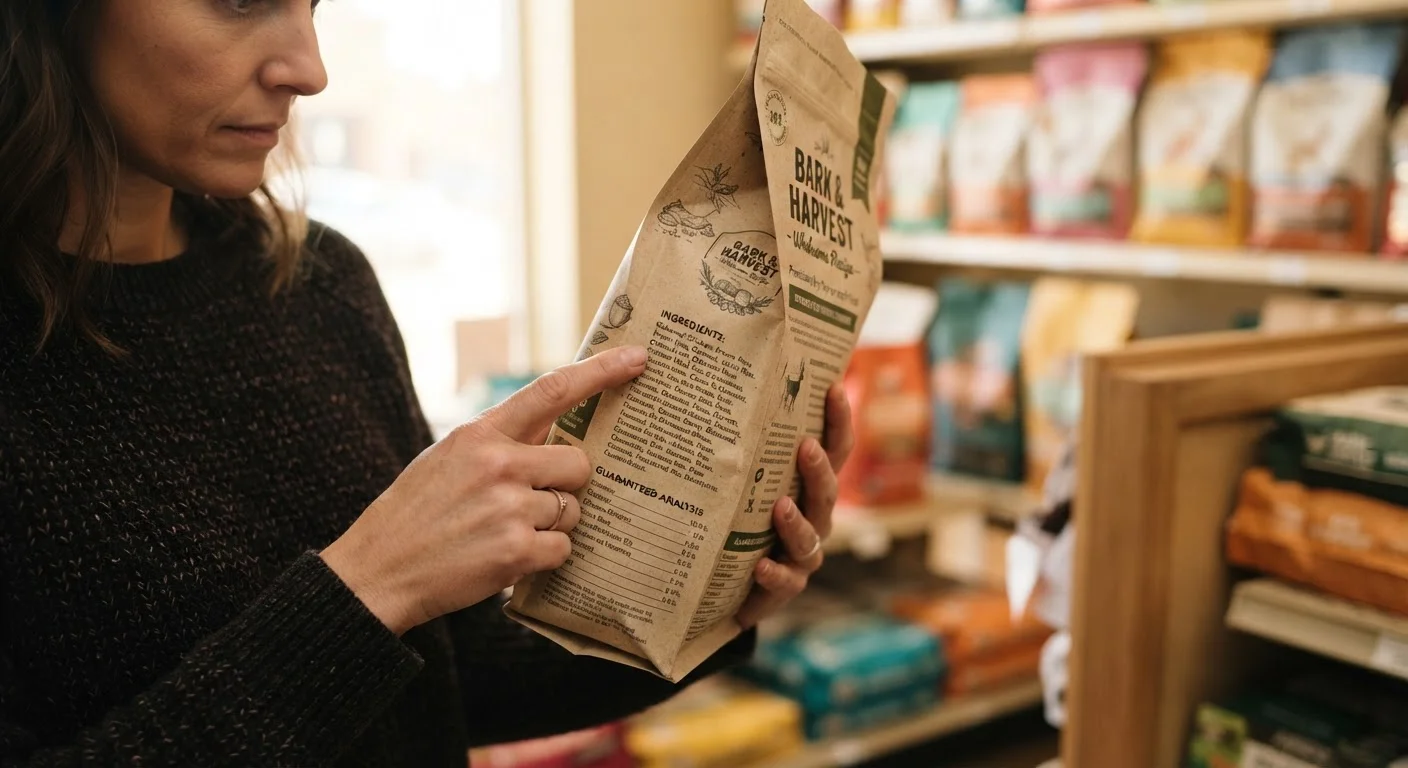
Photo credit: ExplorerGrid.com | Endless Grid Of Factual Content
In this article
Ingredient splitting, marketing meats, and by-product confusion — a practical walkthrough for decoding what's really in your pet's food.
Key Takeaways
- Ingredients are listed by weight before processing, so water content can inflate a meat's apparent ranking.
- Ingredient splitting artificially lowers individual carbohydrate sources so they appear further down the list.
- By-products are not inherently inferior — organ meats and meals can be nutrient-dense protein sources.
- An AAFCO nutritional adequacy statement is a more reliable quality signal than ingredient order alone.
- Marketing terms like 'premium' and 'natural' have limited regulatory definitions and should not drive decisions.
How Pet Food Ingredient Lists Are Regulated
In the United States, pet food labeling is governed at the federal level by the FDA and, for labeling standards specifically, by guidelines developed by the Association of American Feed Control Officials (AAFCO). Individual states adopt AAFCO model regulations at varying rates, which means enforcement can differ by location.
Under these rules, ingredients must be listed in descending order by weight — including the moisture content of each ingredient as it enters the mix. This detail is consequential: a whole chicken breast is roughly 70% water by weight, so it ranks high on the list even though the actual protein contribution after cooking and processing is substantially smaller. A chicken meal, by contrast, has already had most moisture removed, making it a more concentrated protein source by weight — even though it sounds less appealing than 'real chicken.'
Understanding this framework is the first step toward reading ingredient lists accurately rather than reactively. For a broader look at what every panel on a label means, see What Pet Food Labels Are Actually Telling You.
What you will need
Common Labeling Tactics That Can Mislead Owners
Ingredient Splitting
Ingredient splitting occurs when a manufacturer divides a single ingredient into multiple sub-forms, each listed separately. For example, a food might list ground corn, corn gluten meal, and corn bran as three distinct entries. Individually, each ranks lower on the list than it would if combined — potentially falling below a named meat source. In practice, the total contribution of corn across all three forms may exceed that of the meat. There is no regulation that prevents this practice.
When you spot multiple forms of the same base ingredient (pea protein, pea flour, pea starch, for instance), add them mentally and consider how that combined weight changes the picture. This tactic is especially relevant to grain-free formulas, which often substitute legume derivatives in place of grains.
By-Product Confusion
The term by-product carries a strong negative connotation in pet food marketing, but nutritionally the picture is more nuanced. AAFCO defines poultry by-product meal as the ground, rendered parts of the carcass excluding feathers, heads, feet, and entrails — though organ meats such as liver, kidneys, and lungs are included. These organs are protein-dense and nutrient-rich. The real variable is consistency: named by-products (e.g., chicken by-product meal) are held to stricter species-specific standards than generic poultry by-product meal.
Vague or Unregulated Marketing Terms
Words like premium, gourmet, and holistic carry no legally enforced definition in pet food labeling. The term natural has a limited AAFCO definition — it generally means ingredients have not been chemically synthesized — but does not imply superior nutrition. Treat these terms as advertising language, not nutritional claims.
Work With Your Veterinarian
If your pet has a health condition, is a young puppy or kitten, or is a senior animal, nutritional needs become more specific. A veterinarian or board-certified veterinary nutritionist can help you evaluate labels in the context of your individual pet's health profile. General label-reading skills are a useful starting point, not a substitute for professional guidance.
Step-by-Step: Reading an Ingredient List With Confidence
Follow these steps each time you evaluate a new food or consider switching formulas. If you do switch foods, a gradual transition helps avoid digestive upset — the process is outlined in Switching Your Pet's Food Without Upsetting Their Stomach.
Locate and Confirm the AAFCO Statement First
Before reading a single ingredient, find the nutritional adequacy statement — typically located near the guaranteed analysis panel. It should state that the food is complete and balanced for a specific life stage (e.g., adult maintenance, growth, or all life stages) either through formulation to AAFCO nutrient profiles or through an actual feeding trial. If this statement is absent or says the food is intended for intermittent or supplemental feeding only, it is not designed as a sole diet.
Identify the First Named Protein Source
Look at the first one to three ingredients. Ideally, a named animal protein — such as chicken, salmon, beef, or turkey meal — appears at or near the top. Remember that whole meats rank high partly due to water weight. A named meal (e.g., salmon meal) lower on the list may contribute as much or more dry protein. Generic terms like meat meal or animal digest without a species name offer less traceability.
Check for Ingredient Splitting
Scan the full list for multiple forms of the same base ingredient. Common examples include peas (pea protein, pea starch, pea flour), potatoes (potato starch, potato protein, dried potato), and corn (ground corn, corn gluten meal, corn bran). If you spot three or more variants of the same ingredient distributed across the list, mentally combine them to estimate their true collective rank. This is especially important when evaluating carbohydrate-heavy formulas.
Evaluate By-Products Objectively
When you see a by-product listed, note whether it is species-named (e.g., chicken by-product meal) versus generic (poultry by-product meal). Species-named by-products follow tighter AAFCO definitions. Organ meats included in by-product meal — liver, kidney, spleen — are nutrient-dense. The presence of by-products alone is not a reliable indicator of food quality; sourcing consistency and overall formula balance matter more.
Note Preservatives, Colorings, and Additives
Natural preservatives include mixed tocopherols (a form of vitamin E) and rosemary extract. Synthetic preservatives such as BHA, BHT, and ethoxyquin are permitted in pet food under current FDA regulations at specified levels; research on long-term effects at those levels is ongoing. Artificial colorings serve no nutritional purpose — they are added for human appeal. Their presence isn't automatically a quality red flag, but it's useful context about the formulation approach.
Cross-Reference With the Guaranteed Analysis
The guaranteed analysis lists minimum crude protein, minimum crude fat, maximum crude fiber, and maximum moisture. These percentages reflect the food as packaged, not on a dry-matter basis — which matters when comparing wet and dry foods directly. To compare them fairly, convert both to a dry-matter basis by dividing the nutrient percentage by (100 minus the moisture percentage) and multiplying by 100. This step ensures you're comparing actual nutrient density, not water content.
Putting It All Together
An ingredient list is one data point among several. The guaranteed analysis panel — which lists minimum protein and fat percentages and maximum fiber and moisture — adds context, though it too has limits described in Protein, Fat, and Fiber: What the Guaranteed Analysis Panel Doesn't Show. Taken together, the ingredient list, guaranteed analysis, and AAFCO statement give a more complete picture than any single element alone.
If your pet is showing changes in coat quality, energy, digestion, or body condition, those physical signals are worth taking seriously. See Signs Your Pet's Diet May Not Be Working for Them for a guide to what to watch for. And if you're considering home-prepared meals, understand that balance is harder to achieve than it appears — Homemade Pet Food: What a Balanced Recipe Actually Requires outlines the nutritional gaps most owners miss.
Ingredient Lists Don't Tell the Whole Story
An ingredient list reveals what is in the food but not the quality of sourcing, digestibility, or actual nutrient bioavailability. A food with a modest-looking ingredient list can still meet all of your pet's nutritional requirements. Always check the AAFCO nutritional adequacy statement alongside the ingredient list — it confirms whether the diet is formulated or feeding-trial-tested for a specific life stage.
This article provides general educational information about pet food labeling and is not a substitute for professional veterinary nutritional advice. Consult your veterinarian or a board-certified veterinary nutritionist for guidance specific to your pet's health and dietary needs.

Author
Pets & Animals Editorial Team
Pets & Animals Editorial Team is the collective byline for our editorial team and contributor network. Articles published under this byline or an editorial pen name are researched, written, and reviewed according to our editorial standards for clarity, consistency, and independence before publication.
View all articles →