
What Pet Food Labels Are Actually Telling You
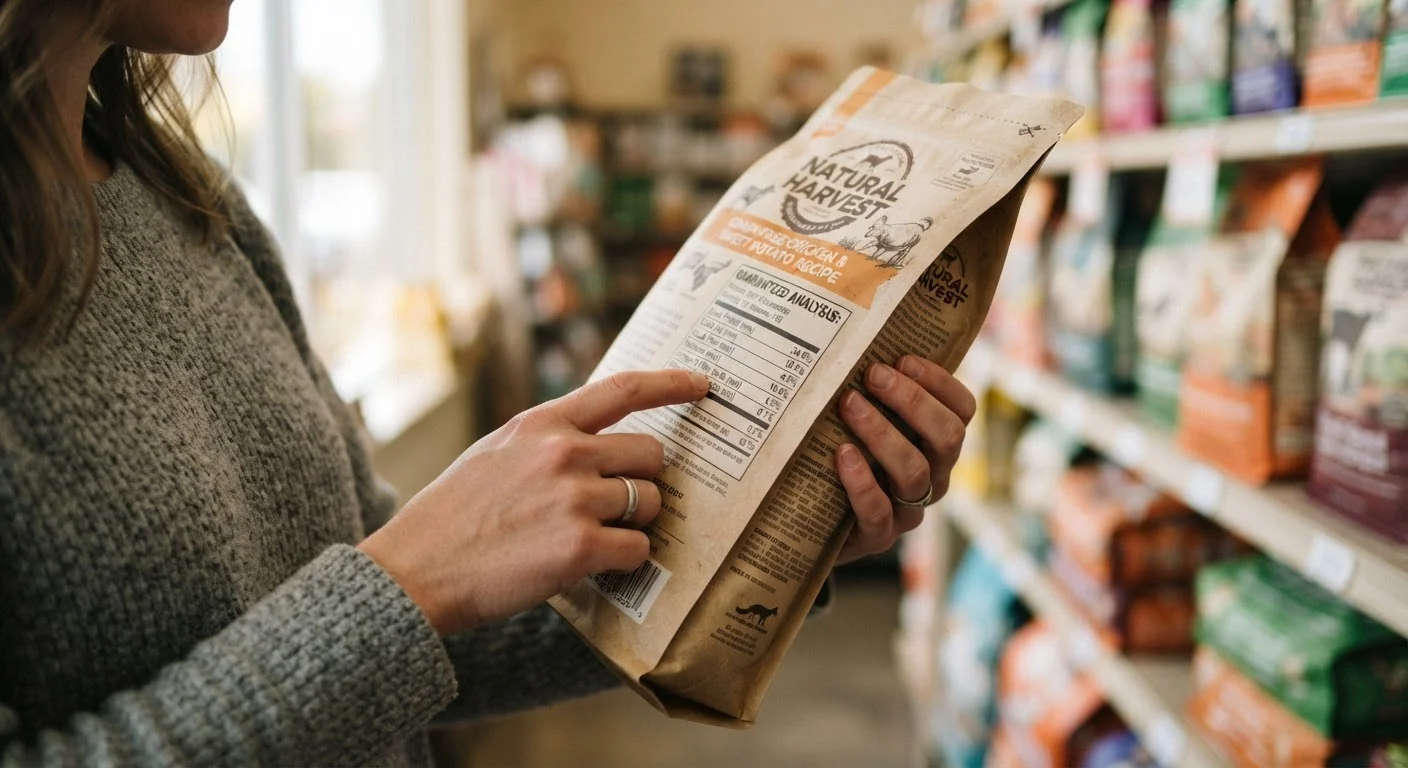
Photo credit: ExplorerGrid.com | Endless Grid Of Factual Content
In this article
AAFCO statements, ingredient order, guaranteed analysis — learn what each part of a pet food label means and what to look past.
Key Takeaways
- The AAFCO nutritional adequacy statement is the single most important line on any pet food label.
- Ingredients are listed by pre-cooking weight, which can make moisture-heavy items like fresh meats appear more prominent than they are.
- The guaranteed analysis shows minimum or maximum nutrient levels, not exact amounts — it has real limitations.
- Marketing terms like 'natural,' 'holistic,' and 'premium' have little or no regulatory definition.
- Life stage matters: a food labeled for 'all life stages' must meet puppy or kitten nutritional minimums.
- Always consult your veterinarian before making significant changes to your pet's diet.
The AAFCO Statement: Start Here, Every Time
Before reading a single ingredient, locate the AAFCO nutritional adequacy statement. This small block of text — often on the side or back panel — is the most regulated and meaningful line on the entire package. It tells you two critical things: whether the food is complete and balanced, and for which life stage.
A complete and balanced food means it meets AAFCO's established nutrient profiles for dogs or cats. A food labeled as a supplement, treat, or intermittent feeding does not meet these standards and should not serve as a primary diet. Many pet owners overlook this distinction entirely.
The statement also specifies life stage: growth (puppies/kittens), maintenance (adult), reproduction, or all life stages. If your adult dog is eating a food formulated for all life stages, he's eating to puppy nutritional minimums — higher in calories and certain nutrients than a sedentary adult typically needs. Your veterinarian can help you match the right life stage designation to your specific pet.
Feeding Trials vs. Formulated Claims
When the AAFCO statement says the food is 'substantiated by animal feeding tests,' it means real animals ate the food for a defined period and met certain health benchmarks. 'Formulated to meet nutrient profiles' means the recipe was calculated to hit targets — without necessarily being fed to animals first. Both are legally compliant, but the distinction matters when evaluating the depth of evidence behind a product.
Ingredient Lists: What the Order Really Means
Ingredients are listed by pre-cooking weight in descending order. This sounds straightforward, but it creates a consistent optical illusion. Fresh chicken is approximately 70% water by weight — so it appears high on the list before processing. After the water cooks off, it contributes meaningfully less protein by dry weight than a concentrated ingredient like chicken meal, which appears lower on the list.
This is why the ingredient list alone is an incomplete tool. Use it alongside the guaranteed analysis, and be aware of a practice called ingredient splitting — where a single ingredient (say, various grain types) is divided into multiple entries to push each one lower on the list. Our guide on reading a pet food ingredient list without getting misled walks through these tactics in detail.
The Guaranteed Analysis Panel: Numbers With Limits
The guaranteed analysis shows minimum percentages of crude protein and crude fat, and maximum percentages of crude fiber and moisture. These are regulatory floors and ceilings — not the actual amounts in the food. A food guaranteeing a minimum of 26% protein may contain significantly more.
Crucially, the panel says nothing about nutrient quality, digestibility, or bioavailability. High crude protein numbers can come from sources the animal digests poorly. For a more complete picture, look at the guaranteed analysis in context with the ingredient list and the AAFCO statement together. Our companion article on what the guaranteed analysis panel doesn't show covers this gap in depth.
~4,000
Pet food products on the US market
The FDA estimates thousands of distinct pet food products are sold in the United States, making label literacy an essential consumer skill.
70%
Water content in fresh chicken by weight
Fresh or refrigerated meats consist largely of water, which is why they rank high on ingredient lists before processing removes moisture.
2
AAFCO substantiation methods accepted
AAFCO recognizes nutrient profile formulation and animal feeding trials as the two acceptable methods for substantiating a nutritional adequacy claim.
Marketing Language vs. Regulated Claims
Pet food packaging is designed to appeal to owners, not animals. Terms like holistic, premium, artisan, and human-grade carry no official regulatory definition under AAFCO or FDA guidelines. They communicate brand positioning, not nutritional standards.
'Natural' is the one exception with a partial definition: AAFCO describes it as sourced without chemical synthesis, though the term can still appear on foods that include synthetic vitamins and minerals added for nutritional completeness. When in doubt, the AAFCO adequacy statement and the ingredient list together are far more informative than front-of-pack claims.
If your pet's diet doesn't seem to be working — changes in coat quality, energy, or digestion — these are worth evaluating with your vet. Our article on signs your pet's diet may not be working outlines the key physical signals to watch for.
This article is for general informational and educational purposes only. Always consult a licensed veterinarian before making significant changes to your pet's diet, especially for animals with health conditions.
Frequently Asked Questions

Author
Pets & Animals Editorial Team
Pets & Animals Editorial Team is the collective byline for our editorial team and contributor network. Articles published under this byline or an editorial pen name are researched, written, and reviewed according to our editorial standards for clarity, consistency, and independence before publication.
View all articles →