
Road Trip vs. Flying: Weighing the Real Trade-Offs
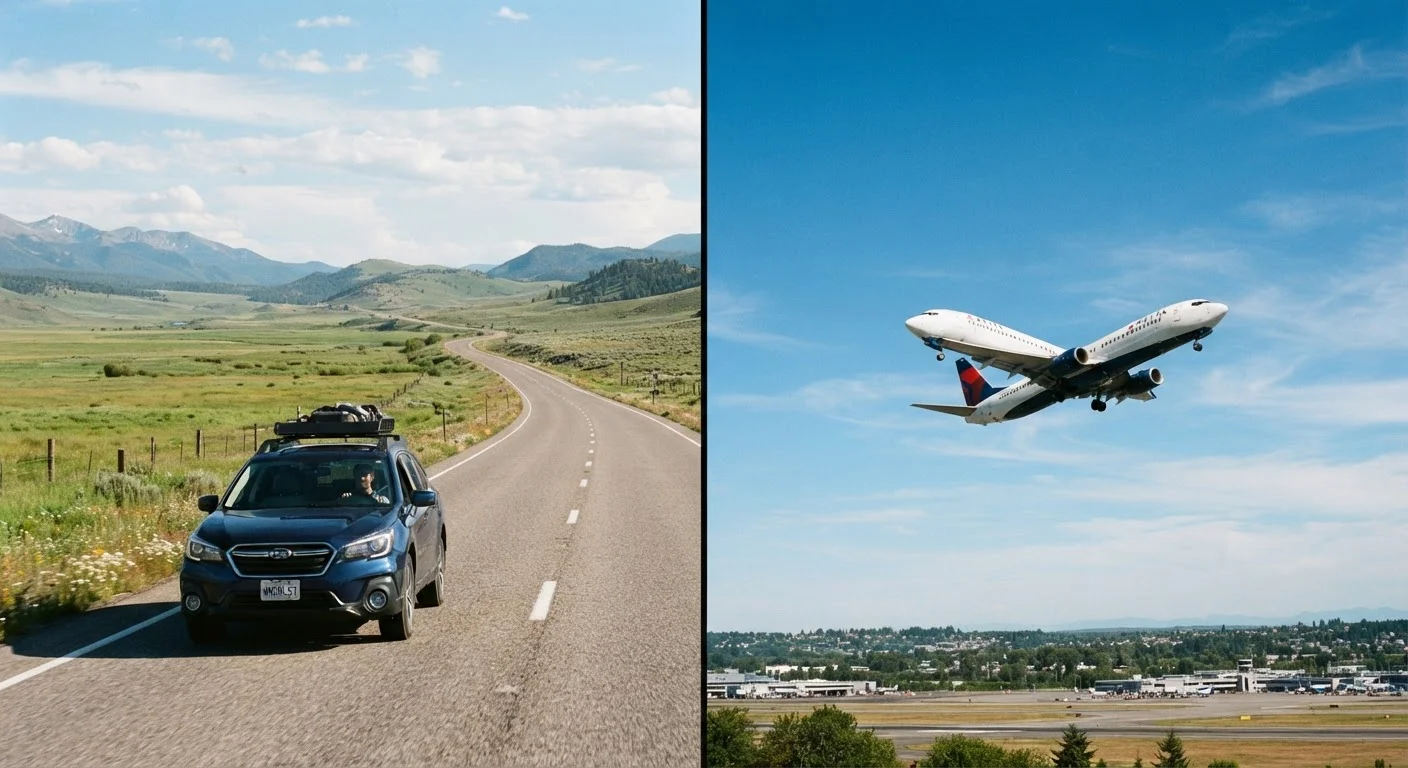
Photo credit: ExplorerGrid.com | Endless Grid Of Factual Content
In this article
Distance, cost, flexibility, and comfort — a clear-eyed comparison of driving versus flying to help you choose the right mode for your next trip.
Key Takeaways
- Driving typically becomes less cost-effective beyond 500 miles when hidden costs like fuel, food, and lodging are included.
- Flying saves time on long distances but adds airport friction — security, delays, and baggage fees — that erodes that advantage.
- Road trips offer flexibility and the ability to bring more gear, pets, and people without extra fees.
- Flying is generally the clearer choice for cross-country travel; driving wins for regional trips under 6–8 hours.
- Both modes have real trade-offs — the best choice depends on your group size, budget, schedule, and destination.
The Distance Threshold: Where Driving Stops Making Sense
Distance is the single biggest factor in this decision. As a rough guideline, trips under 400–500 miles (roughly a 6–8 hour drive) tend to favor the road. Beyond that, the math and the fatigue start tilting toward flying.
Here's why: a 300-mile drive to a neighboring state is manageable in an afternoon, lets you skip airports entirely, and keeps you in control of your schedule. A 1,500-mile cross-country haul means two or three full driving days, multiple overnight stops, and arriving tired. A flight covers that distance in under four hours of actual air time.
That said, "total travel time" for flying isn't just the flight itself. Factor in arriving at the airport 90 minutes early, TSA screening, potential delays, baggage claim, and the drive to your final destination. For routes under 300 miles, door-to-door, driving often wins on time alone. See our guide to road trip distance and route logic for help estimating realistic drive times.
Breaking Down the Real Costs
Sticker price comparisons rarely tell the full story. A flight might show a low base fare — but baggage fees, seat selection, and ground transportation at both ends add up quickly. A road trip feels "cheap" until you tally fuel, meals, tolls, and a night or two at a hotel.
| Criterion | Road Trip | Flying |
|---|---|---|
| Best distance range | Under 500 miles | Over 500 miles |
| Base cost (solo traveler) | Fuel + tolls + lodging | Airfare + fees + ground transport |
| Cost with 4+ travelers | More economical per person | Scales up significantly |
| Schedule flexibility | High — leave and stop anytime | Low — fixed departure times |
| Total travel time (500 mi) | 7–9 hours driving | 4–6 hours door-to-door |
| Luggage freedom | Essentially unlimited | Restricted; fees apply |
| Pet-friendliness | Straightforward | Costly and restricted |
| Physical fatigue | Driver fatigue over long hauls | Cabin pressure, limited movement |
| Weather vulnerability | Road conditions can delay or reroute | Delays and cancellations possible |
For a more structured way to estimate your total trip spend — transportation and beyond — the Travel Budgeting framework is a useful starting point. It helps you account for the costs that often get overlooked until you're already on the road or in the air.
One often-underestimated road trip expense: vehicle wear. If you're driving a high-mileage car, adding 1,500 miles means real depreciation and maintenance considerations. The true cost of operating your vehicle is worth understanding before you assume driving is the budget option.
Flexibility, Comfort, and What You're Actually Giving Up
Road trips win on flexibility — full stop. You decide when to leave, where to stop, how long to linger at a roadside attraction, and whether to take a scenic detour. That freedom is genuinely valuable and difficult to replicate in any airline seat. If you're drawn to the open-ended travel style, driving supports it naturally.
Flying, meanwhile, trades flexibility for speed and predictability — when things go right. When they don't (delays, cancellations, lost luggage), the airport experience can be deeply frustrating and largely outside your control. That variability is worth weighing honestly, particularly during peak travel periods. The trade-offs of peak-season travel apply strongly here — airports at holidays or summer peaks operate differently than the rest of the year.
Comfort is more personal. Long drives are tiring in a different way than long flights — you're active and in control, but physically constrained to a seat. Flights compress discomfort into a shorter window, though the cabin environment brings its own challenges. For anyone sensitive to the physical effects of air travel, our tips for staying healthy on flights are worth a read before booking.
Group Size, Gear, and Special Circumstances
Group size quietly changes everything. Airline pricing scales with every passenger, while a car's fuel cost stays fixed regardless of whether there are two people or five inside. A family of four flying round-trip at $250 per person spends $2,000 on tickets alone — before bags or extras. That same family driving 600 miles might spend $120 in fuel. The calculus shifts substantially.
Pets, large gear (camping equipment, sports gear, musical instruments), and young children also favor road travel. Airlines have strict, sometimes expensive rules around all three. Your car handles them without surcharges, and without the stress of fitting everything into overhead bins.
One practical note: if your destination is somewhere remote or scenic — say, a national park, a coastal highway, or an off-the-beaten-path region — you may need a rental car on arrival anyway. In that case, the flexibility advantage of flying shrinks, and the cost advantage of flying weakens further once you add the rental. If a drive like the Pacific Coast Highway is part of the experience itself, there's no substitute for being in your own vehicle.
Note: Fuel prices, airline fees, and travel conditions change regularly. Always verify current costs directly with providers before budgeting your trip. For entry requirements, safety advisories, or other travel-critical information, consult official government sources.

Author
Travel & Trips Editorial Team
Travel & Trips Editorial Team is the collective byline for our editorial team and contributor network. Articles published under this byline or an editorial pen name are researched, written, and reviewed according to our editorial standards for clarity, consistency, and independence before publication.
View all articles →