
The Full Arc of Buying a Used Car: From Search to Signed Title
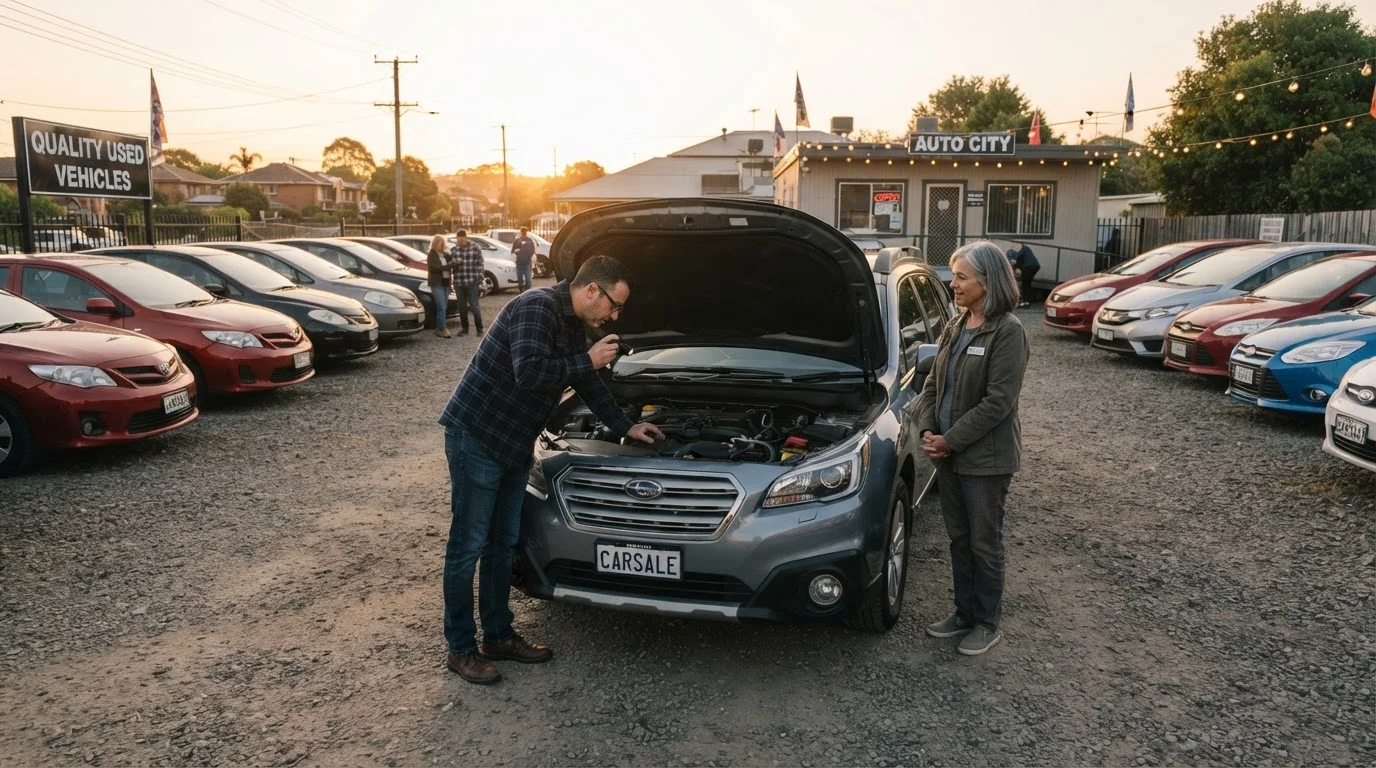
Photo credit: ExplorerGrid.com | Endless Grid Of Factual Content
In this article
Walk through every stage of buying a used car—research, inspection, negotiation, and paperwork—so nothing catches you off guard.
Key Takeaways
- Set a firm total-cost budget — including insurance, taxes, and registration — before browsing any listings.
- A professional pre-purchase inspection typically costs $100–$200 and can prevent thousands in surprise repairs.
- Vehicle history reports reveal title issues, prior accidents, and odometer discrepancies before you commit.
- Negotiate the out-the-door price, not just the sticker, to avoid hidden fees added at signing.
- Secure financing pre-approval before visiting a seller so you negotiate from a position of clarity.
- Complete the title transfer promptly and notify your insurer the day you take possession.
Setting Your Budget Before You Search
The most common used-car mistake buyers make has nothing to do with the car — it happens before they ever look at one. Going into the market without a firm budget invites scope creep, emotional overspending, and monthly payments that strain household finances for years.
Start with a realistic monthly payment ceiling, then work backward to a total purchase price. A widely used guideline suggests keeping total vehicle expenses — loan payment, insurance, fuel, and maintenance — below 20% of take-home pay, though your own situation may call for a more conservative figure. For a fuller breakdown, see this financial roadmap for car ownership before you finalize your number.
Factor in costs beyond the sale price: state sales tax (typically 5–10%), title and registration fees ($50–$300+ depending on your state), and the first year of insurance. On a $15,000 vehicle, these extras can add $1,500–$2,500 before you've driven a mile.
Build your budget around the total monthly cost of ownership — not just the loan payment. Insurance alone can vary by $100 or more per month depending on the vehicle's theft rate and repair cost profile.
Buyers who focus solely on the sticker price or monthly payment routinely underestimate total ownership costs, leading to financial strain once recurring expenses kick in.
When requesting a pre-purchase inspection, ask the mechanic to provide a written estimate for any issues found — not just a verbal summary. A documented repair list is a negotiating tool.
Written findings from a licensed mechanic carry weight in price discussions and protect you from vague seller dismissals of legitimate mechanical concerns.
Narrowing the Field: Research and Vehicle Selection
Once you have a budget, define what you actually need from a vehicle — daily commute length, cargo requirements, number of passengers, and must-have safety features. Mixing lifestyle requirements with budget constraints will naturally filter your options to a manageable shortlist.
Research ownership costs for the models you're considering: reliability history from independent consumer surveys, average repair costs, and parts availability. Vehicles with large production runs tend to have more affordable parts and more qualified technicians familiar with them. If you're weighing whether a used vehicle makes financial sense at all, this comparison of new versus used vehicle costs lays out the tradeoffs clearly.
Check typical market pricing on multiple platforms to establish a realistic value range for any model and year combination you're targeting. This baseline makes it much harder for a seller to anchor the negotiation at an inflated starting price.
$28,000
Average used-car transaction price
According to Edmunds industry data, average used vehicle transaction prices have remained significantly elevated following pandemic-era inventory disruptions.
77%
Used-car buyers who skipped independent inspections
A consumer survey by CarMD found the majority of used-car buyers did not commission an independent pre-purchase inspection before buying.
$1,200+
Median first-year surprise repair cost
Industry estimates suggest buyers who skip a pre-purchase inspection face median unplanned repair bills exceeding $1,200 in their first year of ownership.
Sourcing: Where to Actually Find the Car
Used vehicles surface through several distinct channels, each with different risk and price profiles. Franchised dealerships (those affiliated with a manufacturer) typically offer certified pre-owned programs with limited warranties, but prices are generally higher. Independent dealerships vary widely in quality and accountability. Private-party sellers — often found through classified listings — may offer lower prices but zero warranty protection and more due-diligence burden on the buyer. Auctions carry the highest risk for the uninitiated, as inspection time is severely limited.
There is no universally superior source. The right channel depends on how much uncertainty you're comfortable absorbing, your mechanical knowledge, and whether warranty coverage matters to you. Whatever the source, every candidate vehicle deserves the same rigorous evaluation. If you're also thinking about selling a current vehicle, understanding how private sales work from the seller's side can sharpen your perspective on pricing and negotiation dynamics.
Inspection and Vehicle History
No used-car purchase should proceed without two distinct checks: a vehicle history report and a physical pre-purchase inspection (PPI) by an independent, qualified mechanic.
A vehicle history report — generated from the Vehicle Identification Number (VIN) — surfaces title problems (salvage, flood, or rebuilt designations), reported accident history, odometer rollbacks, and ownership count. These reports are not exhaustive; damage that was never reported to an insurer won't appear. Treat them as a necessary starting point, not a clean bill of health.
The PPI is where a licensed mechanic puts the vehicle on a lift, checks fluid condition, inspects brake pad thickness, evaluates tire wear patterns, looks for rust or evidence of prior repairs, and listens to the engine under load. A thorough inspection runs roughly $100–$200 at an independent shop and is money well spent. Our detailed pre-purchase inspection checklist covers every category a mechanic — and you — should evaluate before any money changes hands.
Any seller who refuses to allow an independent inspection is giving you important information about the vehicle.
Negotiating the Price
Effective negotiation starts well before you sit across from a seller. Knowing the market value range for the specific vehicle — adjusted for mileage, condition, and local demand — means you're not guessing. Print or screenshot comparable listings to reference during discussion.
Lead with the out-the-door price: the total you'll pay including all taxes, fees, and any dealer add-ons. Dealerships sometimes quote attractive sticker prices while tucking documentation fees, nitrogen tire inflation charges, or paint protection packages into the final contract. Ask for an itemized breakdown of every line before agreeing to anything.
Inspection findings give you legitimate leverage. A $400 brake job revealed by the mechanic is a concrete, documentable reason to adjust the asking price — use it. Be prepared to walk away; this is the most powerful negotiating position available to a buyer. First-time buyers navigating dealership dynamics for the first time will find this grounded overview of the lot experience particularly useful before entering negotiation.
Watch for Last-Minute Add-Ons at Signing
Finance-and-insurance (F&I) offices at dealerships routinely present extended warranties, GAP insurance, and appearance protection packages at the point of signing. These products may have value in specific circumstances, but they are profit centers and are almost always negotiable or optional. Request each item's terms and price in writing before deciding, and never feel pressured to decide in the moment.
Financing, Payment, and Closing the Deal
If you're financing the purchase, secure a pre-approval from your bank or credit union before visiting any seller. This gives you a concrete interest rate benchmark and prevents the financing desk from presenting a dealership loan as your only option. Dealerships can sometimes match or beat outside rates — but you'll only know if you have a number to compare against.
When paying cash or cashier's check for a private sale, meet at the bank where the funds originate. Have the seller sign the title over in the presence of a notary if your state requires it — check your state DMV's requirements in advance, as they vary significantly.
Review every document before signing. The purchase agreement should match every number you negotiated. Never sign a contract with blank fields. If a financing contract includes an arbitration clause that concerns you, ask for an explanation — you're entitled to understand what you're agreeing to.
Title Transfer and Post-Sale Steps
The signed title is the legal evidence of ownership. In a private sale, the seller signs the back of the title over to you; both parties should fill in the odometer reading and sale price accurately, as these are legal declarations. Submit the signed title to your state's DMV within the required window — usually 10–30 days — along with the bill of sale and applicable fees to register the vehicle in your name.
Contact your auto insurer on the day you take possession, not after. Driving an uninsured vehicle — even briefly — exposes you to significant financial and legal risk.
Finally, pull the vehicle's maintenance history if you received service records, and schedule any overdue items promptly. The car maintenance hub is a practical starting point for understanding what your newly purchased vehicle will need going forward, and the car ownership costs hub can help you plan for ongoing expenses with realistic figures.

Author
Automotive Editorial Team
Automotive Editorial Team is the collective byline for our editorial team and contributor network. Articles published under this byline or an editorial pen name are researched, written, and reviewed according to our editorial standards for clarity, consistency, and independence before publication.
View all articles →