
New Car vs. Used Car: A Financial Breakdown for First-Time Buyers
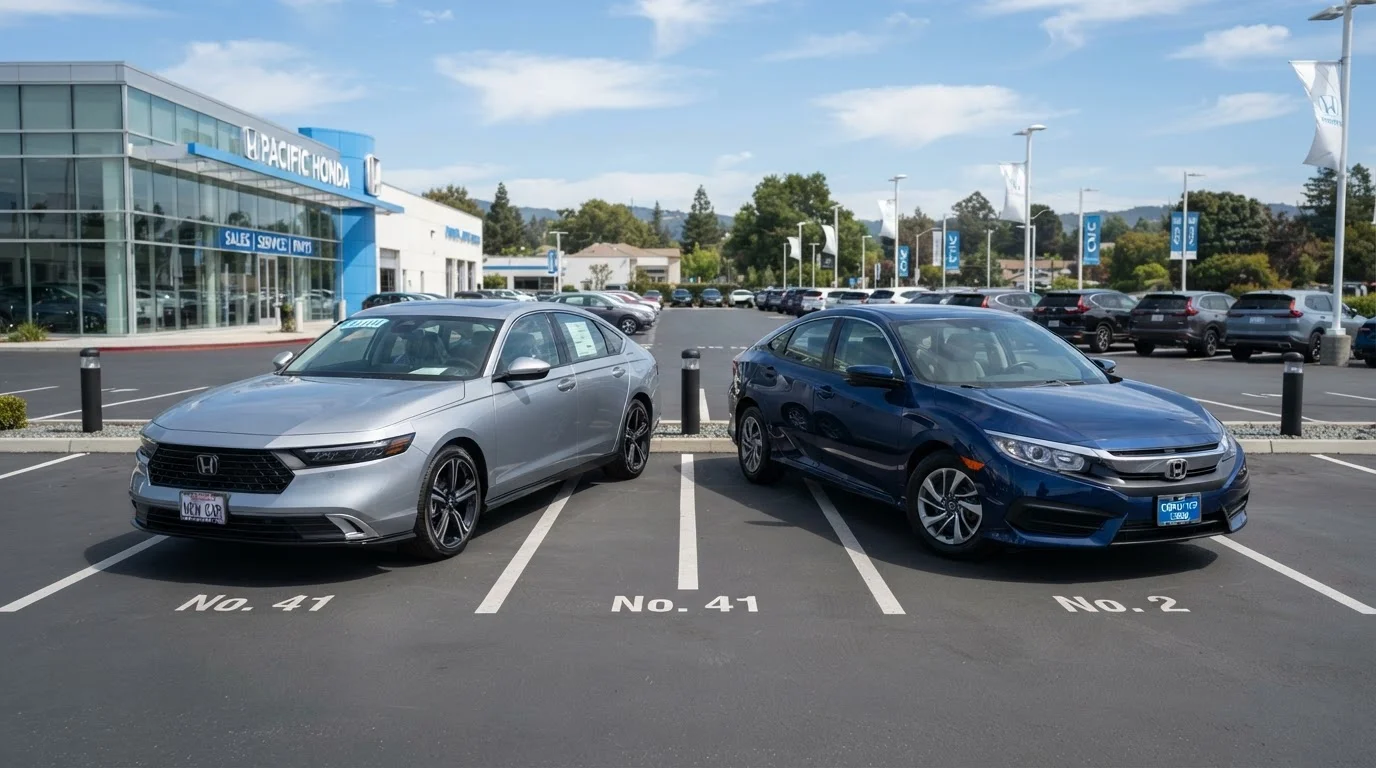
Photo credit: ExplorerGrid.com | Endless Grid Of Factual Content
In this article
Lower purchase price doesn't always mean lower total cost. See how new and used vehicles compare across depreciation, financing, and upkeep.
Key Takeaways
- New cars depreciate roughly 15–25% in the first year, making used vehicles a stronger value-retention play for many buyers.
- Used cars typically carry higher interest rates and shorter loan terms, which can offset some of their sticker-price advantage.
- Insurance premiums are generally lower for used vehicles, but older models may carry higher liability or collision costs.
- Warranty coverage on new cars provides cost certainty for repairs; used cars vary widely depending on age, mileage, and CPO status.
- Total cost of ownership — not monthly payment — is the metric that matters most for first-time buyers on a budget.
Depreciation: Where the Biggest Dollar Gap Lives
Depreciation is the single largest cost of vehicle ownership for most buyers, yet it rarely appears on a window sticker. A new car loses an estimated 15–25% of its value in the first year alone, and roughly 50% within five years, according to general industry analysis — though exact figures vary by make, model, and market conditions.
A used car that is two to three years old has already absorbed that steepest portion of the curve. The buyer of a used vehicle effectively pays a price closer to the car's sustained market value rather than its peak value. For first-time buyers on a budget, this distinction matters enormously when they eventually sell or trade in the vehicle.
That said, depreciation works in the used buyer's favor only if the vehicle was priced fairly to begin with. Overpaying for a high-demand used model can erase much of the theoretical advantage. Market timing and model-year cycles can influence used prices significantly.
| Criterion | New Car | Used Car |
|---|---|---|
| Typical purchase price | Higher (full MSRP) | Lower (depreciated value) |
| First-year depreciation | 15–25% of value | 5–12% (curve has flattened) |
| Average loan interest rate | Lower; promo rates available | Typically 1–3 pts higher |
| Warranty coverage | Full factory warranty | Expired or limited (CPO varies) |
| Insurance cost | Higher (higher vehicle value) | Generally lower |
| Near-term repair risk | Low (warranty covers most) | Moderate to high |
| Safety technology | Latest standard features | Varies by model year |
| Fuel efficiency | Current EPA ratings | May lag newer standards |
Financing Costs: Interest Rates and Loan Terms
New-car buyers typically qualify for lower interest rates. Manufacturers frequently offer promotional financing — sometimes as low as 0% APR for well-qualified buyers — that used-car shoppers cannot access. Used-car loans from banks and credit unions generally carry rates that are 1–3 percentage points higher than comparable new-car loans, reflecting the lender's view of collateral risk on an aging asset.
Loan terms also differ. New-car loans are commonly offered at 60–84 months, spreading payments over a longer horizon. Used-car loans frequently top out at 48–60 months on older vehicles, resulting in higher monthly payments even on a smaller principal balance.
Running the numbers on a hypothetical $20,000 used-car loan at 7% APR over 48 months versus a $32,000 new-car loan at 3.9% APR over 60 months illustrates the complexity: the lower sticker price doesn't automatically mean a lower monthly payment or less total interest paid. For a comprehensive look at how financing structures affect total cost, see how leasing compares to buying across these same variables.
20–30%
Value lost in first 2 years of new-car ownership
Industry analysts broadly estimate new vehicles shed this share of their value within 24 months, making early depreciation the dominant ownership cost.
1–3 pts
Higher APR typical on used-car loans vs. new
Lenders price used-car loans at a premium to reflect collateral risk on older vehicles, which can add hundreds to total interest paid over a loan term.
$500–$1,500
Estimated annual unplanned repair budget for used vehicles
This is a general planning range for used cars beyond their warranty period; actual costs depend heavily on vehicle age, mileage, and maintenance history.
Insurance, Maintenance, and the Costs That Keep Coming
Insurance premiums generally favor used vehicles. A lower market value means collision and comprehensive coverage costs less to provide. However, an older used car may lack modern safety features — automatic emergency braking, lane-keep assist, backup cameras — that insurers increasingly reward with discounts. Net effect: insurance savings on a used vehicle are real but not always dramatic.
Maintenance tells a more nuanced story. New cars come with factory warranties that cover most mechanical repairs for at least 3 years or 36,000 miles. Used vehicles beyond their original warranty period transfer all repair costs to the new owner. A used car with 60,000–80,000 miles may be approaching the service intervals for timing belts, brake fluid, coolant flushes, and other items that carry meaningful price tags. Budgeting $500–$1,500 annually for unplanned repairs on a used vehicle is a reasonable planning assumption, though individual results vary widely by make and model.
First-time buyers frequently underestimate these ongoing costs. Our guide on where car budgets most commonly break down details the specific line items that catch new owners off guard. For a structured planning framework, a starter's financial roadmap for car ownership walks through every cost category before purchase.
Making the Decision: Total Cost Over Time
Neither option is universally superior. The financially sound choice depends on how long you plan to own the vehicle, how much you can put down, your credit profile, and your tolerance for repair uncertainty.
A useful framework: add up the realistic 5-year cost of each option — depreciation loss, interest paid, estimated insurance premiums, expected maintenance — rather than comparing monthly payments alone. A $10,000 lower sticker price on a used car can look different after accounting for a higher interest rate, a shorter warranty window, and deferred maintenance costs coming due.
Where you buy also matters. Private sellers typically offer lower prices but fewer protections; dealerships provide recourse but often charge more. Comparing private sellers and dealerships helps clarify which channel suits your situation. And if you're considering a used vehicle specifically, the full arc of buying a used car covers the inspection and negotiation steps that protect your investment.
The best car purchase is the one you can afford to own — not just to buy. Build your budget around total cost of ownership, and the new-versus-used question often answers itself.
This article provides general financial information for educational purposes and does not constitute personalized financial or automotive advice. Consult a qualified financial professional for guidance specific to your situation.

Author
Automotive Editorial Team
Automotive Editorial Team is the collective byline for our editorial team and contributor network. Articles published under this byline or an editorial pen name are researched, written, and reviewed according to our editorial standards for clarity, consistency, and independence before publication.
View all articles →