
Tire Pressure and Why Getting It Wrong Costs You More Than You Think
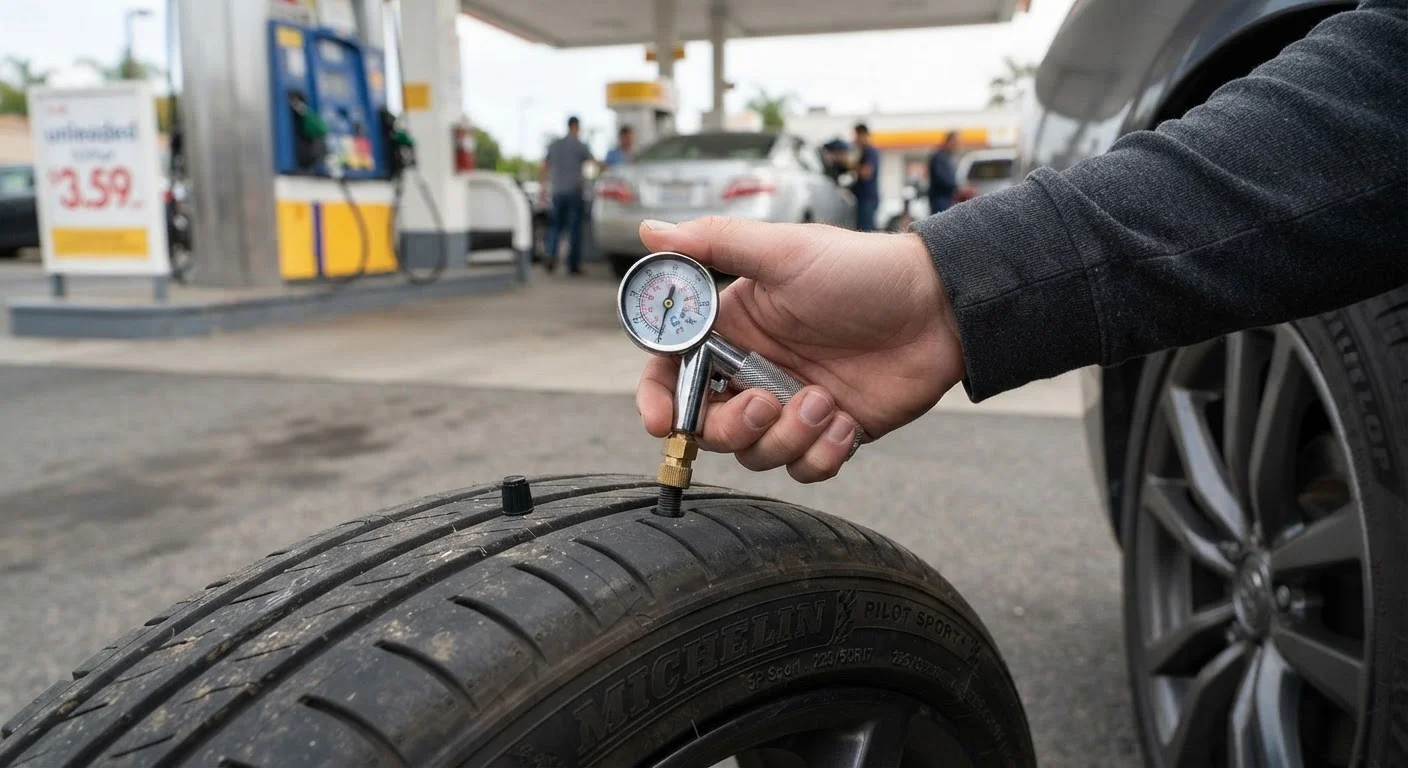
Photo credit: ExplorerGrid.com | Endless Grid Of Factual Content
In this article
Under- or over-inflated tires affect fuel efficiency, handling, and tread life. Learn how tire pressure works and how to check it correctly.
Key Takeaways
- The correct tire pressure is on your door jamb sticker, not molded into the tire sidewall.
- Under-inflated tires are responsible for reduced fuel economy, accelerated tread wear, and increased blowout risk.
- Tire pressure drops roughly 1 PSI for every 10°F fall in ambient temperature.
- Checking pressure monthly and before long trips is the single easiest form of preventive vehicle maintenance.
- Over-inflation is also harmful, reducing grip and causing uneven center-tread wear.
The Cost Nobody Budgets For
Most drivers assume tires wear out on a predictable schedule. The reality is that inflation — something you can correct in two minutes for free — is one of the biggest variables determining how long your tires last and how much fuel you burn getting anywhere. Improper tire pressure is not a minor inconvenience; over the life of a vehicle, it quietly compounds into hundreds of dollars in unnecessary costs.
The U.S. Department of Energy estimates that under-inflated tires can reduce fuel economy by about 0.2% per PSI drop across all four tires. That sounds trivial, but a car running 10 PSI low — which is more common than most drivers realize — can lose roughly 2% or more in fuel efficiency. At current fuel prices and average annual mileage, that adds up. See our full breakdown of how MPG differences accumulate for specific cost illustrations.
~1–2 PSI
Pressure lost per month through normal permeation
Even undamaged tires with no leaks lose pressure gradually — making monthly checks essential rather than optional.
1 PSI
Pressure drop per 10°F temperature decrease
The U.S. Department of Energy notes this seasonal effect, meaning fall and winter require extra attention to inflation.
0.2%
Fuel economy lost per PSI under-inflation (per tire)
According to U.S. Department of Energy estimates, this loss compounds across all four tires and across miles driven over time.
$400–$900
Typical cost of a full tire replacement set
Premature replacement due to chronic under-inflation represents avoidable expenditure for most passenger vehicle owners.
Under-Inflation: The More Common Danger
Under-inflation is by far the more prevalent problem. Air permeates rubber gradually — even a tire with no puncture or valve leak loses about 1–2 PSI per month under normal conditions. Cold weather accelerates this: pressure drops approximately 1 PSI for every 10°F decrease in temperature, meaning a tire that was correctly inflated in September can be noticeably low by December without anyone noticing.
A soft tire flexes more than it should with every rotation. That excess flexing generates heat in the sidewall and casing, weakening the tire's internal construction over time. The consequences layer on top of each other: shoulders wear faster than the center tread, the tire becomes vulnerable to impact damage from potholes, and blowout risk increases — particularly at sustained highway speeds.
From a cost perspective, replacing a set of tires prematurely because of chronic under-inflation typically costs $400–$900 depending on vehicle and tire type. That's avoidable spending. Our overview of ownership assumptions that drive up car costs covers how this kind of neglect compounds across the full vehicle lifecycle.
Over-Inflation Is Also a Problem
Drivers who've heard that firmer tires improve fuel economy sometimes over-inflate to compensate. Over-inflation causes its own damage: too much pressure makes the tire's contact patch — the portion of tread actually touching the road — smaller and concentrated toward the center. The result is rapid center-tread wear, reduced traction (especially in wet conditions), and a harsher ride that transfers more road shock to the suspension.
An over-inflated tire is also more susceptible to sudden failure from a road hazard because the casing has no flex to absorb impact. The target is always the manufacturer's recommended range, not the tire's maximum molded PSI.
Use Your Door Jamb — Not the Tire
The PSI number molded into a tire's sidewall is the maximum pressure the tire can structurally hold, not the operating target for your vehicle. Always inflate to the specification printed on the sticker inside your driver's door jamb. Front and rear tires sometimes have different recommended pressures — check both.
How to Check Pressure Correctly
You need a tire pressure gauge — dial, digital, or stick-style all work adequately. Check pressure when tires are cold: either before driving or after the car has been stationary for at least three hours. Remove the valve cap, press the gauge firmly onto the valve stem, and read the PSI. Compare it to the figure on your door jamb sticker.
If a tire is low, add air at any gas station compressor or with a portable inflator. If it's over the target, release air in small increments using the gauge's built-in release pin or a small tool pressed into the valve center. Recheck after each adjustment.
Pair pressure checks with rotation and alignment service — three related but distinct disciplines. Our guide to tire rotation, balancing, and alignment explains what each service addresses and when each is typically needed.
Making It a Habit
The simplest system: check pressure on the first day of each month. Set a recurring reminder on your phone. Keep a quality gauge in the glove box so there's no friction to doing it. Before any road trip — particularly one involving significant highway driving or heavy loading — add a pressure check to your pre-departure checklist.
Your TPMS warning light is a safety net, not a maintenance plan. By the time it activates, pressure has already fallen far enough to affect handling and fuel economy. Proactive monthly checks catch the gradual drift that TPMS was never designed to flag.
Managing tire pressure fits within the broader discipline of keeping maintenance costs manageable over a vehicle's lifetime. It costs nothing beyond two minutes of attention and prevents expenses that run into the hundreds. Few maintenance habits return more for less effort.
Frequently Asked Questions

Author
Automotive Editorial Team
Automotive Editorial Team is the collective byline for our editorial team and contributor network. Articles published under this byline or an editorial pen name are researched, written, and reviewed according to our editorial standards for clarity, consistency, and independence before publication.
View all articles →