
What Your Car's Dashboard Warning Lights Are Actually Telling You
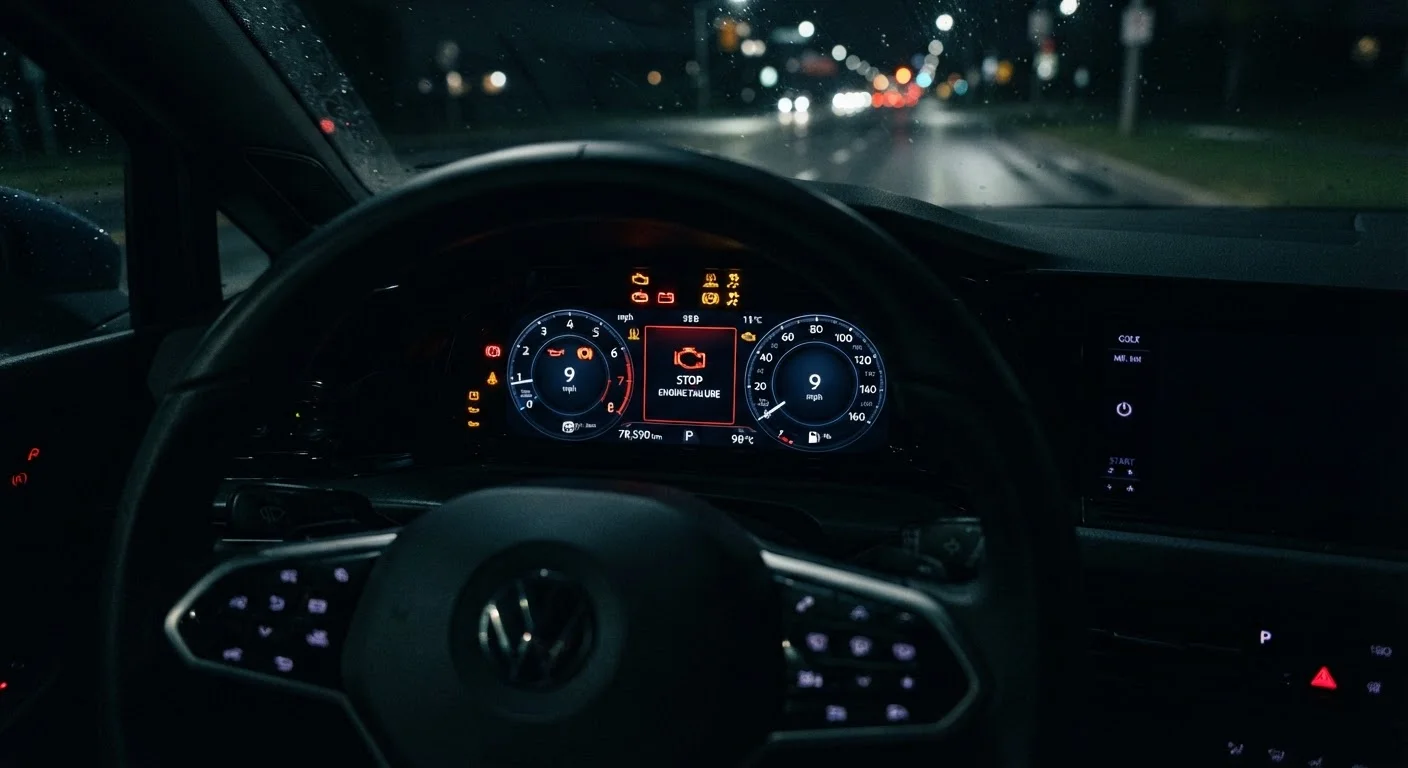
Photo credit: ExplorerGrid.com | Endless Grid Of Factual Content
In this article
Decode the most common dashboard warning lights, what triggers them, and when it's safe to keep driving versus pull over immediately.
Why Warning Lights Exist — and Why Color Matters
Your vehicle's onboard diagnostic system monitors dozens of sensors simultaneously. When something falls outside normal operating parameters, it triggers a dashboard warning light. These aren't arbitrary alerts — each symbol follows an international standard (ISO 2575) that most automakers adhere to, which means the icons are largely consistent across makes and models.
Color is the first layer of communication. Red lights signal an immediate or serious condition that may require you to stop driving. Amber or yellow lights indicate a condition that needs attention soon but generally allows you to continue driving cautiously to a shop. Green and blue lights are informational — they confirm that a system is active, not that something is wrong.
| Red light meaning | Stop or seek immediate service |
| Amber/yellow light meaning | Schedule service soon; monitor the condition |
| Flashing check engine light | Active misfire — reduce speed, seek service promptly |
| TPMS trigger threshold | Approximately 25% below recommended tire pressure (National Highway Traffic Safety Administration (NHTSA)) |
| OBD-II availability | Standard on all US vehicles manufactured after 1996 (U.S. Environmental Protection Agency mandate) |
| Owner's manual | Complete vehicle-specific warning light reference |
Understanding this color hierarchy alone prevents two common mistakes: ignoring amber lights until they become expensive failures, and panicking unnecessarily over a blue high-beam indicator.
The Lights You're Most Likely to See
Check Engine (Malfunction Indicator Lamp) — Perhaps the most misunderstood light on the dashboard. A steady amber check engine light means the engine management system has detected an emissions-related fault. Common causes include a loose gas cap, a failing oxygen sensor, or a misfiring cylinder. A flashing check engine light, however, signals an active misfire severe enough to damage the catalytic converter — reduce speed and seek service promptly. For context on how fluids and sensors interact, see our guide on car fluids every driver should know.
Oil Pressure Warning — A red oil can icon means oil pressure has dropped critically low. This is a stop-now situation. Driving even a short distance with no oil pressure can seize an engine within minutes. Pull over safely, shut off the engine, and investigate before continuing.
Temperature Warning — A red thermometer icon means your coolant temperature has exceeded safe limits. Pull over, turn off the engine, and allow it to cool before opening the hood. Our related article on engine overheating walks through exactly what to do next.
Battery / Charging System — An amber or red battery symbol means the charging system isn't maintaining voltage. Your car is running on battery reserve alone. Turn off non-essential accessories (seat heaters, rear defrost) and drive directly to a shop. See also: how your car battery works and when to replace it.
Tire Pressure (TPMS) — An amber icon of a tire cross-section with an exclamation mark. One or more tires are significantly underinflated (typically 25% or more below spec). Check pressures manually — the light doesn't tell you which tire or by how much.
Brake System Warning — A red circle with an exclamation point. If your parking brake is off and this light is on, check your brake fluid level immediately. A low level may indicate a leak or worn brake pads. Do not ignore this light.
ABS Warning — An amber light labeled ABS. Your anti-lock braking system has a fault. Normal braking still works, but ABS won't activate in a skid. Avoid hard braking situations and schedule service.
If you're evaluating a used vehicle and notice a cluster of warning lights, that's a significant red flag — read more in our piece on red flags in used car listings.
What to Do When a Light Comes On
The right response depends on the color and the light's behavior (steady vs. flashing). As a practical rule: any red light warrants immediate attention — pull over when safe. Amber lights mean schedule a diagnostic scan within a day or two; don't defer for weeks. If a light appears and disappears repeatedly, that intermittent pattern is still worth logging and reporting to a mechanic.
Modern vehicles store fault codes even after a light resets. An OBD-II scan — available free at many auto parts retailers — reads those stored codes and gives your mechanic a precise starting point. Unusual sounds often accompany warning lights; our guide to noises your car makes and what they mean can help you describe the full picture accurately.
Malfunction Indicator Lamp (MIL)
The formal name for the check engine light. It illuminates when the engine control module detects a fault in the emissions or powertrain system. A stored fault code accompanies every MIL event.
OBD-II
On-Board Diagnostics, second generation — a standardized diagnostic port found in all US vehicles built after 1996. A scanner plugged into this port retrieves fault codes that correspond to dashboard warning events.
TPMS
Tire Pressure Monitoring System. Sensors inside each wheel transmit pressure data to the vehicle's computer, triggering a dashboard alert when any tire drops significantly below the recommended inflation level.
Catalytic Converter
An emissions control device in the exhaust system that converts harmful combustion byproducts into less harmful gases. A misfiring engine can overheat and permanently damage this component.
ABS
Anti-lock Braking System. A safety system that prevents wheel lockup during hard braking, allowing the driver to maintain steering control. An ABS fault disables this protective function without affecting standard braking.
Charging System
The combination of the alternator, voltage regulator, and battery that keeps a vehicle's electrical systems powered while the engine runs. A charging system fault means the alternator is not replenishing the battery.
When in doubt, consult your owner's manual — it contains a complete, vehicle-specific list of every warning light with manufacturer guidance on urgency. No dashboard symbol should ever be routinely ignored.

Author
Automotive Editorial Team
Automotive Editorial Team is the collective byline for our editorial team and contributor network. Articles published under this byline or an editorial pen name are researched, written, and reviewed according to our editorial standards for clarity, consistency, and independence before publication.
View all articles →